

Micron released Crucial DDR5-6400 CUDIMM modules for mini PCs
21.10.24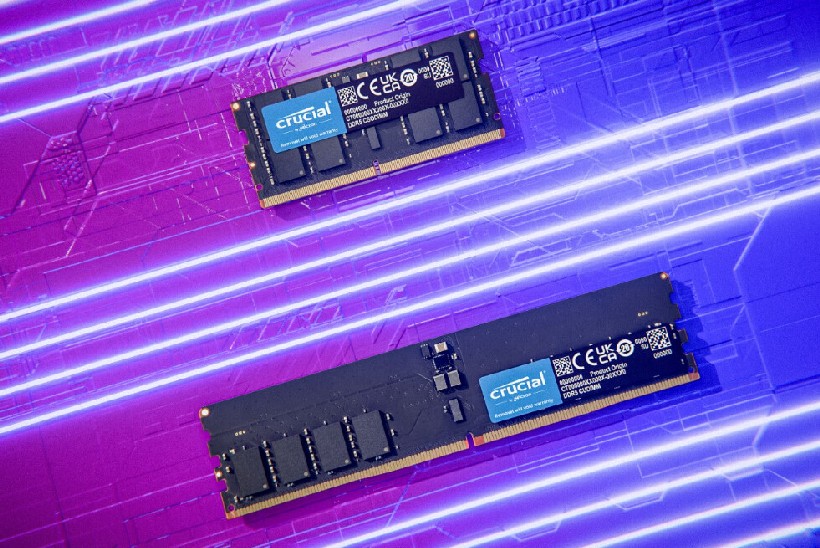
Micron Technology has announced the start of sales of CUDIMM (Clocked Unbuffered Dual In-Line Memory Module) DDR5 memory modules approved by the JEDEC committee in January 2024. A distinctive feature of these modules is the presence of a clock generator CKD (Client Clock Driver), which improves the stability of operation and increases the potential for overclocking. Subsidiary brand Crucial offers such modules for both desktop PCs and laptops and mini-computers (CSODIMMs). In both cases, 16-gigabyte modules with a frequency of 6400 MT/s are available, as well as sets of two modules.
The delay formula is 52-52-52-103 and meets JEDEC specifications. The price for a single 16-gigabyte module starts at $85, and a set of two modules costs at least $170.
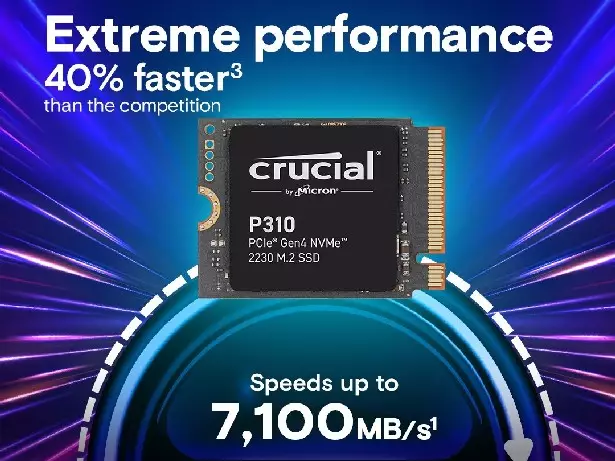
Previously, Micron Technology introduced under the Crucial brand a new line of M.2 2230 P310 solid-state drives. These devices are available in 1 and 2 TB capacities and are designed for use in notebooks and portable gaming systems such as like ASUS ROG Ally and Steam Deck.
Storage devices are equipped with a PCI Express 4.0 x4 interface and are based on the Phison E27T controller without an external DRAM buffer, as well as on 232-layer 3D NAND QLC memory chips.
They show impressive performance figures: sequential read speeds of up to 7,100 MB/s, write speeds of up to 6,000 MB/s, and maximum input/output operations (IOPS) of up to 1 million read and 1.2 million write. The TBW (Total Bytes Written) indicator is 220 TB for the 1 TB model and 440 TB for the 2 TB model.
The Crucial P310 also comes with a five-year warranty from the manufacturer. In foreign stores, the drives are already available at a price of $115 for the 1 TB version and $215 for the 2 TB version.
Don't miss interesting news
Subscribe to our channels and read announcements of high-tech news, tes

Oppo A6 Pro smartphone review: ambitious

 0
0 
Creating new mid-range smartphones is no easy task. Manufacturers have to balance performance, camera capabilities, displays, and the overall cost impact of each component. How the new Oppo A6 Pro balances these factors is discussed in our review.
Logitech G G325 headphones review: reliable and long-lasting
0 
Logitech G has released a new gaming headset that offers good ergonomics, stable connectivity, and high battery life at a very affordable price. Let’s talk about the Logitech G G325 in more detail
Norwegian electronics store will give GTA 6 to those who give birth on the day the game is released games GTA

Norwegian electronics retailer Komplett has announced an unusual promotion dedicated to the release of Grand Theft Auto VI. The company has promised to give a free copy of the game to all families whose children are born on the official release date – November 19, 2026.
The most affordable lifecell tariff can be transferred from other operators for free events in Ukraine lifecell rates

Ukrainian mobile operator lifecell has extended the “Care” tariff to subscribers who have used the number portability (MNP) service from other networks