

US Air Force to buy Tesla Cybertruck for use as target
10.08.25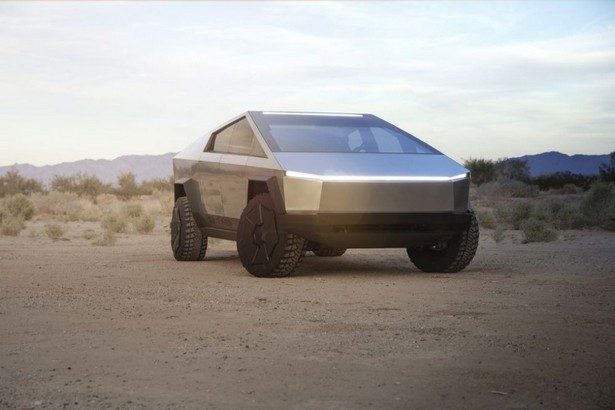
The US Air Force is planning to buy Tesla Cybertrucks — but not for base patrols or amphibious operations. According to documents seen by The War Zone and Electrek, the electric pickup trucks will be used as targets for precision weapons testing.
According to the procurement request, the Air Force Test Center at White Sands Proving Ground (New Mexico) plans to purchase 33 different vehicles — from sedans to pickup trucks and trucks. Only two of the names are listed by brand: Tesla Cybertruck.
Unusual target
The military explained that certain Tesla cars will be used to prepare for the launch of high-precision weapons, since “in real combat conditions, the enemy may use vehicles similar to the Cybertruck, which withstand impacts differently than conventional cars.” The task is to realistically simulate potential scenarios.
At the same time, the documentation specifies: the Cybertruck does not necessarily have to be on the move, the main thing is that it can be towed.
Testing and weapons
The training is being conducted as part of the Stand Off Precision Guided Munitions (SOPGM) program, aimed at testing high-precision air munitions for special forces. The list of weapons includes:
- Hellfire missile (AGM-114),
- Griffin missile (AGM-176),
- GBU-69/B small-caliber guided bombs,
- GBU-39B/B laser-guided bombs.
Irony of fate for the Cybertruck
Elon Musk has previously pitched the Cybertruck as a “bulletproof” and “apocalypse-survival” vehicle. He also suggested that it would be used by the military. Ironically, however, the US military may be the first to use the Cybertruck not as a vehicle but as a expendable target for combat training.
To date, the model has not been a market breakthrough. Despite initial plans to produce up to 250,000-500,000 units per year, actual production remains at about 10% of capacity.
Don't miss interesting news
Subscribe to our channels and read announcements of high-tech news, tes

Oppo A6 Pro smartphone review: ambitious

 0
0 
Creating new mid-range smartphones is no easy task. Manufacturers have to balance performance, camera capabilities, displays, and the overall cost impact of each component. How the new Oppo A6 Pro balances these factors is discussed in our review.
Logitech G G325 headphones review: reliable and long-lasting
0 
Logitech G has released a new gaming headset that offers good ergonomics, stable connectivity, and high battery life at a very affordable price. Let’s talk about the Logitech G G325 in more detail
Google I/O 2026 conference will take place on May 19-20 Google world events

The Google I/O 2026 conference traditionally serves as the central platform for presenting updates to the Android mobile platform and the company’s services.
Nova Poshta will deliver parcels from the USA together with UPS events in Ukraine post USA

Nova Poshta announced the start of cooperation with the American delivery service UPS. The new partnership provides for the possibility of sending parcels weighing up to 30 kilograms from the USA to Ukraine