

Neuralink’s implants for converting thoughts into text will begin testing in October
28.09.25
Neuralink, founded by Elon Musk, plans to begin clinical trials in the United States in October 2025 of a device that can read speech signals directly from the brain and convert them into text, Bloomberg reports. The project aims to help people with speech disorders, including after a stroke or with neurodegenerative diseases such as amyotrophic lateral sclerosis (ALS).
The company’s president, DJ Seo, said the US Food and Drug Administration (FDA) has granted permission for the study under an exemption for experimental devices. According to him, the technology will be able to record what a person is trying to say or mentally imagine speech. “If you imagine yourself saying something, we can catch it,” Seo said.
Neuralink is currently conducting five more clinical trials of implants that allow you to control electronic devices, including computers and prosthetics, using brain signals. There are no commercially available implants for direct speech reading yet.
The company is considering implanting the device in healthy people by 2030, which would be a step towards creating consumer technology. According to Seo, in the future, users will be able to interact with large AI language models “at the speed of thought” and receive responses, for example, through headphones.
Similar developments are already being tested by other scientific groups to restore speech in patients who retain the ability to think but cannot physically pronounce words.
The start of the tests in October was postponed from the previous plan: implantation in the language cortex was supposed to begin by the end of September. In addition to restoring speech, Neuralink is studying the possibilities of treating blindness and Parkinson’s disease. By 2031, the company plans to implant 20,000 people annually.
Don't miss interesting news
Subscribe to our channels and read announcements of high-tech news, tes

Oppo A6 Pro smartphone review: ambitious

 0
0 
Creating new mid-range smartphones is no easy task. Manufacturers have to balance performance, camera capabilities, displays, and the overall cost impact of each component. How the new Oppo A6 Pro balances these factors is discussed in our review.
Logitech G G325 headphones review: reliable and long-lasting
0 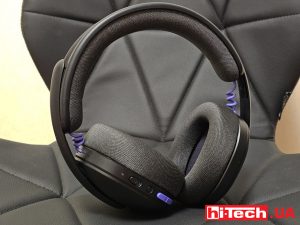
Logitech G has released a new gaming headset that offers good ergonomics, stable connectivity, and high battery life at a very affordable price. Let’s talk about the Logitech G G325 in more detail
In China, physical buttons in cars will become a mandatory safety requirement car china

China’s Ministry of Industry and Information Technology (MIIT) is preparing new regulations for automakers that will require the use of physical controls for key vehicle functions
New Asus ExpertBook B3 G2 laptops introduced in 14 and 16 inch diagonals Asus laptop
Asus has introduced an updated line of ExpertBook business laptops, which have received modern processors, enhanced artificial intelligence capabilities, improved autonomy, and new security features.