

Make no mistake! Which smart TV to buy this year
20.11.25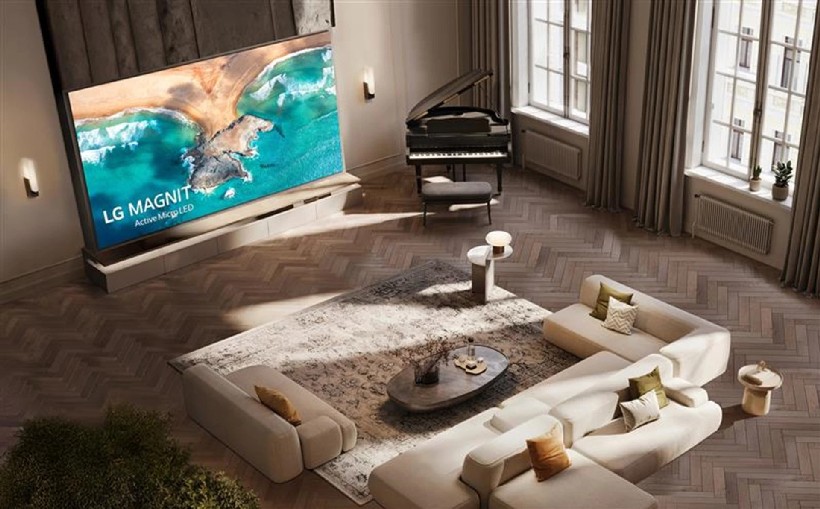
Smart TVs are experiencing a technology boom in 2025: from the perfect black of OLED to the incredible brightness of Mini LED. In order not to get confused in the terms and choose a TV that suits your tasks and budget, you need a clear understanding of what is what.
In this review, we will analyze the key selection criteria step by step, compare the current models of Samsung, LG, Sony, Philips and Xiaomi and present our recommendations. After reading this material, you will know exactly which TV you need, and a large selection and manufacturer’s warranty can be provided in the section smartphones, TVs and electronics on Rozetka.
Key selection criteria
Step 1: Choose the diagonal of the TV
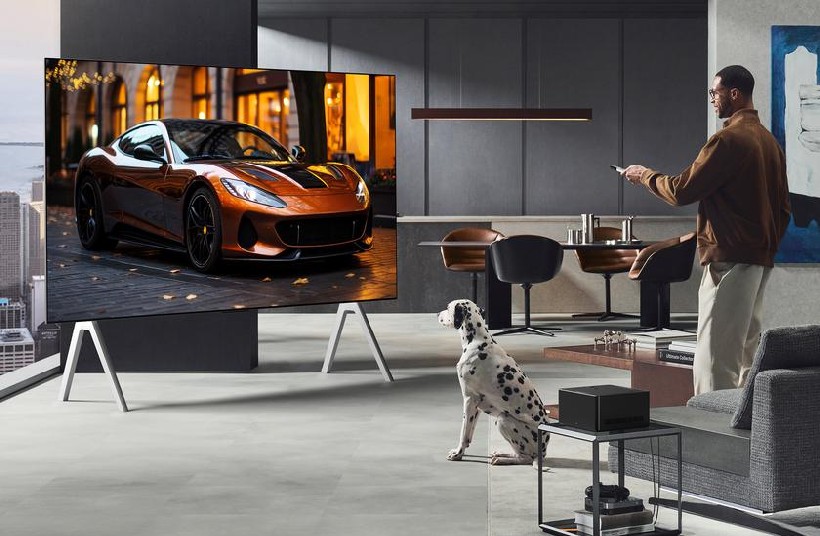
You can of course just put a big TV, but the pleasure of watching it will be small if you put the device too close or far for the viewer. You need to choose a model that matches the size of your room so as not to have discomfort when watching TV.
Measure the place for the TV and the distance to the viewing area. Next, decide what resolution your device should have: Full HD (1920x1080px) or Ultra HD 4K (3840x2160px). All flagship TVs now support UHD 4K.
According to a formula based on the recommendations of THX and SMPTE, calculate what diagonal your smart TV should have:
Minimum comfortable diagonal:
- For UHD 4K: Diagonal (inches) = Distance (meters) /(1.5*0.0254)
- For Full HD: Diagonal (inches) = Distance (meters) /(2.5*0.0254)
Maximum comfortable diagonal:
- For UHD 4K: Diagonal (inches) = Distance (meters) /(1.0*0.0254)
- For Full HD: Diagonal (inches) = Distance (meters) /(1.5*0.0254)
where 0.0254 is the number of meters in inches.
That is, for example, for a distance of 1.5 meters, the comfortable minimum diagonal for a modern 4K smart TV will be 1.5/(1.5 * 0.0254) = 39.37” ~ 40”, and the maximum comfortable diagonal is 1.5/(1.0*0.0254) = 59.05” ~ 60”.
If you find it difficult to work with a calculator, here is a table of diagonal/distance correspondences depending on the screen resolution:
TV Distance Table
| TV Diagonal (inches/cm) | Distance for 4K TV (meters) | Distance for Full HD TV (meters) |
| 43″ (109 cm) | 1.0 – 1.6 m | 1.4 – 2.1 m |
| 50″ (127 cm) | 400;”>1.2 – 1.9 m | 1.6 – 2.6 m |
| 55″ (140 cm) | 1.2 – 2.1 m | 1.7 – 2.8 m |
| 65″ (165 cm) | 1.5 – 2.4 m | 2.0 – 3.2 m |
| 75″ (190 cm) | 1.8 – 2.8 m | 2.3 – 3.7 m |
Important:For large diagonals (55″ and more), 4K becomes almost mandatory: on large screens you will immediately notice if the matrix has only 1080p.
Step 2: Select the matrix
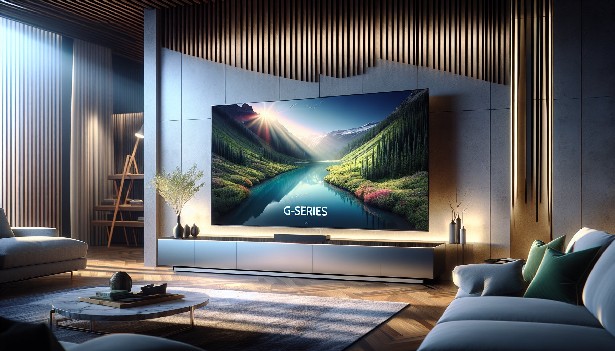
The main types of matrices in modern TVs are LED/LCD, QLED, OLED and Mini‑LED:
- LED/LCD is the most affordable option. However, it may be less perfect in displaying black color and contrast.
- QLED is an improved version of LED: quantum dots provide better color and brightness. This is a good choice if you watch content in a well-lit room.
- OLED — provides almost perfect black, excellent contrast, fast response time: an advantage for movies and games. However, it is more expensive and may have limitations in brightness.
- Mini‑LED / NeoQLED — a kind of “intermediate” option: LED with more backlight zones, improved brightness and contrast.
When choosing, pay attention to: contrast, maximum brightness, response time, viewing angles, burn-in protection (especially for OLED, if the TV will be used for a long time on one static image).
If the TV is installed in a bright room with plenty of daylight, choosing QLED or Mini-LED will be justified. If the main goal is watching movies in the dark or playing games, OLED will be a better option.
Step 3: Choosing an operating system
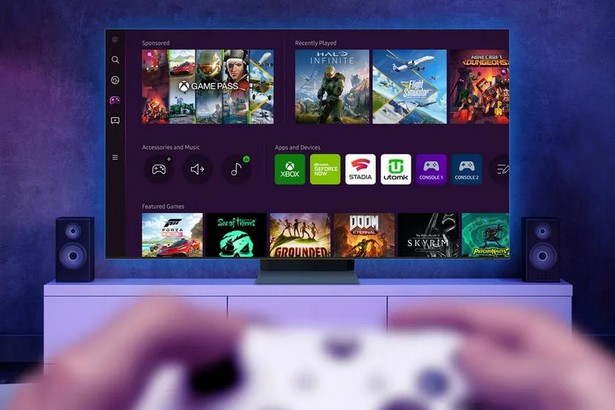
Oddly enough, the issue of the operating system is also important in televisions. The most common systems: tvOS from Apple, AndroidTV from Google, Tizen from Samsung, webOS from LG, RokuTV and other proprietary solutions from manufacturers.
In addition to the fact that each operating system has its own interface features, we recommend paying attention to the following parameters:
- Speed and smoothness – the TV should respond instantly, the menu should not “slow down”.
- The prospect of updates. A good TV should provide OS updates for several years – this affects security and access to new features.
- Availability of necessary applications (Netflix, YouTube, language services, games) and the ability to install new ones.
- Support for voice control and integration with other devices (smartphone, smart speakers, smart home system).
TV models
Samsung Neo QLED QN70F (2025)
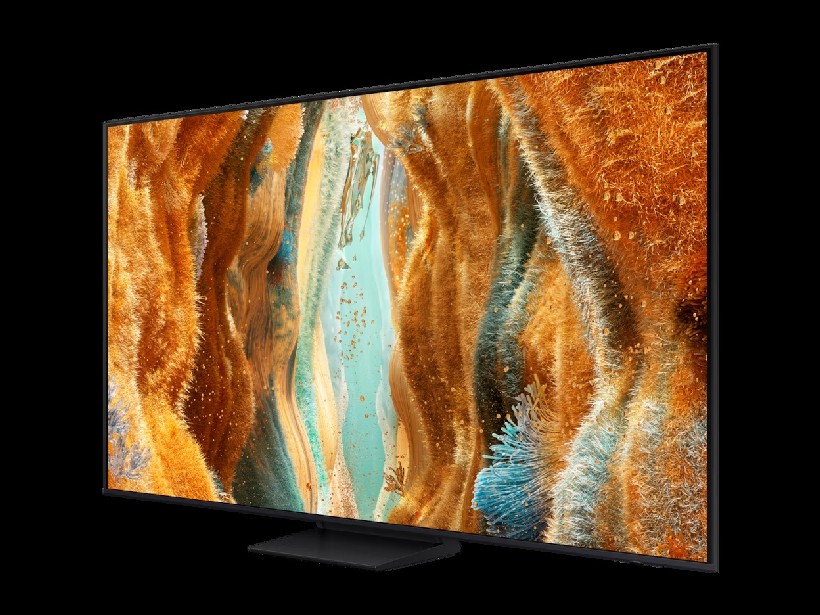
The Samsung Neo QLED QN70F TV is available in 55″, 65″, 75″ and 85″ diagonals, all with 4K resolution (3840×2160) and support for Mini-LED backlighting. Image processing is performed by the NQ4 AI Gen2 processor (in the 2025th generation), which provides 4K AI Upscaling and support for neural networks to improve video quality. The panel supports Motion Xcelerator technology up to ~144Hz, which is especially useful for gaming consoles and PCs. Visual effects are complemented by Quantum Dot technology and Quantum Matrix Slim backlighting. HDR10+ support in addition to AI optimization provides improved image quality even on regular SDR content.
The TV supports gaming features: ALLM, VRR (FreeSync Premium Pro) and HDMI2.1 ports up to 4×, which makes it a good choice for gamers. The One UI Tizen operating system supports SmartThings, voice assistants and the SamsungTVPlus service. For audio, Adaptive Sound Pro, Object Tracking Sound Lite and synchronization with compatible soundbars are provided. The audio system has 2 channels of 20W (in some models) – a movie fan may need a separate soundbar.
+ 4KNeoQLED with Mini‑LED backlighting and AI Upscaling
+ Gaming features (up to ~144Hz, VRR/FreeSync Premium Pro, HDMI2.1)
- Basic audio system — additional sound is needed for a full-fledged cinema.
- No DolbyVision HDR support
LG QNED AI QNED70
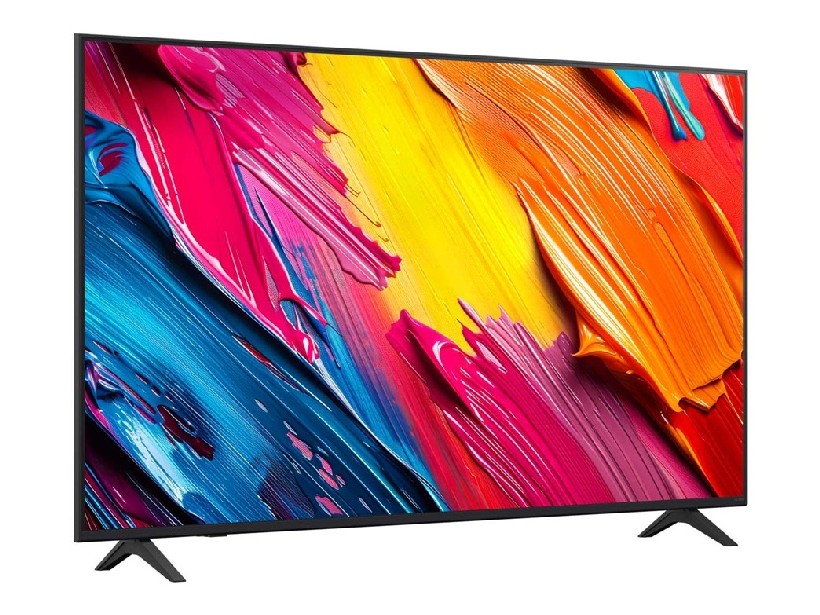
The screen has a resolution of 3840×2160 pixels (UHD4K) and implements QNED technology, which combines quantum dots and NanoCell elements for brighter and more saturated colors. The TV is equipped with an α7AIProcessor4KGen8 processor, upscaling to 4K and optimization of sound depending on the content. There is support for full color coverage (100% DCI‑P3 according to certification). The panel refresh rate is 60Hz – for basic use this is acceptable, but does not meet the requirements of gamers with frequent 120Hz or higher.
The matrix works with a regular LED backlight (direct) and supports a number of technologies: 4KSuperUpscaling, FilmmakerMode, DynamicToneMapping, as well as HDR (HDR10/HLG) for improved work with dynamic scenes. The TV has support for SmartTV on the webOS platform with access to popular streaming services, as well as AirPlay, Chromecast and Miracast functions for wireless broadcasting. The audio system is represented by a 2.0-channel configuration with a power of 20W, supplemented by AISoundPro, ClearVoicePro and AISpaceRecognitionSound technologies. The connectors include 4HDMI (2 of which support HDMI2.1), 2USB ports, LAN (RJ-45), CI slot, optical audio output (S/PDIF). There are also DVB-T2, DVB-C, DVB-S2 TV tuners.
+ QNED technology with 100% DCI‑P3
+ Powerful α7AIProcessor4KGen8 processor
+ Full set of ports, HDMI2.1 support, SmartTV on webOS
- Refresh rate only 60Hz
- Audio system 2.0 with a power of 20W – external speakers or soundbar.
Sony K-55XR50
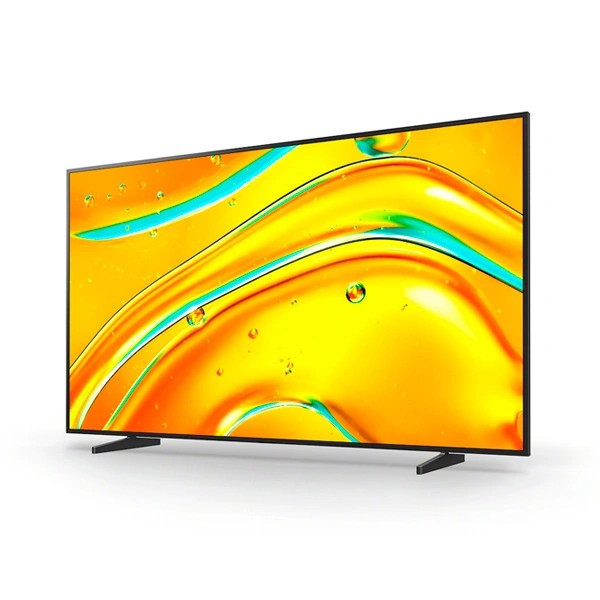
The SonyBRAVIA5 TV with the K-55XR50 model offers a 55-inch 4K (3840×2160) screen with Mini-LED backlighting and a refresh rate of up to 120Hz. HDR formats HDR10, HLG and Dolby Vision are supported. The image processing is handled by the XRProcessor with XRContrastBooster and XRBacklightMasterDrive technologies for deeper blacks and brighter highlights.
Smart platform — GoogleTV with support for Wi-Fi6, Bluetooth5.3, AppleAirPlay2, Chromecast, as well as four HDMI 2.1 ports with VRR and ALLM. The audio system is represented by AcousticMulti-Audio with four speakers (2 woofers + 2 tweeters) with a total power of 40W, Dolby Atmos support. The TV design is minimalist, the frames are thin, the VESA mount is 300×300mm, the weight without legs is about 17.7kg. Although high brightness (SDR) is sufficient for most conditions, according to tests, the model has limitations in brightness and contrast in HDR mode, which is why the effect of HDR content may be less than in waiting.
+ 4K screen with MiniLED technology and up to 120Hz
+ DolbyVision, VRR, ALLM, GoogleTV support.
- Despite 120Hz, the peak refresh rate of game mode may be less flexible
Philips 55OLED820/12
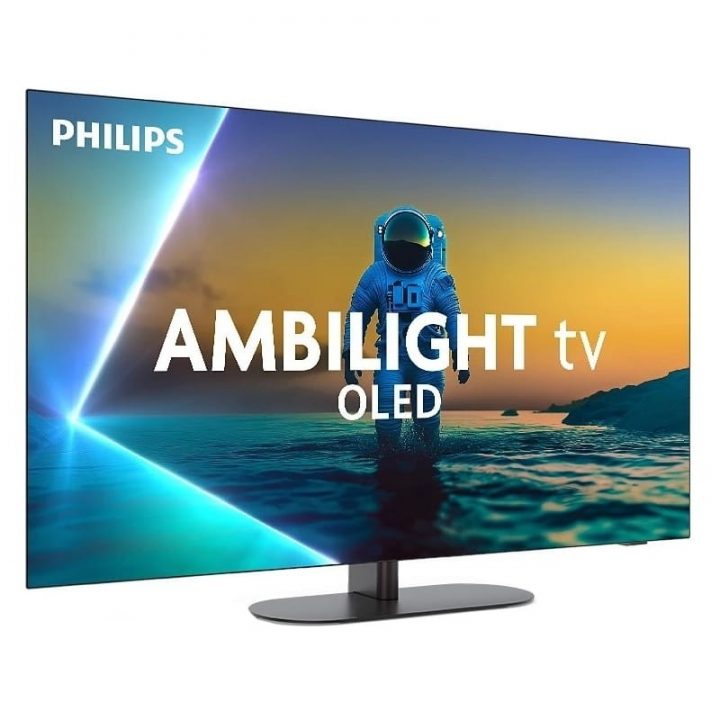
Philips 55OLED820/12 is a 55-inch TV with an OLED panel and a resolution of 3840×2160 (4KUltraHD). It is characterized by a high refresh rate of up to 144Hz. The TV supports DolbyVision, HDR10+ and HLG technologies, which provide a wide dynamic range and realistic colors. The P5AIPerfectPictureEngine processor is responsible for image processing, which increases sharpness, contrast and optimizes motion.
To create an atmosphere, the Ambilight function is used – a backlight installed on the back of the TV that reacts to the image on the screen and visually expands the boundaries. The smart platform – GoogleTV, provides access to a variety of applications, support for voice assistants and integration with a smart home. There are four HDMI2.1 ports that allow you to connect modern gaming consoles or PCs with support for 4K@120Hz, as well as VRR/FreeSync support for a smoother image. The sound is presented by a system with a total power of 70W and compatibility with DolbyAtmos, which provides a deeper immersion when watching movies or games. In particular, this TV can be found at Rosetka.
+ OLED panel with a high refresh rate of up to 144Hz
+ HDR support (DolbyVision, HDR10+)
+ Ambilight effect, image processing system (P5 AI) and HDMI2.1 for consoles.
- Maximum brightness may be lower compared to top-end Mini-LED/Neo-QLED models.
Xiaomi TV S Pro Mini LED 2026
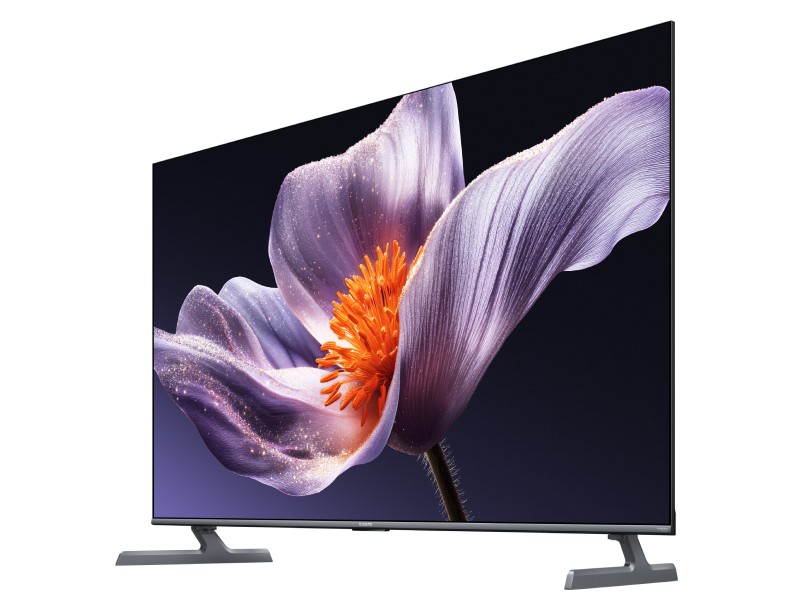
The latest Xiaomi TV S Pro Mini LED 2026 model is based on a Mini LED panel with a 4K resolution and a refresh rate of 144 Hz, which can be increased to 288 Hz in high-dynamic-range scenes. The screen supports HDR10+ and Dolby Vision, covers 93% of the DCI-P3 color space and reaches a peak brightness of up to 5700 nits.
The backlight is divided into 880 local dimming zones, which allows for more precise contrast control. To protect your eyesight, Xiaomi Qingshan Eye Protection technology is used, which automatically adjusts brightness and color temperature depending on lighting conditions. There is also a Filmmaker Mode and a Visual Engine Pro system aimed at reducing glare.
The acoustics were developed in conjunction with Harman. The configuration includes a 2.1.2 set, which includes a pair of 25 W broadband and tweeter speakers, a 15 W low-frequency module and two additional 8 W high-frequency emitters.
The TV is equipped with a quad-core processor, 4 GB of RAM and 64 GB of internal storage. Google TV is used as the software platform. Wi-Fi 6 and Bluetooth 5.2 are supported, there are three HDMI 2.1 ports, Ethernet and a 3.5 mm audio output.
+ 144Hz with the ability to increase to 288Hz.
+ Advanced acoustics: 2.1.2 configuration with Harman support
- Limited RAM: 4GB for modern applications and games on Google TV.
- durability of the matrix is in question
Comparative table of smart TVs
| Characteristics | Samsung Neo QLED QN70F (2025) | LG QNED AI QNED70 | Sony K-55XR50 | Philips 55OLED820/12 | Xiaomi TV S Pro Mini LED 2026 |
|---|---|---|---|---|---|
| Panel Type / Technologies | Neo QLED, Mini-LED, Quantum Dot | QNED, LED Direct | Mini-LED, XR Processor | OLED, P5 AI Engine | Mini LED, Visual Engine Pro |
| Resolution | 4K (3840×2160) | 4K UHD | 4K (3840×2160) | 4K Ultra HD | 4K |
| Refresh rate | up to 144Hz | 60Hz | up to 120Hz | up to 144Hz | 144Hz (up to 288Hz) |
| HDR / Colors | HDR10+, AI Upscaling | HDR10/HLG, 100% DCI-P3 | HDR10, HLG, Dolby Vision | Dolby Vision, HDR10+, HLG | HDR10+, Dolby Vision, 93% DCI-P3 |
| Smart platform | One UI Tizen | webOS Smart TV | Google TV | Google TV | Google TV |
| Audio | 2x20W, Adaptive Sound Pro | 2.0, 20W, AI Sound Pro | Acoustic Multi-Audio, 40W, Dolby Atmos | 70W, Dolby Atmos, Ambilight | 2.1.2, Harman |
| Ports / Gaming Features | 4×HDMI2.1, VRR, ALLM | 4×HDMI (2×2.1), AirPlay, Chromecast | 4×HDMI2.1, VRR, ALLM | 4×HDMI2.1, VRR/FreeSync | 3×HDMI2.1, Ethernet |
Recommendations for choosing smart TVs
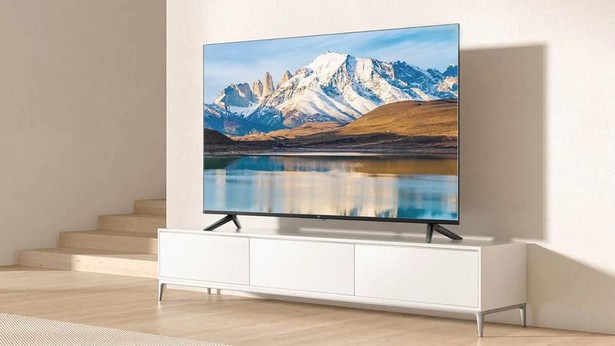
Let’s introduce the ideal smart TV models from our review for different usage scenarios.
Cinema (dark room)
Philips 55OLED820/12 — because OLED technology provides perfect black color and deep contrast, which is critical for a realistic image in the dark. The Ambilight function enhances the immersion effect.
Games on PS5/Xbox Series X consoles
Samsung Neo QLED QN70F — because this model supports all key gaming features: HDMI 2.1, 120/144 Hz, VRR, ALLM. And also – the bright Mini LED screen is perfect for HDR games.
Just a TV (daytime or in a lit room)
LG QNED AI QNED70 — because the QNED panel with Quantum Dot technologyof this TVprovides high peak brightness and color saturation, well blocking daylight and coping with glare much better than OLED.
Together with PlayStation 5 (Movies + Games)
Sony K-55XR50 — because Sony fully integrates with PS5 (Auto HDR Tone Mapping function), which guarantees perfect image settings from the console right out of the box. And the TV has a powerful XR processor for processing digital content.
Budget premium (for everything)
Xiaomi S Pro Mini LED — because Xiaomi offers Mini LED technology (high brightness, good contrast), and all other flagship features, but at a more affordable price. If price is a key factor, there is no better choice.


Don't miss interesting news
Subscribe to our channels and read announcements of high-tech news, tes



Oppo A6 Pro smartphone review: ambitious

 0
0 
Creating new mid-range smartphones is no easy task. Manufacturers have to balance performance, camera capabilities, displays, and the overall cost impact of each component. How the new Oppo A6 Pro balances these factors is discussed in our review.
Acer Nitro Lite 16 (NL16-71G) laptop review: versatile and attractive
0 
The 2025 Acer Nitro Lite 16 features an interesting case design, gaming accents, and proven components. Let’s take a closer look at its features.
MWC 2026: Lenovo ThinkBook Modular AI PC Concept unveiled – detachable display, Bluetooth keyboard, USB-A, USB-C and HDMI ports Bluetooth laptop Lenovo MWC

Lenovo introduces new ThinkBook Modular AI PC Concept, combining a detachable second display and interchangeable ports
Apple MacBook Neo with iPhone 16 Pro processor costs $599 Apple iPhone laptop processor

Apple introduced the affordable MacBook Neo laptop. It received the A18 Pro mobile processor, which was previously used in the iPhone 16 Pro and iPhone 16 Pro Max.