

A Google Gemini query requires as much energy as a second of microwave operation
29.08.25
Google has revealed for the first time precise data on the energy consumption of its AI service Gemini. According to MIT Technology Review, one text query requires an average of 0.24 Wh of electricity, which is equivalent to one second of microwave operation. In addition, it results in 0.03 g of CO₂ emissions and consumes 0.26 ml of water, about five drops.
Google notes that this is the first detailed report in the industry. The data covers not only the operation of TPUs, but also the infrastructure of data centers: 25% of the energy goes to the CPU and memory of servers, 10% to backup systems, 8% to cooling. Over the year, Gemini’s efficiency has increased 33 times due to optimization of models and software.
However, Google has so far provided information only for text queries. More complex scenarios, such as book analysis or multimedia tasks, require much more resources. The company also calculates emissions based on its own clean energy purchase agreements, which means the average is three times lower than the average for a conventional power grid.
Experts call this report the most comprehensive study in the field of AI, but note that without data on the total number of requests, it is not yet possible to assess Gemini’s real environmental impact.
Don't miss interesting news
Subscribe to our channels and read announcements of high-tech news, tes

Oppo A6 Pro smartphone review: ambitious

 0
0 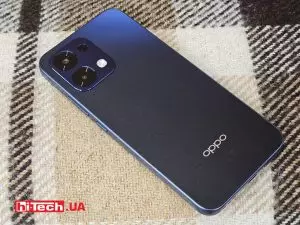
Creating new mid-range smartphones is no easy task. Manufacturers have to balance performance, camera capabilities, displays, and the overall cost impact of each component. How the new Oppo A6 Pro balances these factors is discussed in our review.
In-Ear headphones Active Noise Cancellation: how Oppo eliminate noise
0 
In-ear headphones remain one of the most popular form factors due to their lightweight design. However, this design is considered one of the most challenging to implement active noise cancellation (ANC). We’ll explain how Oppo solved this problem.
Ninkear L20: A Compact Intel Lunar Lake Mini PC With Copilot+ Support
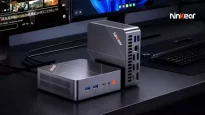
Ninkear L20 is a new mini PC based on the Intel Lunar Lake architecture with 40 TOPS NPU support and official Copilot+ PC compliance.
Samsung Wallet Adds Digital Key Support for Volkswagen EVs
Samsung Wallet is adding support for digital car keys for Volkswagen ID series electric vehicles, allowing Galaxy smartphone users to unlock and start their cars key-free.