

The new Peugeot E-208 GTi debuts at Le Mans: 280 hp, sports chassis and electric traction
10.06.26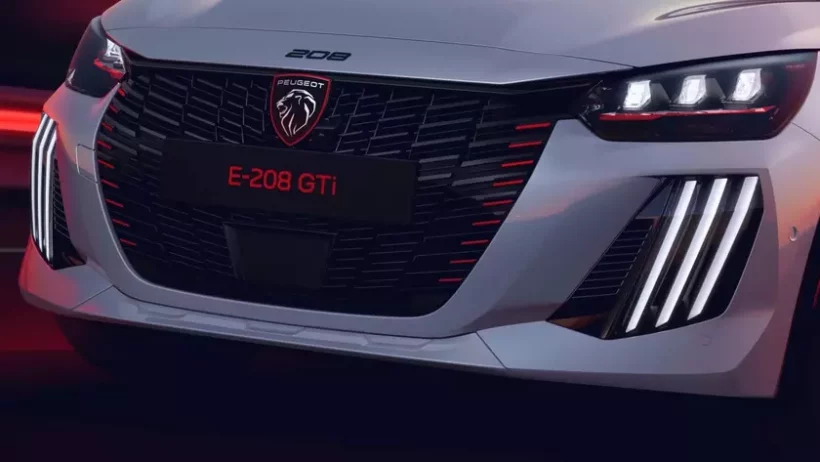
The GTi sports line, which has been associated with Peugeot’s compact and dynamic petrol hatchbacks for many years, is getting a new development. The French automaker is preparing the production version of the Peugeot E-208 GTi – the first fully electric car in GTi history. The public premiere of the model will take place in June 2026 at the legendary 24 Hours of Le Mans race, where the company will also celebrate the centenary of its participation in the famous marathon.
The appearance of the E-208 GTi reflects the general course of the European automotive industry towards electrification. Peugeot aims to preserve the sporty character of the model, which has been one of the key features of cars with the GTi index for decades.
The most powerful Peugeot 208 in the history of the model
The new E-208 GTi is built on the architecture of the Stellantis concern. The car is equipped with a 280-horsepower electric motor mounted on the front axle.
According to this indicator, the novelty surpasses all previous serial versions of the Peugeot 208, including the most productive gasoline modifications. Acceleration to 100 km/h takes 5.7 seconds, and the maximum speed is limited to 180 km/h.
Despite the fact that such characteristics are no longer a record for the electric car market, for a compact city hatchback they allow to claim the status of one of the fastest representatives of its class.
Chassis adapted for increased power
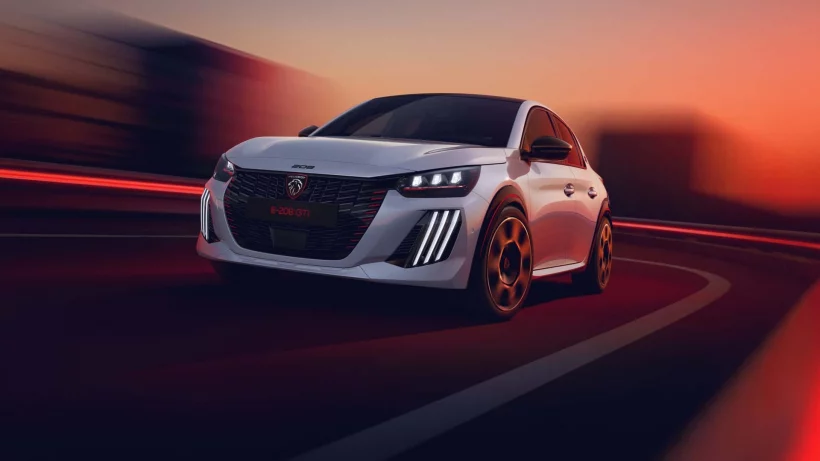
The developers paid special attention not only to acceleration dynamics, but also to the behavior of the car on the road. For the GTi version, the chassis was significantly modernized.
The front track was widened by 56 millimeters, and the rear – by 27 millimeters. At the same time, engineers reduced the ground clearance by 30 millimeters, which made it possible to lower the center of gravity and improve the stability of the car in turns.
For more efficient transmission of power to the front wheels, the car received a self-locking differential. The braking system has also been modernized: discs with a diameter of 335 millimeters are installed in front in combination with four-piston calipers. Additional changes affected the steering control, the setting of which was adjusted for a more accurate response to the driver’s actions.
Power reserve and technical platform
The source of energy for the new E-208 GTi is a battery with a capacity of 54 kWh. According to the preliminary data of the manufacturer, one charge should be enough for about 350 kilometers of track.
At the same time, the real autonomy will depend on road conditions, ambient temperature and driving style. For the sports version, oriented to active operation, the actual mileage may differ significantly from the declared indicators.
The vehicle platform is common to several models of the Stellantis concern. In particular, similar technical solutions are already used in Alfa Romeo Junior Veloce and Lancia Ypsilon HF, which are also positioned as more dynamic versions of mass electric cars.
Differences from standard E-208
Externally, the sports version received a number of improvements that set it apart from the usual E-208 modifications. The front part of the car got a revised design with closed radiator grilles and contrasting red decorative elements.
New alloy wheels were also installed, the design of the rear part of the body was changed, an enlarged spoiler and a diffuser appeared. All these elements are aimed at not only changing the appearance, but also forming a more sporty image of the model.
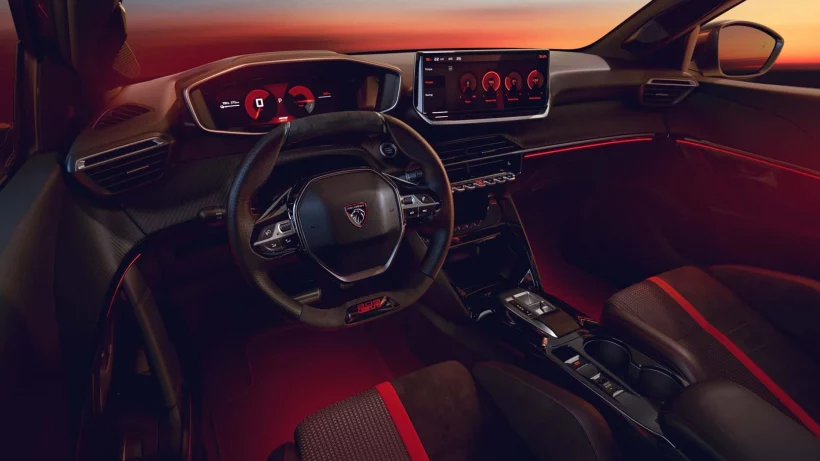
In the interior, seats with enhanced lateral support, a sports steering wheel and special design options for the digital instrument panel are used. The interior is designed in a style characteristic of GTi cars of previous generations, but adapted to modern digital solutions.
Peugeot bets on a new interpretation of the GTi
The launch of the E-208 GTi can be seen as an attempt by Peugeot to preserve one of the most famous marks in its history in the context of the transition of the automotive industry to electric traction. If earlier GTi models were associated with compact gasoline engines and manual gearboxes, now their place is occupied by electric motors, batteries and electronic control systems.
The official presentation of the car will take place on June 12, 2026. After that, the details of the complete set, prices and the timing of the model’s appearance on the main markets will become known. For Peugeot, the new E-208 GTi will be not only another electric car in the brand’s lineup, but also a kind of test of how well the concept of a classic European hot hatch can adapt to the new technological reality.
Don't miss interesting news
Subscribe to our channels and read announcements of high-tech news, tes

Oppo A6 Pro smartphone review: ambitious

 0
0 
Creating new mid-range smartphones is no easy task. Manufacturers have to balance performance, camera capabilities, displays, and the overall cost impact of each component. How the new Oppo A6 Pro balances these factors is discussed in our review.
In-Ear headphones Active Noise Cancellation: how Oppo eliminate noise
0 
In-ear headphones remain one of the most popular form factors due to their lightweight design. However, this design is considered one of the most challenging to implement active noise cancellation (ANC). We’ll explain how Oppo solved this problem.
Ninkear L20: A Compact Intel Lunar Lake Mini PC With Copilot+ Support

Ninkear L20 is a new mini PC based on the Intel Lunar Lake architecture with 40 TOPS NPU support and official Copilot+ PC compliance.
Samsung Wallet Adds Digital Key Support for Volkswagen EVs
Samsung Wallet is adding support for digital car keys for Volkswagen ID series electric vehicles, allowing Galaxy smartphone users to unlock and start their cars key-free.