

Volkswagen and Rivian have entered into a $5 billion partnership to develop software-defined vehicles
28.06.24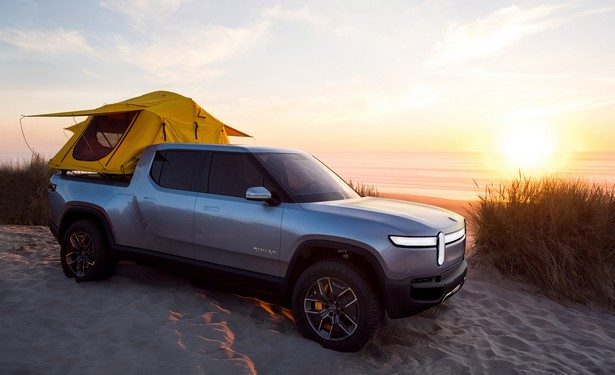
Volkswagen and Rivian have entered into a $5 billion partnership to develop software-defined vehicles. The collaboration will focus on Rivian’s zonal architecture, which significantly reduces the complexity of wiring and electronics in electric vehicles. This partnership will allow the companies to use their joint capabilities to produce new cars, while each company will continue to produce its own models.
The amount of cooperation is divided into several components. Volkswagen is investing $1 billion in Rivian, with further investments of the same amount in 2025 and 2026. Volkswagen also plans to invest $2 billion in the joint venture, partly at launch and partly in the form of a loan in 2026.
This work will allow Volkswagen to adapt Rivian’s signature zonal architecture for future vehicles. Rivian, which has faced financial difficulties, including abandoning plans for a Georgia plant and cutting 10% of its workforce, could be stabilized with this major deal with the leading automaker.
Don't miss interesting news
Subscribe to our channels and read announcements of high-tech news, tes

Oppo A6 Pro smartphone review: ambitious

 0
0 
Creating new mid-range smartphones is no easy task. Manufacturers have to balance performance, camera capabilities, displays, and the overall cost impact of each component. How the new Oppo A6 Pro balances these factors is discussed in our review.
Acer Nitro Lite 16 (NL16-71G) laptop review: versatile and attractive
0 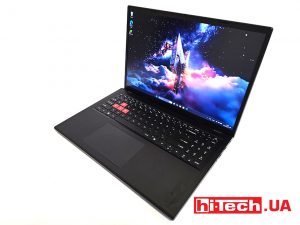
The 2025 Acer Nitro Lite 16 features an interesting case design, gaming accents, and proven components. Let’s take a closer look at its features.
Meta will buy AMD AI processors for $100 billion AMD artificial intelligence Facebook server

As part of the agreements, Mark Zuckerberg’s company plans to purchase AMD MI450 artificial intelligence accelerators for its data centers over five years.
LG UltraGear evo (52G930B-B) – 52-inch gaming monitor for $2,000 games LG monitor
The color gamut of the LG UltraGear evo (52G930B-B) monitor is stated at 95% DCI-P3—sufficient for both gaming and basic color work.