

Micron releases 3GB GDDR7 memory chips
27.02.26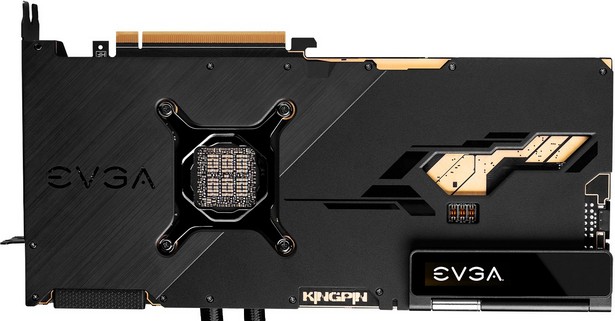
While gamers are counting their upgrade budgets, Micron Technology has officially announced the launch of new chips. This is 50% more than the usual 2-gigabyte modules – and it’s not just a cosmetic update to the specifications.
The increased density directly hits one of the key limitations of modern GPUs – the amount of video memory at a fixed bus width. If earlier on a 384-bit bus the standard configuration was 24 GB, then with the transition to 3-GB modules the theoretical bar rises to 36 GB without changing the bus architecture.
In the professional segment, the stakes are even higher. Micron predicts the possibility of creating accelerators with a total amount of video memory of up to 96 GB. For the AI market and work with large language models, this is not just a “stock for the future”, but a practical necessity: the size of models is growing faster than data centers can be updated.
Up to 36 Gbit/s and a bet on PAM3
The new modules are betting not only on volume, but also on speed. Micron claims data transfer of up to 36 Gbit/s. For comparison: the first waves of GDDR7 in current flagship video cards operate in the range of 28–32 Gbit/s.
This increase was made possible by the use of PAM3 pulse amplitude modulation – a key feature of the GDDR7 standard approved by JEDEC. The technology allows you to transfer more data per clock without increasing power consumption. Although in the segment of top-end video cards, talks about energy efficiency are traditionally accompanied by an ironic smile.
There is an important nuance: despite the loud announcement, the official Micron catalog at the time of the announcement still includes 2-GB solutions. This means that the mass appearance of video cards with new 3-GB chips is a matter of time, not the next few weeks.
GPU manufacturers now have to adapt the design of printed circuit boards and cooling systems to the increased memory capabilities. And if today such models as the MSI GeForce RTX 5090 Lightning Z are already perceived as an extreme segment in terms of price and performance, then the next generation of accelerators may well use Micron’s 3-GB modules to reach new levels of volume and bandwidth.
Don't miss interesting news
Subscribe to our channels and read announcements of high-tech news, tes

Oppo A6 Pro smartphone review: ambitious

 0
0 
Creating new mid-range smartphones is no easy task. Manufacturers have to balance performance, camera capabilities, displays, and the overall cost impact of each component. How the new Oppo A6 Pro balances these factors is discussed in our review.
Oppo Reno16 Pro 5G smartphone review: well-heeled
0 
Oppo Reno16 Pro 5G looks like a balanced smartphone, in which the manufacturer tried not to make a single characteristic the defining one. It has many advantages. Let’s tell you what
Danger in the Driver’s Seat: Waymo and Zoox Robotaxis Surface with Brake-Related Injuries

Dozens of robotaxi test drivers have been injured due to flaws in autonomous driving systems. The primary culprit is erratic emergency braking, which has led to significant neck and back injuries.
Samsung Galaxy Book6: An Affordable Laptop With 25-Hour Battery Life

Samsung has introduced a new affordable version of the Galaxy Book6. The device features Intel Core 3 or Core 5 processors, up to 16GB of RAM, up to 1TB of storage, and a rated battery life of up to 25 hours.