

US-China quantum response: Europe expands MareNostrum 5 project
03.06.26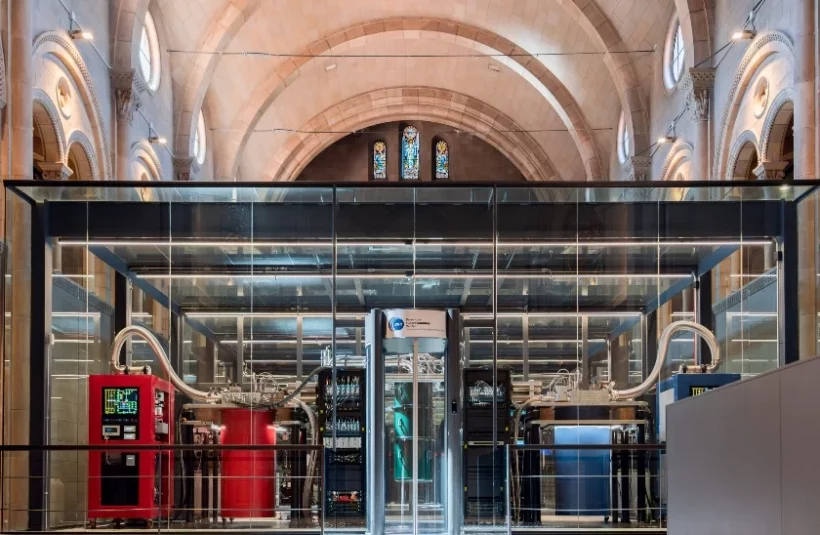
Europe is taking a confident step towards the next technological establishment by building advanced computing infrastructure across the continent. The Barcelona Supercomputing Center (BSC-CNS) officially presented its new quantum computer MareNostrum 5. This high-performance system became the center’s third quantum node, strengthening Spain’s position in the global technological race. The main goal of the project is to provide researchers with a reliable and independent computing base, leaving the prolonged dependence on the USA and the PRC.
Supercomputer MareNostrum 5
MareNostrum in Barcelona is one of the most powerful and technologically advanced supercomputer centers in Europe. The launch of the new third quantum machine, integrated directly into MareNostrum 5, brings the system to the peak of its efficiency. The demand for a scientific platform is enormous. Thus, since February 2025, the previous MareNostrum Ona digital module has already worked for more than 4,200 hours, completing tasks for 53 independent research projects. The launch of the new node will provide European researchers with flexible algorithms for the most complex data analysis.
Characteristics and technical features of the analog quantum system
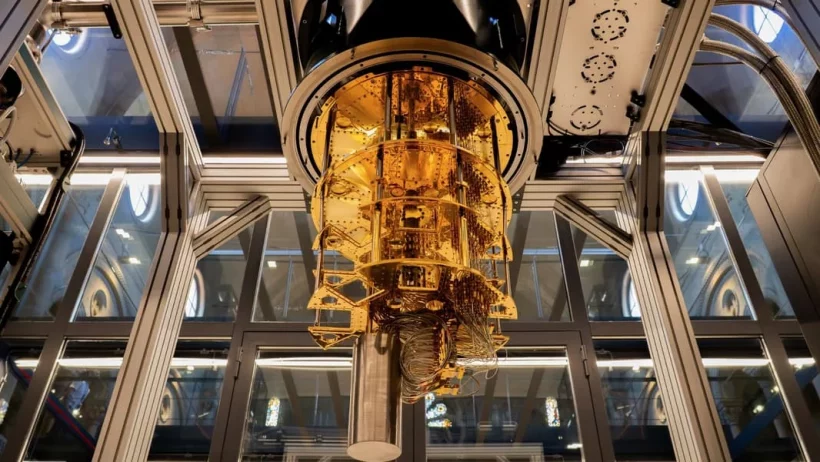
An American corporation from Silicon Valley was not responsible for the creation of an innovative computer, but the Spanish technology company Qilimanjaro Quantum Tech. Funding for the design and construction of the system is shared between the European Union and the Spanish State Secretariat for Digitalization. This is the most important strategic nuance that demonstrates the capabilities of the EU’s internal engineering. The architectural basis of this computer is the analog nature of physical processes, which distinguishes it from the traditional semiconductor solutions common in the industry.
Project cost
The process of deploying such capacities on a state scale requires colossal budgets. The total investment cost of the analog quantum system in Barcelona is UAH 460 million (USD 10.6 million). The specified budget is formed by the joint resources of the European EuroHPC program and the Ministry of Digitalization of Spain. Every hryvnia invested goes towards the creation of our own scientific facilities, eliminating the need to buy American cloud subscriptions or Chinese boards.
Analog quantum computer vs digital analogs
Unlike classic personal PCs and two other digital systems of the center, the new supercomputer is arranged according to the analog principle. Modern research reveals important technological differences in their work:
- Digital quantum systems: They try to imitate the standard operation of computers based on the classical gate logic of qubits. The process is associated with the formation of a colossal level of computational “noise”, thermal distortions and is complicated by a complex procedure of compensation and error correction.
- Analog quantum systems: Project the original mathematical formula directly onto the physical state of the internal structure of the machine. They cope much more efficiently with specific complex calculations (such as the analysis of molecules or simulation of solid-state physics processes) and bypass the rigid technological framework of digital correction of quantum noises.
Holy supercomputer
The technical capacities of the supercomputer network were located in an extremely unexpected situation. All server cabinets, controllers and peripheral equipment of MareNostrum are located under the stone domes of the historical landmark – the deconstructed chapel of Torre Girona. The historic temple space today provides electrical power and ideal climatic storage for five different generations of European systems of the MareNostrum family, embodying a fascinating contrast between the past and the future.
Why does Europe need its quantum computer and what is the point of sovereignty?
Spain’s initiative has direct geopolitical goals. Nuria Montserrat (Nuria Montserrat), Minister of Education, Research and Universities in Catalonia, frankly says that the possession of a supercomputer is a guarantee of political autonomy of the EU. Local development of advanced scientific hardware reduces the total technological dominance of US multinational companies, keeping inside the union an advanced software stack and the security of the most important mathematical calculations.
Don't miss interesting news
Subscribe to our channels and read announcements of high-tech news, tes

Oppo A6 Pro smartphone review: ambitious

 0
0 
Creating new mid-range smartphones is no easy task. Manufacturers have to balance performance, camera capabilities, displays, and the overall cost impact of each component. How the new Oppo A6 Pro balances these factors is discussed in our review.
In-Ear headphones Active Noise Cancellation: how Oppo eliminate noise
0 
In-ear headphones remain one of the most popular form factors due to their lightweight design. However, this design is considered one of the most challenging to implement active noise cancellation (ANC). We’ll explain how Oppo solved this problem.
The new Radeon RX 9050 4GB is only for pre-built PCs.

AMD has unveiled the Radeon RX 9050 with 4GB of VRAM, a 64-bit bus, and 16MB of Infinity Cache.
Honor Turbo 5G Hands-On: Affordable Phone With Massive Battery and IP69 Rating

Honor has officially released the Honor Turbo 5G smartphone. The new device packs a large AMOLED screen, an 8,560 mAh battery, a Snapdragon 6 Gen 4 chipset, and IP69 protection.