

Samsung will supply Apple with cameras and displays, instead of Sony and BOE
12.08.25
Samsung seems to be able to become even more independent in the sources of income from its production. Is it a joke, Samsung will become Apple’s main supplier in two areas at once.
Samsung cameras instead of Sony
Apple and Samsung have officially confirmed cooperation in the field of production of detectors for cameras of future iPhones. According to The Financial Times, these are three-layer matrices (3-layer stacked CIS), capable of capturing more light, transmitting data faster, reducing power consumption and improving image quality, especially at night. Apple notes that such receptors have not previously been produced on an industrial scale.
Production is planned to be established at Samsung’s factory in Austin, Texas. This will allow Apple to shorten logistics chains and minimize risks associated with potential import duties, since the main supplier of sensors for the iPhone is Japanese Sony. For Samsung, the new contract means strengthening its position in the American market and expanding cooperation with major players – in particular, the company already has a large-scale agreement with Tesla.
The day after the partnership was announced, Samsung Semiconductor introduced the ISOCELL JNP sensor with Nanoprism technology. Instead of traditional mini-lenses, it uses a nanostructured prism surface that scatters light and more efficiently directs it to color pixels. According to the manufacturer, this provides up to 25% increase in light sensitivity in low light conditions without increasing the size of the camera.
Although Nanoprism technology is not three-layer, the coincidence of the announcements has led to speculation that the new sensor could become the basis for future iPhones. Apple’s first smartphones with such cameras are expected to be released in 2026, likely in the iPhone 18 series. The initiative fits into Apple’s strategy to localize production in the US, as part of which the company plans to invest $ 600 billion in the American economy over the next four years.
Samsung displays instead of BOE
According to industry sources, Apple has chosen Samsung Display as the sole supplier of OLED panels for the next generation of MacBook Pro, which is scheduled for release in 2026.
Samsung has invested in Gen 8.6 production lines that work with large glass substrates and TFT oxide films – technologies used specifically for laptop screens and monitors. Such investments allow for a stable supply of large OLED matrices with high quality.
According to insiders, Apple plans to abandon the traditional protrusion at the top of the MacBook Pro display and switch to a notch similar to the implementation in the iPhone.
The main supplier of displays for the MacBook remains the Chinese BOE, which provides more than half of the panels for all models except OLED versions. This is explained by the popularity of the MacBook Air with LCD screens. With the release of the OLED modification of the MacBook Pro, Samsung Display is expected to gain a leading position in this segment.
Don't miss interesting news
Subscribe to our channels and read announcements of high-tech news, tes

Oppo A6 Pro smartphone review: ambitious

 0
0 
Creating new mid-range smartphones is no easy task. Manufacturers have to balance performance, camera capabilities, displays, and the overall cost impact of each component. How the new Oppo A6 Pro balances these factors is discussed in our review.
In-Ear headphones Active Noise Cancellation: how Oppo eliminate noise
0 
In-ear headphones remain one of the most popular form factors due to their lightweight design. However, this design is considered one of the most challenging to implement active noise cancellation (ANC). We’ll explain how Oppo solved this problem.
iQOO 16 Specs Surface: 165Hz Display and Snapdragon Elite Power

The iQOO 16 is shaping up to be a powerhouse flagship with a 165Hz screen and the latest 2nm Snapdragon 8 Elite Gen 6 Pro chip. Get all the details before the official launch.
DongSu: China Deploys World’s Largest LFP Energy Storage System
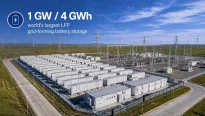
DongSu, the world’s largest single-site LFP battery energy storage facility, has officially begun operations in Inner Mongolia.