

Apple is changing its approach: iOS 27 will be an update about stability and autonomy
09.06.26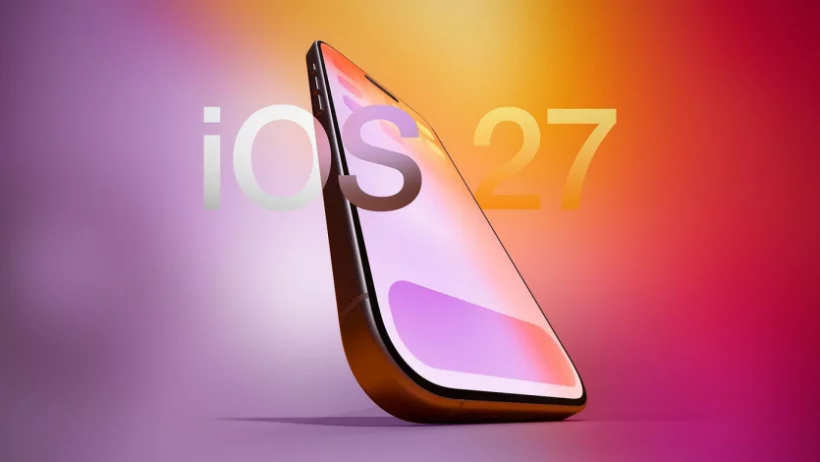
A few days before the opening of the WWDC 2026 conference, new details of the future version of Apple’s mobile operating system appeared. One of the main directions of iOS 27 development will be to improve the energy efficiency of devices. The company intends to increase the battery life of the iPhone by comprehensively optimizing system processes and improving the interaction of software with the hardware part of smartphones.
At first glance, such changes may seem less noticeable compared to high-profile AI-based features or a large-scale interface redesign. However, it is the optimization of performance and the reduction of power consumption that can have a much greater impact on the user experience in the long term.
Apple bets on efficiency instead of feature race
In recent years, major updates to mobile operating systems have increasingly been associated with new AI capabilities, additional services, and expanded functionality. However, increasing the number of functions inevitably increases the load on the system and can negatively affect the performance of devices.
All things considered, in the case of iOS 27, Apple decided to change its approach and focus on fundamental improvements to the platform. The main task of the developers is to make the system lighter, more responsive and more economical without the need to increase the battery capacity or install more powerful components.
This approach is especially important for owners of existing iPhone models, who will be able to get an increase in autonomy solely due to software improvements.
Why iOS 27 is already being compared to the legendary Snow Leopard
Inside the industry, the new update is increasingly being called a kind of “Snow Leopard moment” for Apple’s mobile platform.
A similar comparison refers to the release of the Mac OS X Snow Leopard operating system, which became one of the most successful in the company’s history. Unlike most updates at the time, Snow Leopard offered virtually no new features to users. Instead, Apple directed major resources to improve stability, fix bugs, and optimize system performance.
The result was a noticeably faster, more reliable and predictable platform that is still considered a model of competent software updating.
A similar philosophy appears to underlie iOS 27.
Autonomy becomes a key factor for users
Despite the rapid development of mobile technologies, the operating time of a smartphone without charging remains one of the main characteristics for most users.
Even the most productive devices lose their appeal if they require a constant connection to a charger. That is why manufacturers are increasingly looking for ways to increase autonomy not only through batteries, but also through intelligent management of system resources.
Optimization of background processes, more efficient distribution of computing load and reduction of energy consumption of individual components can give a tangible result without any changes in the design of the smartphone.
This effect can be especially noticeable for users of older iPhone models who actively use the devices several years after purchase.
The contrast with Google’s approach is becoming increasingly apparent
Apple’s upcoming update comes amid heightened competition in the AI industry.
Earlier, Google introduced the new version of Android 17, with a main focus on the development of the Gemini Intelligence ecosystem and the expansion of AI functions in all smartphone usage scenarios.
Apple chose a more conservative path. Instead of rapidly expanding new capabilities, the company is betting on improving the quality of the system itself. This approach may prove to be particularly popular among users who value stability, predictability and long service life of devices no less than innovative functions.
Don't miss interesting news
Subscribe to our channels and read announcements of high-tech news, tes

Oppo A6 Pro smartphone review: ambitious

 0
0 
Creating new mid-range smartphones is no easy task. Manufacturers have to balance performance, camera capabilities, displays, and the overall cost impact of each component. How the new Oppo A6 Pro balances these factors is discussed in our review.
In-Ear headphones Active Noise Cancellation: how Oppo eliminate noise
0 
In-ear headphones remain one of the most popular form factors due to their lightweight design. However, this design is considered one of the most challenging to implement active noise cancellation (ANC). We’ll explain how Oppo solved this problem.
Windows 11 Update Breaks Games: The RGB Fix

The latest cumulative Windows 11 update has caused issues with game performance and stability. Microsoft confirmed the conflict is triggered by RGB peripheral software.
Asus Challenges MacBook Pro With Powerful ProArt Creation 16

Asus has introduced a new version of its ProArt Creation 16 laptop for professionals. The device is equipped with an AMD Ryzen AI 9 processor, 64GB of RAM, and a high-quality 120Hz OLED screen.