

Qualcomm’s new Snapdragon G processors are designed for portable gaming consoles
21.03.25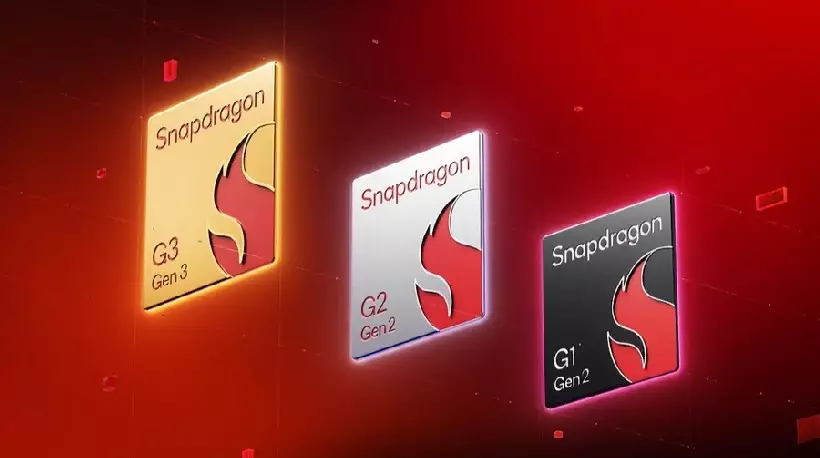
Qualcomm has unveiled its new Snapdragon G series of chips for portable gaming devices at the Game Developers Conference. It includes three platforms: Snapdragon G3 Gen 3, Snapdragon G2 Gen 2 and Snapdragon G1 Gen 2, each of which is aimed at different levels of gaming performance.
The Snapdragon G3 Gen 3 is the flagship platform in the series, supporting Lumen, Unreal Engine 5’s dynamic lighting and rendering engine on Android devices. It offers a 30% increase in CPU performance and a 28% improvement in graphics capabilities, and supports Wi-Fi 7, which reduces latency and increases wireless bandwidth.
The Snapdragon G2 Gen 2 is aimed at local and cloud projects with a frequency of 144 frames per second, increasing performance by 2.3 times and graphics capabilities by 3.8 times compared to the previous generation. It also supports Wi-Fi 7.
Snapdragon G1 Gen 2 delivers cloud gaming performance, supporting resolutions up to 1080p at 120 frames per second over Wi-Fi. This platform features an 80% increase in CPU performance and a 25% increase in GPU performance for cloud gaming.
AYANEO, ONEXSUGAR, and Retroid Pocket are among the first to launch devices based on the new Snapdragon G series, with availability expected in Q1 2025.
Don't miss interesting news
Subscribe to our channels and read announcements of high-tech news, tes

Oppo A6 Pro smartphone review: ambitious

 0
0 
Creating new mid-range smartphones is no easy task. Manufacturers have to balance performance, camera capabilities, displays, and the overall cost impact of each component. How the new Oppo A6 Pro balances these factors is discussed in our review.
Acer Nitro Lite 16 (NL16-71G) laptop review: versatile and attractive
0 
The 2025 Acer Nitro Lite 16 features an interesting case design, gaming accents, and proven components. Let’s take a closer look at its features.
Smartphone market in 2025: Honor in the top five for the first time smartphone statistics

By the end of 2025, smartphone shipments in Europe will decline by 1% to 134.2 million units, according to analytics firm Omdia.
Meta will buy AMD AI processors for $100 billion AMD artificial intelligence Facebook server

As part of the agreements, Mark Zuckerberg’s company plans to purchase AMD MI450 artificial intelligence accelerators for its data centers over five years.