

Korea give robots to lonely old people
06.09.25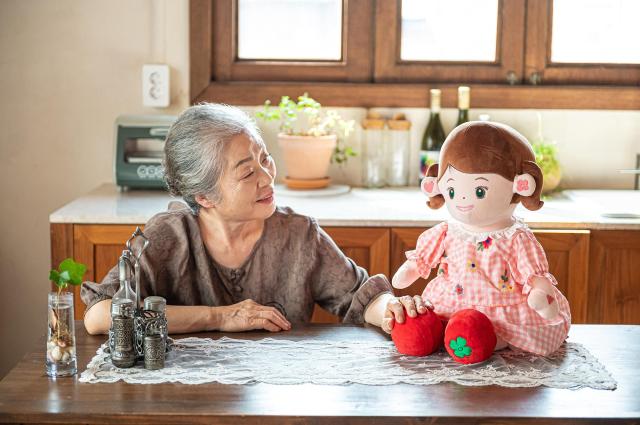
In South Korea, thousands of lonely elderly people have received a new companion — a doll with artificial intelligence called Hyodol. The device can talk, remind people to take medications, monitor their health, and call for help in emergency situations. In a video shown by local media, 81-year-old Kim sits on a bed next to the robot and says, “Hyodol, I love you,” and the doll’s soft voice replies, “Grandma, I love you too.”
The Hyodol robot speaks in a friendly voice and supports emotional dialogues. It reminds people to take food and medications, records alarm signals, such as lack of movement for 24 hours, and in this case automatically transmits a signal to social services. In addition, the device records answers to questions about how you feel every day to track your owner’s emotional state.
The country’s authorities have already distributed more than 12 thousand such devices to lonely elderly people. The cost of one doll is approximately 160 million Korean won, which is equivalent to about 120 thousand US dollars, and at the same time significantly cheaper than the annual salary of a caregiver. In 2023, South Korea recorded a shortage of 190 thousand caregivers, by 2032 this figure could reach 1.55 million.
The situation is complicated by the demographic crisis: the birth rate in the country remains one of the lowest in the world – only 0.72 children per woman with a coefficient of 2.1 required to maintain the population. Already now, the population is decreasing by more than 200 thousand people annually, and in the future, the number of elderly people will significantly exceed the number of young people.
Similar projects exist in other countries. In Japan, a therapeutic robot seal Paro is used, in the USA, elderly people communicate with the ElliQ lamp, and in Singapore, a robot Dexie is working, which can play, sing and engage with people. The idea of an artificial companion goes back to the past: for example, the Japanese toy Tamagotchi was once also an answer to the problem of loneliness, and its loss caused strong emotional experiences in its owners.
The use of such technologies also raises ethical issues. Some elderly people become so attached to robots that they express a desire to be buried with them. There are known cases when Hyodol recorded suicidal thoughts and transmitted information to specialists. At the same time, cybersecurity experts warn about the risks of data leakage, because the device records personal conversations and transmits them to remote servers.
The name Hyodol is associated with the concept of “孝道”, which reflects the traditional Korean value of respect and care for elders. Thus, the project combines modern technologies and cultural heritage, turning the robot not just into a gadget, but into an element of social support.
Don't miss interesting news
Subscribe to our channels and read announcements of high-tech news, tes

Oppo A6 Pro smartphone review: ambitious

 0
0 
Creating new mid-range smartphones is no easy task. Manufacturers have to balance performance, camera capabilities, displays, and the overall cost impact of each component. How the new Oppo A6 Pro balances these factors is discussed in our review.
Acer Nitro Lite 16 (NL16-71G) laptop review: versatile and attractive
0 
The 2025 Acer Nitro Lite 16 features an interesting case design, gaming accents, and proven components. Let’s take a closer look at its features.
Keychron K2 HE – 75% concrete keyboard keyboard

Keychron has released a limited edition of the K2 HE mechanical keyboard in 75% format
New Amazfit Active 3 Premium watch has a more premium design and more monitoring functions Amazfit smart watches

Amazfit Active 3 Premium watch is aimed at runners and users who combine cardio with strength training.