

Hyundai has developed a built-in fire extinguishing system for electric vehicle batteries
21.04.25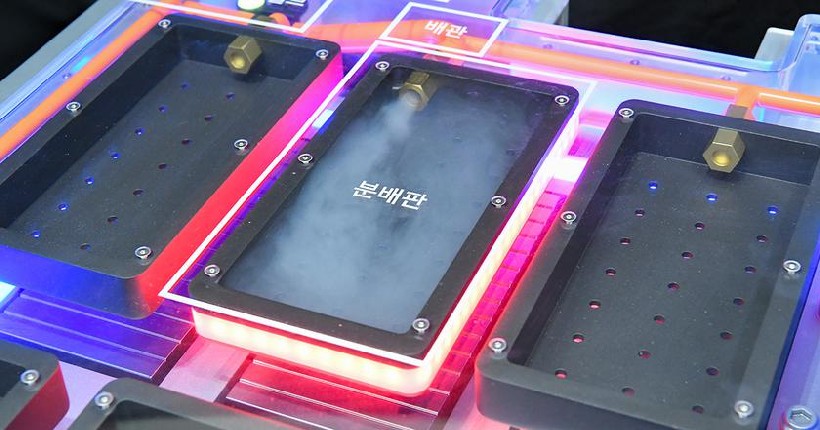
Hyundai Mobis has introduced a development in the field of electric vehicle safety – a battery system capable of localizing a fire at the level of an individual cell. The company’s engineers emphasize that this is the first technology that not only slows down thermal acceleration, but also prevents its spread to neighboring elements.
When an individual cell overheats or catches fire, the system automatically sprays fire extinguishing agent directly into the risk zone. The mechanism is built on three components: the hardware part, which includes the fire extinguishing device itself and the substance supply tubes inside the battery pack, the control modules (BMS), as well as software that monitors temperature, electrical and mechanical parameters in real time, identifies the cell and activates protection.
One battery pack is provided with a volume of substance that is comparable to five standard household fire extinguishers weighing 3.3 kilograms each. According to Hyundai Mobis, the composition is characterized by a high ability to penetrate the cell structure, effectively dissipate heat and insulate the hearth. In addition, it does not pose a threat to human health and does not harm the environment.
The company clarified that three patent applications have already been filed, covering the structural elements of the battery module and the pressure supply system. The development is planned to be introduced in both domestic and foreign markets.
Hyundai Mobis Vice President of R&D for Battery Systems Park Yong-jun said that with the growth of battery capacity and the increase in the range of electric vehicles, the requirements for safety systems are becoming increasingly stringent. According to him, the company intends to further strengthen the integration of hardware and digital solutions in this area in order to meet international standards.
It also became known that Hyundai Mobis is in the final stages of developing a material based on aluminum and a refrigerant designed for effective heat dissipation. This is the so-called “pulsating heat pipe”, which is planned to be placed between battery cells to stabilize temperatures, especially during intensive charging.
Don't miss interesting news
Subscribe to our channels and read announcements of high-tech news, tes

Oppo A6 Pro smartphone review: ambitious

 0
0 
Creating new mid-range smartphones is no easy task. Manufacturers have to balance performance, camera capabilities, displays, and the overall cost impact of each component. How the new Oppo A6 Pro balances these factors is discussed in our review.
Acer Nitro Lite 16 (NL16-71G) laptop review: versatile and attractive
0 
The 2025 Acer Nitro Lite 16 features an interesting case design, gaming accents, and proven components. Let’s take a closer look at its features.
Meta will buy AMD AI processors for $100 billion AMD artificial intelligence Facebook server

As part of the agreements, Mark Zuckerberg’s company plans to purchase AMD MI450 artificial intelligence accelerators for its data centers over five years.
LG UltraGear evo (52G930B-B) – 52-inch gaming monitor for $2,000 games LG monitor

The color gamut of the LG UltraGear evo (52G930B-B) monitor is stated at 95% DCI-P3—sufficient for both gaming and basic color work.