

Huawei develops AI chips for China instead of Nvidia
30.04.25
Huawei is working on testing its new and most powerful AI processor to date, the Ascend 910D, The Wall Street Journal reports.
The company has already approached several Chinese tech firms with a proposal to test the new chip, checking its technical capabilities.
In parallel, Reuters reports that Huawei is preparing to begin mass deliveries of another of its advanced AI chips – the 910C – to Chinese customers as early as next month.
Model training requires processing large amounts of data and high computing power, so Nvidia’s advantage in this area was key.
News about Huawei’s new products indicates China’s intensification in the fight for technological independence in the field of artificial intelligence and reducing dependence on American chips.
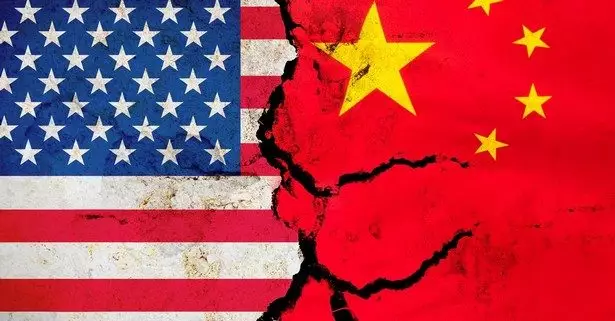
The trade war between the US and China is gaining new momentum. After Donald Trump imposed tariffs on countries all over the world, causing instability in financial markets, the situation stabilized for a while thanks to a 90-day pause. However, China quickly responded with mirror measures, which provoked another round of US restrictions. Today, US tariffs on Chinese goods can reach 145%, while Chinese tariffs in response have increased to 125%. In these conditions, the question remains: how will technology companies with global production chains manage to continue operating?
As it turned out, China left a loophole for the supply of technology products. According to the clarification of the China Semiconductor Industry Association (CSIA), the country of origin for all integrated circuits — both packaged and unpackaged — is considered the location of the wafer manufacturing plant. Since a significant part of American companies, such as AMD, Nvidia and Qualcomm, manufacture chips outside the US, for example, at the facilities of Taiwan’s TSMC, they will be able to continue supplying to China without paying new tariffs.
Companies that rely on their own US production are in a more difficult situation. First of all, these are Intel, but also Texas Instruments, Analog Devices (ADI) and ON Semiconductor. Their products may be subject to new tariffs.At the same time, even chips that are packaged in China but manufactured in the US may be subject to additional taxes.
According to representatives of the CSIA, such a policy should stimulate the development of domestic production chains and reduce the dependence of the Chinese technology industry on foreign components.
Don't miss interesting news
Subscribe to our channels and read announcements of high-tech news, tes

Oppo A6 Pro smartphone review: ambitious

 0
0 
Creating new mid-range smartphones is no easy task. Manufacturers have to balance performance, camera capabilities, displays, and the overall cost impact of each component. How the new Oppo A6 Pro balances these factors is discussed in our review.
Protecting your site from fuzzing: They break you while you sleep
0 
Protect your website from fuzzing and auto-scans! Learn how to configure Cloudflare and .htaccess to secure .env files and passwords. Real case study by hi-tech.ua.
Samsung plans to launch AI-controlled robotic factories by 2030 artificial intelligence robot Samsung
In fact, it is about the transition from automated lines to Samsung factories, where software agents manage logistics.
Neurons in a petra dish were forced to play Doom development Doom games
The developers emphasize that CL-1 does not execute game code in the traditional sense. Visual elements from the screen are transformed into patterns of electrical stimulation, which are fed to neurons