

Samsung plans to launch AI-controlled robotic factories by 2030
08.03.26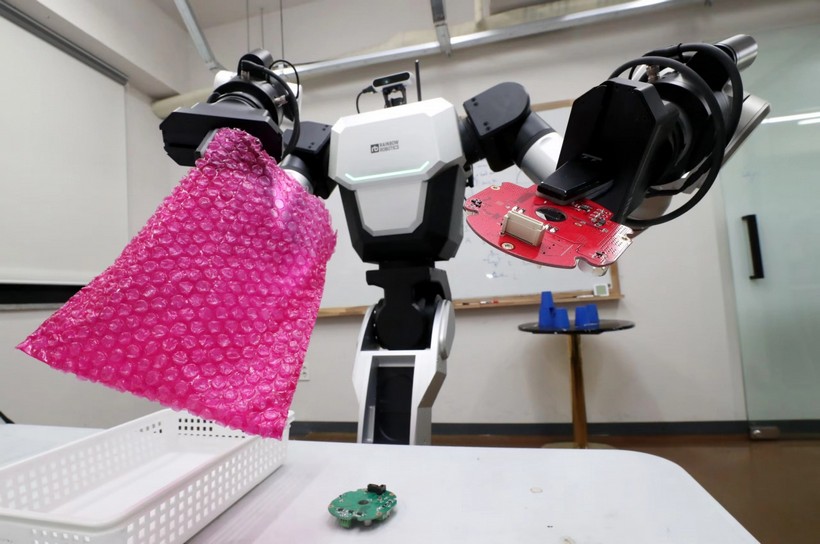
Samsung has announced plans to convert all of its manufacturing sites to an “AI-driven factory” model by 2030. This is not about classic automation, but about implementing systems that can make decisions and coordinate processes on their own.
Agent AI
Samsung specifies that the concept is based on agent-based artificial intelligence. Such systems should not simply perform programmed operations, but plan and implement tasks without constant human control.
For the first time, the company demonstrated elements of this approach in the new Galaxy S26 smartphone line, where agent-based AI is used at the user scenario level. Currently, they plan to scale similar logic to production processes.
In fact, it is about the transition from automated lines to factories, where software agents manage logistics, capacity utilization, maintenance and optimization of production output in real time.
Robots and humanoid systems
In parallel, Samsung intends to increase the number of robots in its enterprises. They are divided into three categories:
- operators of production lines and facilities;
- logistics robots for transporting materials;
- systems for assembling and performing precise production operations.
A separate direction is humanoid robots, designed for more flexible and complex tasks, where human motor skills are still required. The company is increasing investments in Rainbow Robotics, developing its own expertise in robotics.
One system that could potentially appear in factories in the near future is called the RB-Y1, a wheeled humanoid robot with two manipulators. It is aimed at performing a variety of operations in a dynamic environment.
Context and risks
Other manufacturers are also testing humanoid robots and AI automation against the backdrop of rising labor costs and complicated supply chains. However, creating reliable and economically justified solutions remains a challenge.
So far, Samsung has shared mainly strategic plans. How deeply AI and robotics will change real-world manufacturing processes by 2030 will depend on how well these technologies can work in conditions of mass production of electronics.
Don't miss interesting news
Subscribe to our channels and read announcements of high-tech news, tes

Oppo A6 Pro smartphone review: ambitious

 0
0 
Creating new mid-range smartphones is no easy task. Manufacturers have to balance performance, camera capabilities, displays, and the overall cost impact of each component. How the new Oppo A6 Pro balances these factors is discussed in our review.
Oppo Reno16 Pro 5G smartphone review: well-heeled
0 
Oppo Reno16 Pro 5G looks like a balanced smartphone, in which the manufacturer tried not to make a single characteristic the defining one. It has many advantages. Let’s tell you what
Haptic Feedback in Smart Rings: The Future of Wearable Interaction

Integrating a vibration motor into the RingConn Gen 3 changes the significance of the ring as a wearable device. We examine why haptic signals are the next step in smart ring evolution, what the feature can currently do, and the technical challenges involved.
SmartSens SCC85XS: A 200MP Sensor With Low Noise and Hardware RAW
SmartSens introduces the SCC85XS, a flagship 200MP sensor with 0.61µm pixels, advanced noise reduction, and support for hardware-based up to 4x lossless zoom.