

Chinese drones will able to detect submarines
03.05.25
Amid the standoff between Beijing and Washington in the South China Sea, Chinese experts have tested a new submarine detection technology. The development, created within the framework of the China Aerospace Science and Technology Corporation (CASC), may become an important element in the struggle for supremacy in maritime intelligence.
Unlike traditional optical magnetometers, the efficiency of which decreases near the equator, the new system is adapted to low latitudes. It is based on an atomic sensor connected to the drone by a 20-meter cable. This layout allows you to reduce the level of electromagnetic interference. The technology is supplemented by GPS navigation, a flux probe and digital algorithms that form detailed magnetic maps of the seabed.
Tests off the coast of Shandong Province have shown high accuracy. Researchers are confident that the new product is suitable not only for searching for submarines, but also for detecting sunken objects, geological faults and hydrocarbon deposits.
Particular attention is paid to the comparison with the Western MAD-XR system: the Chinese alternative is cheaper, does not require the installation of several probes to eliminate “blind” zones and shows better stability in regions with geomagnetic difficulties. However, its effectiveness in real combat conditions has yet to be proven – unlike MAD-XR, which is already used by the armed forces of the United States, Japan and other countries.

China has approved a new universal wireless protocol called Star Flash, which promises to simplify device management and strengthen the country’s technological independence, The Register reports. The move could have a significant impact on the global technology market.
What is Star Flash?
Star Flash is a wireless standard created by the SparkLink Alliance consortium, which includes major companies such as Huawei. The main features of the protocol are:
- Support for Bluetooth, infrared control and the proprietary Star Flash standard.
- Low power consumption.
- Connect to multiple devices at the same time.
- High-quality lossless stereo sound.
The protocol is positioned as an alternative and improvement to Bluetooth and Wi-Fi.
Applications and prospects
The new standard requires that universal remotes can:
- Work with voice commands.
- Automatically identify devices to connect to, making setup easier.
The first Star Flash-enabled TV has already been introduced by Konka, and the technology is likely to quickly find application in other smart home devices.
Chinese authorities are actively promoting the standard, planning to implement it in millions of devices by 2025. This will provide manufacturers with significant scale for development and investment in the technology.
Strategic significance
The implementation of Star Flash meets several key goals for China:
- Technological self-sufficiency: reducing dependence on foreign standards such as Bluetooth and Wi-Fi.
- Global impact: promoting domestic technologies outside of China.
- Competition: strengthening the position of Huawei and other Chinese companies in the global market.
Universal remote controls with Star Flash support can significantly simplify interaction with household appliances and smart home devices. For the global market, the standard can pose serious competition to Bluetooth and Wi-Fi, especially if Chinese manufacturers begin to actively use it in a wide range of devices.
Star Flash is a step by China to create its own technological standards that can change the balance of power in the wireless technology market. In the case of large-scale national support and large industrial potential, the use of Star Flash can become a significant challenge to established international standards.
Don't miss interesting news
Subscribe to our channels and read announcements of high-tech news, tes

Oppo A6 Pro smartphone review: ambitious

 0
0 
Creating new mid-range smartphones is no easy task. Manufacturers have to balance performance, camera capabilities, displays, and the overall cost impact of each component. How the new Oppo A6 Pro balances these factors is discussed in our review.
Oppo Reno 15 5G smartphone review: confident
0 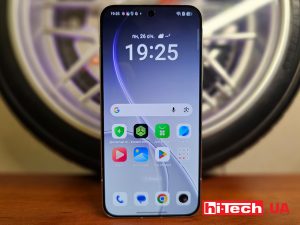
The Oppo Reno15 smartphone emphasizes design, a high-quality display, versatile cameras, and good battery life. Let’s take a closer look.
Vivo V70 and V70 Elite smartphones received 3 cameras, 6500 mAh and 90 W charging, priced from $505 Android smartphone Vivo
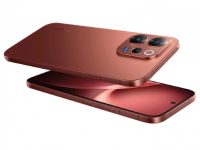
The base model of the Vivo V70 smartphone replaces last year’s V60 and retains the Snapdragon 7 Gen 4 processor – the same chip used in the Motorola Edge 70
New Google Gemini 3.1 Pro give 77% increase in efficiency artificial intelligence Google

Google announced the launch of the Gemini 3.1 Pro, an updated version with enhanced core intelligence designed to tackle complex tasks.