

WhoFi: Wi-Fi learns to recognize people by signal distortion
27.07.25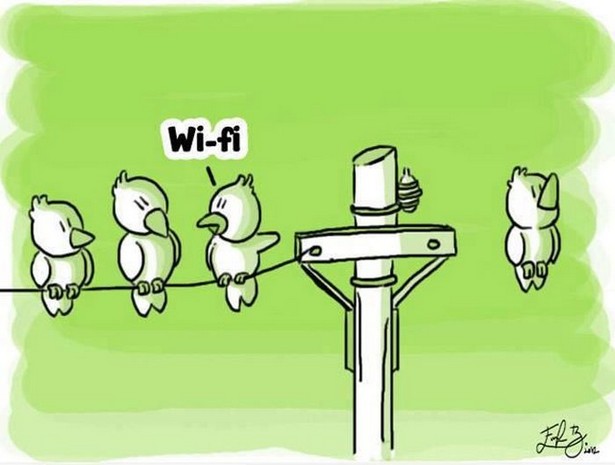
Researchers from the University of Rome La Sapienza have presented the WhoFi system, a technology that can identify people based on how their bodies change Wi-Fi signals.
The system uses the so-called Channel State Information (CSI) — data on the amplitude and phase of the radio signal that can be obtained from regular Wi-Fi equipment. Even if several people are moving at the same time, WhoFi distinguishes them by the unique “handwriting” of their influence on the signal.
Unlike previous solutions, the system does not require preliminary training on specific users and can adapt to new access points. This was made possible by the transformer architecture, which allows the signals received to be generalized.
The technology was tested on the open NTU-Fi dataset, assembled on the campus of the University of Singapore. Volunteers walked past eight Wi-Fi devices. In tests, WhoFi achieved 95.5% accuracy in re-identification, while the earlier EyeFi system showed about 75%.
The authors of the project propose using WhoFi in access control systems without cameras, in offices for presence monitoring, in medical institutions – for contactless monitoring of patients. However, already at this stage, questions arise about potential risks to privacy, especially if the technology is used without the knowledge of users.
The details are described in the scientific article WhoFi: Deep Person Re-Identification via Wi-Fi Channel Signal Encoding, published on arXiv.
Don't miss interesting news
Subscribe to our channels and read announcements of high-tech news, tes

Oppo A6 Pro smartphone review: ambitious

 0
0 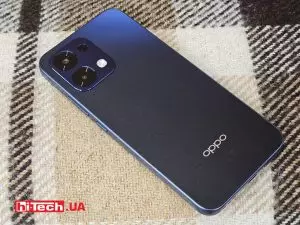
Creating new mid-range smartphones is no easy task. Manufacturers have to balance performance, camera capabilities, displays, and the overall cost impact of each component. How the new Oppo A6 Pro balances these factors is discussed in our review.
Oppo Reno16 Pro 5G smartphone review: well-heeled
0 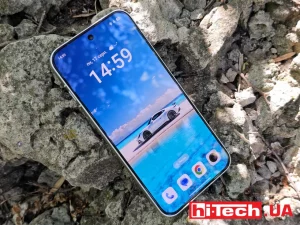
Oppo Reno16 Pro 5G looks like a balanced smartphone, in which the manufacturer tried not to make a single characteristic the defining one. It has many advantages. Let’s tell you what
Honor Play20A: An unusual budget phone with an additional screen
The Honor Play20A arrives with a unique rear secondary display for its budget class and an impressive 6,000 mAh battery.
Triple-powered performance didn’t help: Google Pixel 11 Pro Fold failed a crash test.

The Pixel 11 Pro Fold failed its extreme bend test, snapping at two points near the hinge.