

Sony and Raspberry Pi introduced a camera module that processes images using AI
07.10.24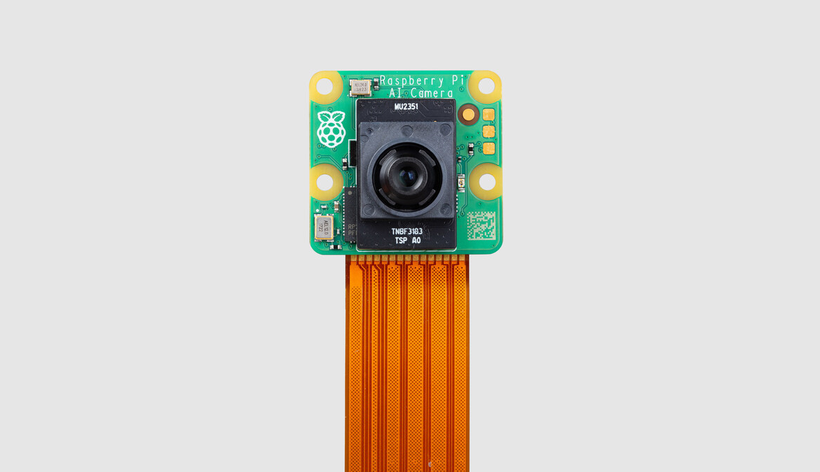
Sony and Raspberry Pi have introduced a new Raspberry Pi AI camera module capable of performing artificial intelligence (AI) tasks without the need for additional GPUs. The camera is equipped with a Sony IMX500 sensor that processes data directly on the device with built-in AI, making it ideal for creating peripheral AI solutions for processing visual information.
Key features of the camera from Sony and Raspberry Pi:
- Resolution 12.3 megapixels
- Video capture at 10 frames per second at 4056 x 3040 resolution and 40 frames per second at 2028 x 1520 resolution
- Manual focus adjustment
- Viewing angle 76 degrees
- Full compatibility with all single-board Raspberry Pi computers
Raspberry Pi CEO Eben Upton said the new camera opens up a lot of opportunities for developers in the field of AI, and expressed confidence that the Raspberry Pi community will be able to use this tool to create innovative solutions.
Raspberry Pi’s new AI camera is now available for $70.
Don't miss interesting news
Subscribe to our channels and read announcements of high-tech news, tes

Oppo A6 Pro smartphone review: ambitious

 0
0 
Creating new mid-range smartphones is no easy task. Manufacturers have to balance performance, camera capabilities, displays, and the overall cost impact of each component. How the new Oppo A6 Pro balances these factors is discussed in our review.
Oppo Reno 15 5G smartphone review: confident
0 
The Oppo Reno15 smartphone emphasizes design, a high-quality display, versatile cameras, and good battery life. Let’s take a closer look.
HP: Memory and storage now cover third of the PC cost business HP memory drive ram

If in 2025 the cost of memory and storage devices accounted for 15-18% of the total cost of components, now the figure is approaching 35%.
Starlink Mobile 5G will provide connection speeds of 150 Mbps even in the Arctic internet SpaceX

SpaceX is preparing to launch its global 5G-enabled Starlink Mobile service. The US Federal Communications Commission (FCC) has approved the launch of up to 15,000 direct-to-cell (D2C) satellites.