

Microsoft standardizes USB Type-C ports on Windows computers
04.06.25
Microsoft intends to streamline the use of USB Type-C in laptops and tablets based on Windows 11. The company notes that device manufacturers often implement the capabilities of this port in different ways – from data transfer speed to support for charging and connecting external displays. To eliminate confusion and establish clear standards, Microsoft decided to use the WHCP (Windows Hardware Compatibility Program) certification mechanism.
As part of this program, it is assumed that devices with Windows 11 that have passed certification will provide a basic set of USB Type-C functions. This means that buyers can count not only on data transfer, but also on charging and image output through the corresponding connector. Such requirements will be mandatory at least for USB 3 ports, and additional criteria are introduced for USB4.
Microsoft emphasizes that WHCP helps make the technical characteristics of the ports predictable and guarantee stable operation regardless of the device model. According to the company, the new compatibility table turns previously optional features into mandatory ones, forming a unified approach to hardware compatibility in the mobile PC market.
Don't miss interesting news
Subscribe to our channels and read announcements of high-tech news, tes

Oppo A6 Pro smartphone review: ambitious

 0
0 
Creating new mid-range smartphones is no easy task. Manufacturers have to balance performance, camera capabilities, displays, and the overall cost impact of each component. How the new Oppo A6 Pro balances these factors is discussed in our review.
Oppo Reno 15 5G smartphone review: confident
0 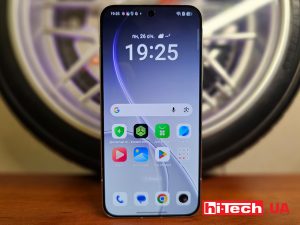
The Oppo Reno15 smartphone emphasizes design, a high-quality display, versatile cameras, and good battery life. Let’s take a closer look.
Starlink Mobile 5G will provide connection speeds of 150 Mbps even in the Arctic internet SpaceX
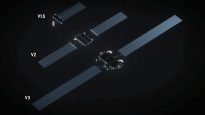
SpaceX is preparing to launch its global 5G-enabled Starlink Mobile service. The US Federal Communications Commission (FCC) has approved the launch of up to 15,000 direct-to-cell (D2C) satellites.
Study: Artificial Intelligence uses nuclear weapons in 95% of simulations artificial intelligence war
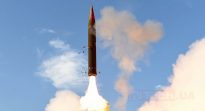
Researchers at King’s College London conducted a series of military simulations using leading artificial intelligence models. The tests used OpenAI’s GPT-5.2, Anthropic’s Claude Sonnet 4, and Google’s Gemini 3 Flash.