

Doom launched on ESA space satellite
02.11.25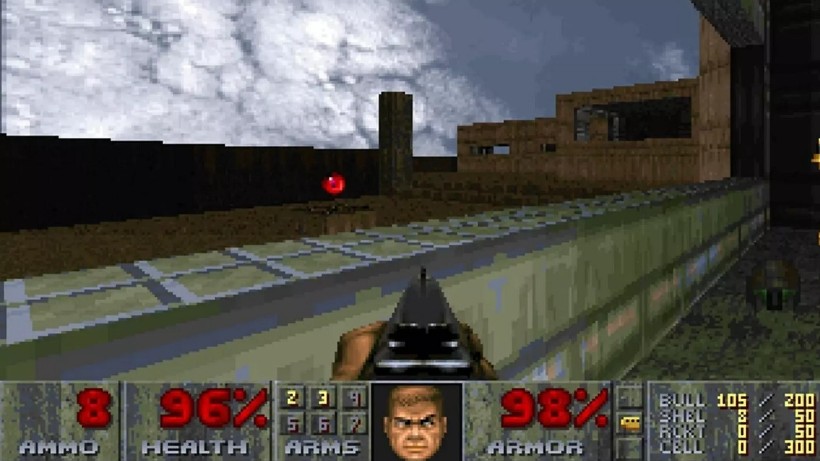
The classic shooter Doom has found itself in an unexpected place again – this time outside the Earth. A group of enthusiasts managed to run the legendary game on board a satellite of the European Space Agency.
The idea belongs to Icelandic programmer Ólafur Vaási, who now lives in Norway. Together with his colleague Georges Labreche and the ESA team, he conducted an experiment, demonstrating that even in orbit it is possible to run the iconic 1993 game.
How to run Doom on a satellite
At the Ubuntu 25.10 Summit, Vaási said that the platform used was the OPS-SAT satellite, an experimental “flying laboratory” of the ESA, designed to test new methods of data processing in space. On board it is a computing module that is about ten times more powerful than standard space systems. It was on this computer that Vaag decided to test the capabilities of Doom, using the open source version of the code, available since 1997. For the experiment, he chose Chocolate Doom 2.3, compatible with the Ubuntu 18.04 LTS operating system installed on the satellite.
According to the developer, the game was even compiled for space equipment – a dual-core ARM Cortex-A9, which is already outdated by terrestrial standards, but is considered quite productive for orbital tasks.
Before launching into orbit, the game was tested on similar equipment on Earth, and no failures were detected. As a result, Doom worked directly on the satellite at the end of December 2023.
However, a full-fledged game session was not conducted – the satellite does not have a graphical interface. Instead, the researchers ran a software simulation using pre-recorded demo files that automatically played game levels. This approach allowed us to observe possible errors caused by the influence of cosmic radiation and to assess the stability of calculations in orbital conditions.
To add to the symbolic experiment, Vaage, together with ESA, used a satellite camera. Orbital images of the Earth became the background of the game – instead of traditional Martian landscapes, the Earth sky appeared on the screen. As Vaage explained, the images were processed taking into account the limitations of the original Doom graphics, which only allowed for 256 colors.
Why run Doom on devices not designed for this?
If someone asks “why”, the answer is, in fact, simple – because it is possible. Doom has already been run on the most unexpected devices: from vapes and Anker charging stations to pregnancy tests. But this particular attempt was perhaps the most distant from Earth.
After the experiment was published, Polish company KP Labs repeated the idea, launching Doom on its satellite Intuition-1, simultaneously with a hyperspectral imaging of the planet’s surface. ESA’s next spacecraft, OPS-SAT VOLT, scheduled for launch in 2026, may become a new platform for similar experiments, only with quantum communication on board.
Attempts to launch Doom on other devices:
- The Doom game was launched on a smart light bulb from IKEA
- The Doom game was launched on a masturbator
- The Doom game was launched on a Christmas tree toy
- The game Doom was launched on the on-board computer of a John Deere tractor
- The game Doom was launched on the controller of the GoPro Karma drone
- The original Doom 1993 was launched on a pregnancy test
Don't miss interesting news
Subscribe to our channels and read announcements of high-tech news, tes

Oppo A6 Pro smartphone review: ambitious

 0
0 
Creating new mid-range smartphones is no easy task. Manufacturers have to balance performance, camera capabilities, displays, and the overall cost impact of each component. How the new Oppo A6 Pro balances these factors is discussed in our review.
In-Ear headphones Active Noise Cancellation: how Oppo eliminate noise
0 
In-ear headphones remain one of the most popular form factors due to their lightweight design. However, this design is considered one of the most challenging to implement active noise cancellation (ANC). We’ll explain how Oppo solved this problem.
Ford Debuts AI Assistant That Knows Everything About Your Car

Ford has introduced a new AI assistant that brings personalized vehicle diagnostics and support to Ford and Lincoln owners.
Google Pixel 11 Pro Fold: The New Foldable Flagship With HiLight and Gemini

Google Pixel 11 Pro Fold features a 6.5-inch outer and 8-inch inner OLED display with peak brightness reaching 3600 nits.