

China introduced its own DDR5 and LPDDR5X
03.12.25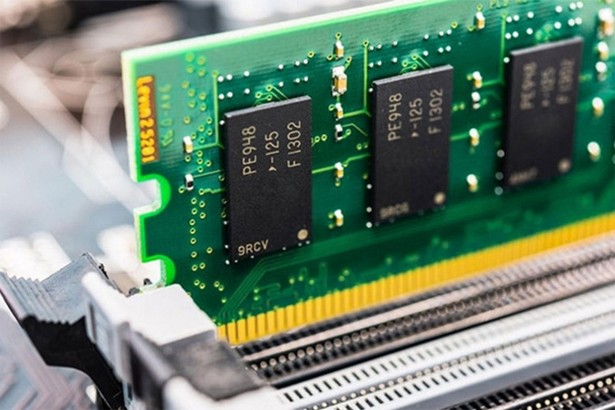
Chinese company ChangXin Memory Technologies (CXMT) has introduced its own DDR5 and LPDDR5X RAM modules, entering the market in conditions of a shortage of components and becoming a competitor to such large manufacturers as Samsung, Micron and SK Hynix.
CXMT Memory
At the IC China 2025 exhibition, CXMT demonstrated DDR5 modules with a maximum operating speed of up to 8000 Mbit/s and a chip capacity of 24 gigabits (3 GB). In terms of characteristics, they correspond to the samples of leading manufacturers. The company presented seven products designed for servers, workstations and personal computers. In addition, LPDDR5X modules with a maximum speed of 10667 Mbit/s and a capacity of 16 gigabits (2 GB) were shown, available in 12, 16, 24 and 32 GB versions.
DDR5 and LPDDR5X Analogues from China
CXMT offered a full range of modular solutions, including products with its own NAND memory. The seven modules on display at the exhibition cover a wide range of applications: from cloud computing to peripherals. The line includes RDIMM, MRDIMM and TFF MRDIMM formats for data centers and enterprise servers, modules for desktop computers, SODIMM for notebooks and compact systems, as well as new solutions with clock speed control in CUDIMM and CSODIMM formats designed for high-performance workstations.
In the server market, which holds the largest share of DRAM, CXMT’s RDIMM modules offer various memory capacities and support the configuration of major platforms. Designed for next-generation computing systems, the CUDIMM and CSODIMM modules comply with JEDEC standards published in 2024. These formats enable DDR5 to move towards higher frequencies and effectively solve the problem of high-frequency signal attenuation due to the integration of CKD chips.
CXMT Marketing Manager Luo Xiaodong noted that the sharp increase in demand for DRAM has seriously affected the market supply and prices. According to him, having its own stable source of DRAM supply will allow China to reduce its dependence on Western manufacturers. In addition, the unloading of China’s domestic market can partially reduce the global memory shortage, allowing SK Hynix, Samsung and Micron to focus more on the international market.
Don't miss interesting news
Subscribe to our channels and read announcements of high-tech news, tes

Oppo A6 Pro smartphone review: ambitious

 0
0 
Creating new mid-range smartphones is no easy task. Manufacturers have to balance performance, camera capabilities, displays, and the overall cost impact of each component. How the new Oppo A6 Pro balances these factors is discussed in our review.
Oppo Reno16 Pro 5G smartphone review: well-heeled
0 
Oppo Reno16 Pro 5G looks like a balanced smartphone, in which the manufacturer tried not to make a single characteristic the defining one. It has many advantages. Let’s tell you what
Xiaomi Debuts Magnetic Bluetooth Speaker That Doubles as a Smartphone Stand

Xiaomi has introduced a new magnetic Bluetooth speaker that doubles as a smartphone stand. The device features IP67 protection, Bluetooth 6.0 support, and is available starting at $21 during a promotional period.
Mobile OS Market Share: Android, iOS, and Harmony OS Performance in Q2 2026

Counterpoint Research analysts have released data on mobile OS market shares based on smartphone shipments for the second quarter. Android maintains its leadership, while Harmony OS continues to strengthen its position in the Chinese market.