

What could be better than the iPhone 17? Comparing 5 Android smartphones this year
16.11.25
Apple undoubtedly creates iconic devices and a self-sufficient ecosystem. Good optimization, energy efficiency of hardware combined with the operating system and software. Each new model may no longer create a revolution, but it attracts fans of the brand. This year, the iPhone 17 smartphone line was released. Even better screens, a more powerful processor and even some radical changes in design in the top models. It is worth noting what exactly is new in the iPhone 17.
What is interesting about the new iPhone 17?

The Apple iPhone 17 smartphone is equipped with a 6.3-inch Super Retina XDR display with support for a 120 Hz refresh rate, AOD (Always-On Display) and a peak brightness of about 3000 nits. The device runs on the new A19 chipset, and versions with 256 GB or 512 GB of internal memory are also available. The smartphone runs iOS 26 with long-term support for updates.
The camera system includes two 48-megapixel modules (main and ultra-wide), an 18-megapixel selfie camera with the Center Stage function – which improves the quality of photo and video shooting. There is support for USB-C (although with limited transfer speed), as well as IP68 body protection. Autonomy with mixed use reaches approximately 44 hours, and charging has become faster – up to 40 W.
The case is made of an aluminum frame, with an updated design and new colors. The Apple ecosystem continues to retain its advantage in the form of smooth operation and integration. At the same time, the iPhone 17 has several compromises: the lack of a telephoto lens, the USB-C interface is limited in speed, and the design has not changed significantly.
If you still don’t want to change the ecosystem and switch to other smartphone manufacturers, there are at least three Apple iPhone 17 on Rozetka – the standard version, Pro and Pro Max. And each also has several memory versions.
+ 120Hz display with Always-On and high brightness
+ A19 chipset and increased memory
+ 48MP cameras with improved ultra-wide optics and selfie module.
- No telephoto lens
- USB-C port has limited transfer speed
- The design remained very similar to the previous year
Nevertheless, if you are no longer a fan of the brand or want to experiment with Android smartphones, we can offer as many as five options. These are not ordinary flagships with more cores in the processor and screen pixels. Each has its own feature that can attract.
Google Pixel 10

The Pixel 10 smartphone has a compact form factor (6.3″) and an OLED screen with a frequency of 120 Hz. The heart of the device is the new Tensor G5 chipset, manufactured using a 3-nanometer process technology – it provides an increase in AI tasks and photo processing, although it is still inferior to competitors in pure performance.
For the first time, a telephoto module appeared in the regular version: a 10.8 MP telephoto lens with five-times optical zoom was added to the 48 MP main and 13 MP “wide-angle”. The 10.5 MP front camera supports autofocus. The screen is 6.3 inches, LTPS OLED with Full HD+ resolution, 120 Hz refresh rate and 2000 nits peak brightness, covered with Gorilla Glass Victus 2.
Autonomy has increased: the battery has become larger, system optimizations allow for a really comfortable day of use, and there is also support for magnetic wireless charging of the Qi 2 standard. Software – Android 16 with guaranteed updates for several years to come.
+ Compact form factor with 6.3″ OLED screen, 120 Hz
+ Cameras with large sensor and optical zoom, emphasis on content creation.
+ Google software: AI features, long OS and security support.
- Tensor G5 does not lead in performance among flagships – weaker in games.
- Some users are experiencing software stability issues
Sony Xperia 1 VII
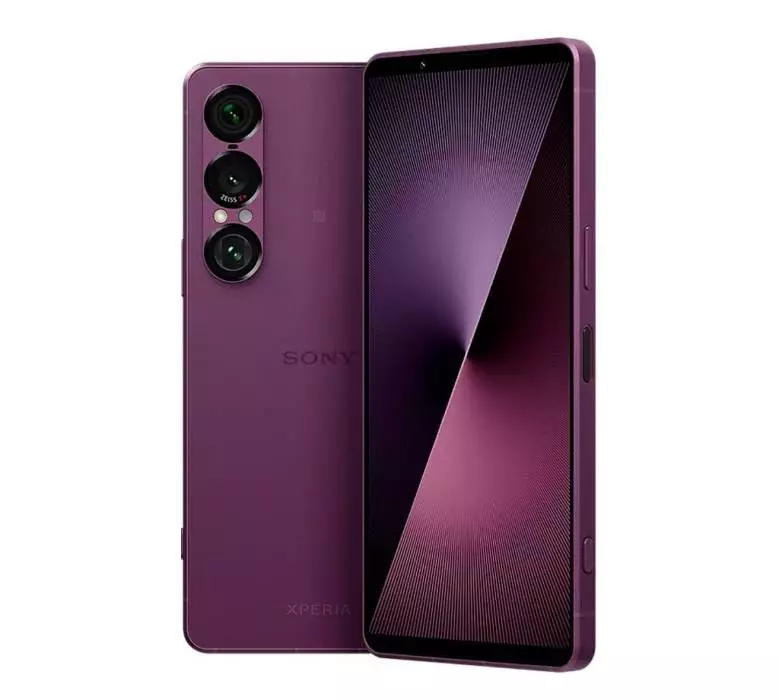
Sony’s Xperia 1 VII smartphone continues the flagship line with an emphasis on content creators, photographers and audio enthusiasts. The device has a 6.5-inch OLED screen with a refresh rate of 120 Hz, which supports a 19.5:9 aspect ratio for comfortable viewing of content. The Snapdragon 8 Elite chipset (3 nm process technology) is installed on board, which provides a significant increase in performance compared to its predecessor. The camera system includes a main 48 MP sensor (1/1.31″) with OIS, a 48 MP wide-angle module and a telephoto lens with 3.5×-7.1× optical zoom – attention is paid to photo and video capabilities.
The audio components are borrowed from the Walkman series: there are stereo speakers, a 3.5 mm jack, support for Hi-Res, Dolby Atmos and LDAC. The case has IP65/IP68 certification, an aluminum frame, Gorilla Glass Victus glass – all for a premium feel in the hand. The smartphone supports a microSD slot (up to 2 TB) and a combined storage of 12 GB of RAM + 256 GB of flash memory.
Autonomy is provided by a 5,000 mAh battery with USB-C charging (30 W) and wireless charging. The software part is Android 15 with the promise of up to 4 major OS updates and 6 years of security updates.
+ Powerful Snapdragon 8 Elite chipset
+ Camera with interchangeable telephoto lens
+ Audio system with Hi-Res support
+ IP68 certification
- Cameras are inferior to Samsung and Apple flagships when shooting in the dark
- Unique ergonomics case
- More geared towards geeks than the mass user, but anyone can buy it on Rozetka
Samsung Galaxy S25
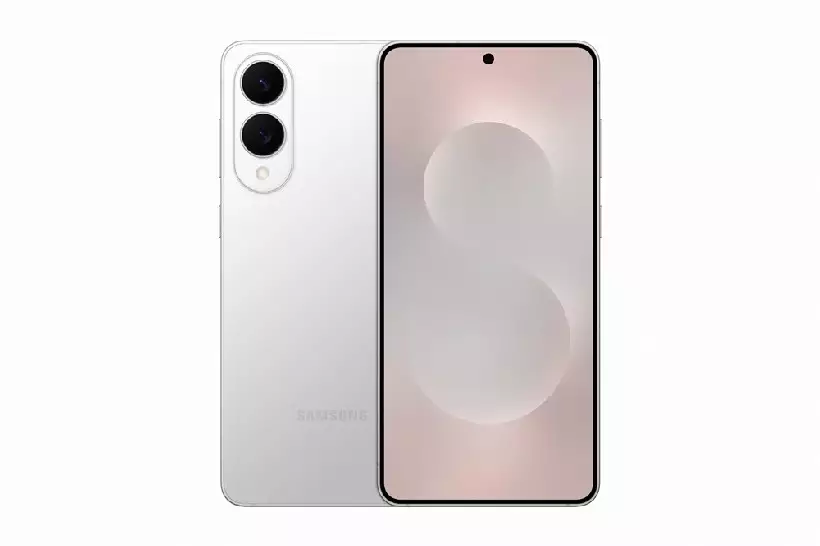
The Samsung Galaxy S25 received a 6.2-inch LTPO AMOLED display with a resolution of 1080×2340 pixels and a density of 416 ppi. The aspect ratio is 19.5:9, and protection is provided by flat Gorilla Glass Victus 2. The screen supports a refresh rate of 120 Hz, HDR10+ technology and Always On Display mode, and also recognizes up to ten simultaneous presses. At a time when most Android smartphones have large screens, the Galaxy S25 actually remains the only flagship in a format convenient for everyday use.
The smartphone is built on the Qualcomm Snapdragon 8 Elite platform, made using the 3rd technological process. The processor includes eight cores and Adreno 830 graphics. The amount of LPDDR5X RAM is 12 GB, and the built-in UFS 4.0 storage is from 128, 256 and 512 GB. It is impossible to expand the memory using microSD. The capacity of the built-in battery is 4000 mAh,
+ Great screen
+ Versatile camera with optical zoom
- Slow charging
Moto X70 Air
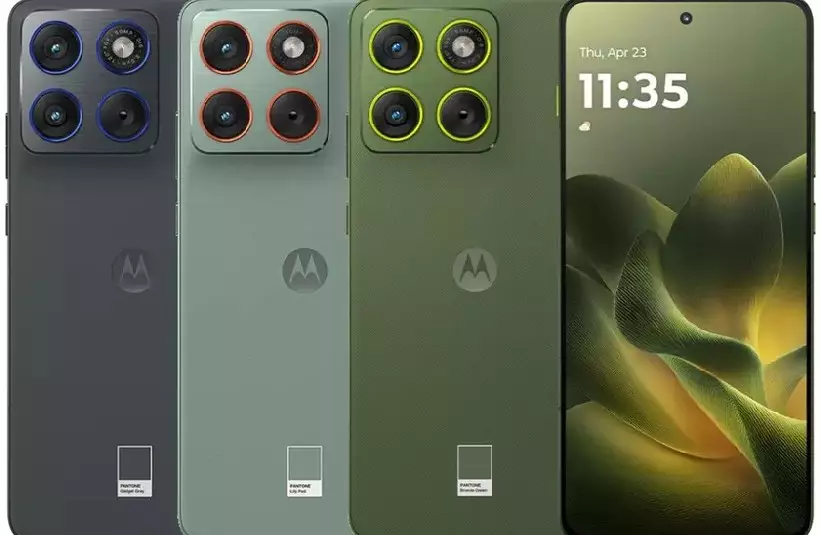
The Moto X70 Air is equipped with a 6.7-inch AMOLED display with a resolution of 1.5K (2712×1220 pixels), a refresh rate of 120 Hz and a peak brightness of up to 4500 nits, thanks to which the picture remains clear even in strong sunlight. The screen is covered with Corning Gorilla Glass 7i protective glass, and the body is made of aluminum alloy.
The Motorola smartphone is equipped with a Snapdragon 7 Gen 4 chipset with an Adreno 722 video processor. Configurations include 12 GB of LPDDR5X RAM and a UFS 3.1 storage capacity of 256 or 512 GB. Power is provided by a 4800 mAh battery with support for 68 W wired charging. The software base is Android 16. Wi-Fi 7, Bluetooth 5.4 and a USB-C 3.1 connector are provided.
+ Compact slim body
+ Powerful processor
+ Fast charging
- Small battery
- No wireless charging
- No IP protection
Xiaomi 17
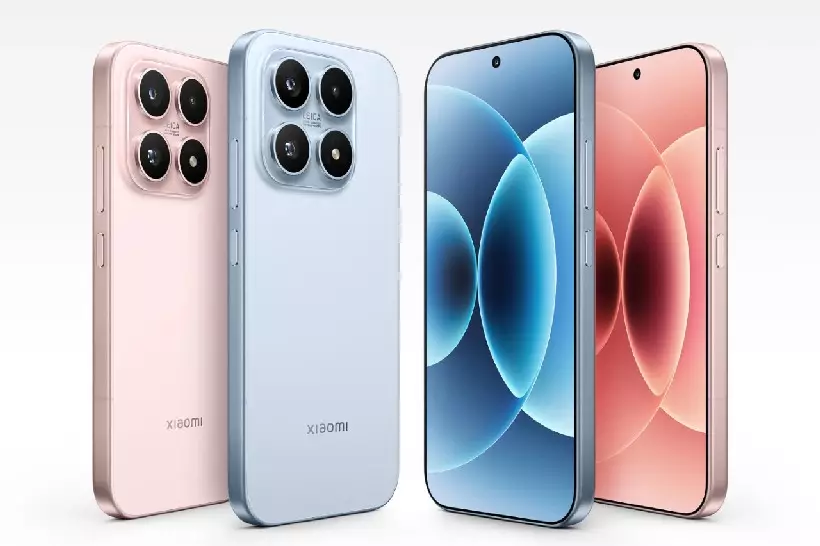
Xiaomi 17 is equipped with a 6.3-inch AMOLED display, which can be considered compact today. The screen has a resolution of 2656 x 1220 pixels, supports a refresh rate of 120 Hz and provides peak brightness of up to 3500 nits.
The main camera includes a 50 MP main module with a 1/1.31″ sensor and optical image stabilization, a 50 MP telephoto lens with a focal length of 60 mm and a 50 MP ultra-wide-angle module with a viewing angle of 102 °. The front camera also made sense.
Compared to the previous generation, the battery capacity has increased significantly – from 5400 mAh to 7000 mAh. The smartphone supports wired charging at 100 W and wireless charging at 50 W. According to the company, one charge will last up to 12 hours of video viewing.
The dimensions of the device are 151.1 x 71.8 x 8.06 mm with a weight of 191 grams, which makes it even more compact than last year’s Xiaomi 15. The novelty is available in four colors: white, dark gray, blue and pink.
+ Bright AMOLED display
+ Good 50MP camera
+ Large battery
- High price like Xiaomi
- No IP protection
- Mediocre front camera
Which smartphone to buy – practical recommendations
Everyone chooses a smartphone according to their personal needs and preferences. Below we will build ratings of the three best smartphones from our review along with the iPhone 17 according to several different scenarios of their use:
- smartphones for everyday use;
- smartphones for gaming;
- smartphones for creativity (photo and video);
- smartphones for blackouts (autonomy rating);
Important! Maybe your smartphone usage scenario won’t be here, but you can write a comment to this material, what scenario you need, and we will take your wishes into account in the next reviews.
Top 3 smartphones for everyday use
- 1st place: iPhone 17 — the best all-rounder for those users who value simplicity, ecosystem and stability.
Why: smooth interface, long iOS support, excellent cameras and power, secure application ecosystem.
- 2nd place: Samsung Galaxy S25 — perfect for those who want Android flexibility + premium features.
Why: One UI, expandability, high-quality display, long update support and many “useful” features (DeX/multitasking).
- 3rd place: Google Pixel 10 — if you want “pure” Android and the best camera/AI software features.
Why: Instant Android updates, powerful AI features (e.g. for notes and translations), and unparalleled ease of use.
Top 3 smartphones for gaming
- 1st place: iPhone 17 — the best choice for gaming in general.
Why: Fastest single- and multi-threaded processor (A19), excellent iOS and gaming optimization, low input lag, high display frequency (ProMotion) and stable long-term performance (thermal profiles and throttling under control).
There are cons: Less flexible settings for emulations/mods compared to Android; accessories and games themselves can be more expensive.
- 2nd place: Samsung Galaxy S25 — a great Android option for gaming.
Why: flagship Qualcomm/Exynos, 120 Hz, high brightness and One UI gaming optimizations; good controller support and game modes.
- 3rd place: Xiaomi 17 / Moto X70 Air— a strong “value” choice
Why: powerful chips, good cooling system and frequent 120 Hz displays; better value for money/performance.
Top 3 smartphones for creativity
- 1st place: Sony Xperia 1 VII — best for video and creativity.
Why: Professional video modes, color management / log profiles, large sensors and a set of shooting / framing tools – focused on content creators.
Note: Photos “in automatic mode” may be inferior to Google Pixel / iPhone17 in noise reduction.
- 2nd place: Google Pixel 10 — the best for taking photos with one click.
Why: excellent software processing, high-quality night and portrait modes, simplicity and consistently high photo quality without proofing.
Note: may be inferior in hardware telephoto/optics to other smartphones in this review.
- 3rd place: iPhone 17 — The best all-rounder for video.
Why: much better hardware-software combination for shooting video (stabilization, codecs, cinematic modes) and easy integration into workflows (Final Cut, AirDrop, etc.). Also great for daylight photos.
Top 3 smartphones for blackouts (autonomy)
This is a smartphone rating for those users who count every kilowatt of electricity, who value charging speed and smartphone operating time without recharging.
- 1st place: Xiaomi 17 — leader in capacity and optimization.
Why: large 7000 mAh battery and good power saving modes. In WiFi surfing tests on Notebookcheck the device worked for ~30 hours, while playing video for about 36 hours. In addition, the smartphone has a very fast 100W charging, which is of great importance in blackout conditions when you need to quickly restore the charge.
- 2nd place: Samsung Galaxy S25 – a very good choice for those who do not want to charge their smartphone often.
Why: although the battery is relatively small (~4000 mAh), the chip and optimization allowed, according to Tom`s Guide tests, to achieve very decent autonomy for a compact flagship: test ~15:43 hours in web-runout.
- 3rd place: iPhone17 – a decent option, but inferior to the first two in terms of autonomy: for example, in web tests it showed ~12:47 hours for the base model.
Other models from our review also have very good autonomy indicators, but are not as indicative in terms of the totality of operating time/charging characteristics as those smartphones that entered the top 3.


Don't miss interesting news
Subscribe to our channels and read announcements of high-tech news, tes



Oppo A6 Pro smartphone review: ambitious

 0
0 
Creating new mid-range smartphones is no easy task. Manufacturers have to balance performance, camera capabilities, displays, and the overall cost impact of each component. How the new Oppo A6 Pro balances these factors is discussed in our review.
Poco M8 Pro smartphone review: give us more
0 
Poco M8 Pro 5G immediately catches the eye with its size and the manufacturer’s desire to offer more than you’d typically expect from a device in this price range. It’s not just another mid-range device.
Returning of international Ukrposhta delivery will become free events in Ukraine post

“Ukrposhta” as a member of the Universal Postal Union delivers items to more than 230 countries and territories. The partner network of national postal operators covers more than 660 thousand post offices
Samsung Galaxy S26 will be presented on February 25, 2026. What will the new flagships be like? Samsung smartphone

All Samsung Galaxy S26 models will receive the new Qualcomm Snapdragon 8 Elite Gen 5 processor, and the differences between the Galaxy S26 Ultra and the previous model may be more noticeable.