

Xiaomi TV S Pro Mini LED 2026 and Redmi TV X 98 support 144 Hz
28.10.25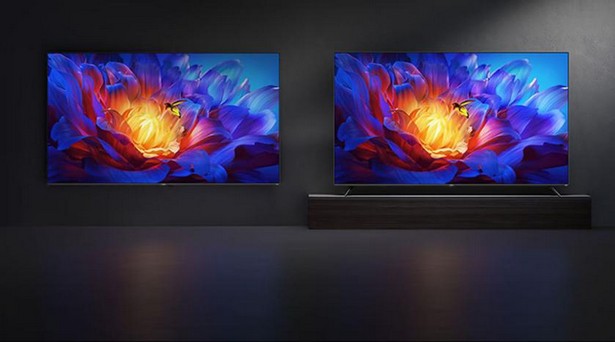
Xiaomi introduced not only new smartphones and smart watches. The company continues to develop its Mini LED TV line, showing the TV S Pro Mini LED 2026 series. The central model was the 98-inch version, which received a large screen and flagship-level characteristics.
Characteristics of Xiaomi TV S Pro Mini LED 2026
The design of the TV is based on the use of thin frames, which creates the visual effect of an almost limitless image. At the heart is a Mini LED panel with a 4K resolution and a refresh rate of 144 Hz, which can be increased to 288 Hz in high-dynamic scenes. The screen supports HDR10+ and Dolby Vision, covers 93% of the DCI-P3 color space and reaches a peak brightness of up to 5700 nits.
The backlight is divided into 880 local dimming zones, which allows for more precise contrast control. Xiaomi Qingshan Eye Protection technology is used to protect vision, which automatically adjusts brightness and color temperature depending on lighting conditions. There is also a Filmmaker Mode and a Visual Engine Pro system aimed at reducing glare.
The acoustics were developed jointly with Harman. The configuration includes a 2.1.2 set, which includes a pair of 25 W broadband and tweeter speakers, a 15 W low-frequency module and two additional 8 W high-frequency emitters.
The TV is equipped with a quad-core processor, 4 GB of RAM and 64 GB of internal storage. Google TV is used as a software platform. Wi-Fi 6 and Bluetooth 5.2 are supported, there are three HDMI 2.1 ports, Ethernet and a standard 3.5 mm audio output. In China, the new product is already available for order at a price of 7599 yuan, which is equivalent to approximately $1066.
Details about Redmi TV X 98 2026
Along with the TV S Pro, the Redmi TV X 98 (2026) model was announced, also equipped with a 98-inch Mini LED display and aimed at a wider range of buyers. Interestingly, the cost coincides – 7599 yuan, but the characteristics differ in some aspects.
The Redmi TV X 98 screen has a peak brightness of 1300 nits and a refresh rate of 144 Hz with the ability to increase to 288 Hz in game mode. 880 backlight zones are installed, HDR10+ support is implemented, factory calibration is declared at the level of ΔE≈2, and Full-Stack Color Engine technology and AI dimming algorithms perform real-time image optimization.
The TV runs on HyperOS 3, has a Cortex-A73 chip, 4 GB of RAM and 64 GB of built-in. Support includes Wi-Fi 6, Bluetooth 5.2, HDMI 2.1 eARC, USB 3.0, Ethernet and optical audio output. For games, VRR, Dolby Vision Gaming, FreeSync Premium and a delay of about 4 ms are provided.
In addition, the device can be used as a smart home control center. The Xiao Ai assistant supports several Chinese dialects and is capable of continuous voice dialogue.
Don't miss interesting news
Subscribe to our channels and read announcements of high-tech news, tes

Oppo A6 Pro smartphone review: ambitious

 0
0 
Creating new mid-range smartphones is no easy task. Manufacturers have to balance performance, camera capabilities, displays, and the overall cost impact of each component. How the new Oppo A6 Pro balances these factors is discussed in our review.
In-Ear headphones Active Noise Cancellation: how Oppo eliminate noise
0 
In-ear headphones remain one of the most popular form factors due to their lightweight design. However, this design is considered one of the most challenging to implement active noise cancellation (ANC). We’ll explain how Oppo solved this problem.
ZTE U25: 5G Connectivity for 32 Devices with 8-Hour Battery Life
The ZTE U25 is one of the company’s first portable routers to feature 5G RedCap support.
Vivo V70 Lite 4G Debuts With Massive 8100mAh Battery and IP69 Rating
Vivo has announced the V70 Lite 4G version powered by the Unisoc T7300 processor. The device’s highlights include an 8100mAh battery and full IP69-rated body protection.