

ASUS at Computex 2026: next-generation AI-PC ecosystem, OLED displays and a return to tablets
06.06.26
At Computex 2026, ASUS presented one of the most extensive updated product ecosystems in recent years. Instead of separate point announcements, the brand built a complete line of devices united by a common logic: ubiquitous artificial intelligence, high energy efficiency, and the transition to universal ARM and hybrid platforms.
Updates affected almost all segments – from ultraportable Zenbooks and massive Vivobooks to desktop PCs, monoblocks and tablets. ASUS actually demonstrates the transition from classic “iron” to the model of AI-first devices, where calculations, graphics and interaction with the user are increasingly taken over by local neural units.
Zenbook 14: bet on lightness and local artificial intelligence
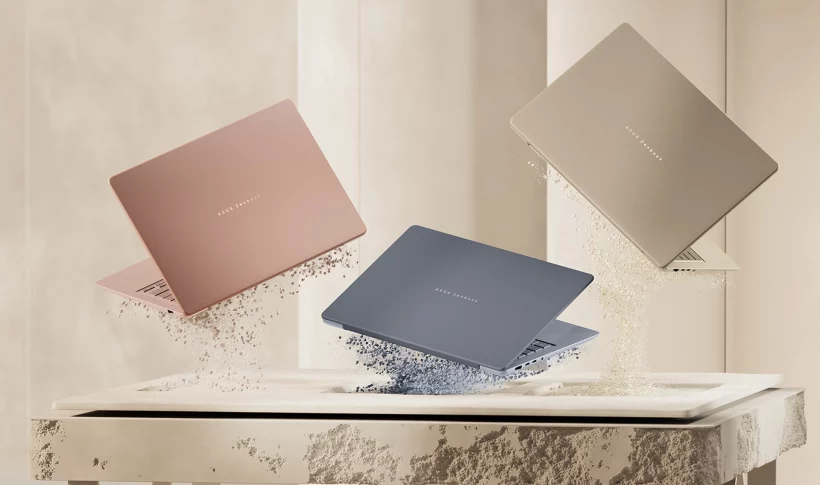
The updated Zenbook 14 has become one of the key examples of ASUS’ new philosophy. Weighing only 1.1 kg, it is aimed at users who need maximum mobility without compromising on functionality.
The body is made of metal using the proprietary material Ceraluminium, which combines the rigidity of aluminum and the visual-tactile texture of ceramics. This is not just a design decision, but part of a strategy to reduce weight while maintaining strength.
At the heart of the device is the Snapdragon X platform with NPU performance of up to 45 TOPS, which allows you to perform a significant part of AI tasks locally: from intelligent text processing to Copilot+ functions and generative scenarios without constant access to the cloud.
The configuration includes:
- 14-inch OLED display 1920×1200
- 16 GB LPDDR5X
- SSD 512 GB
The autonomy of up to 21 hours deserves special attention, which actually puts the device in the “full working day + reserve” category.
ASUS also leaves the flexibility of the platform: in addition to Snapdragon X, AMD Ryzen AI and Intel Core Ultra versions are provided, which emphasizes the strategy of a multi-architecture ecosystem.
Vivobook S14/S16: mass segment with OLED and AI acceleration
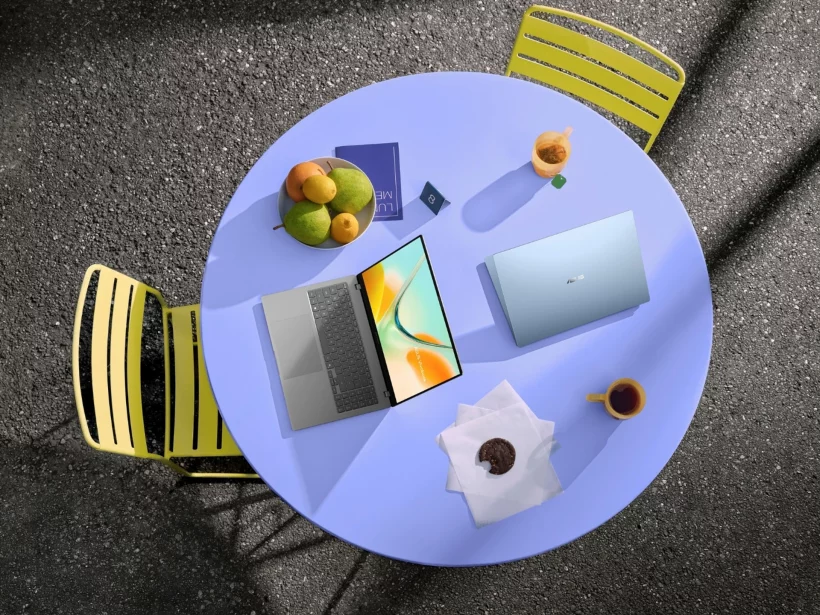
The Vivobook S14 and S16 line continues the trend towards “premiumization” of the mid-range segment. Here, ASUS transfers technologies previously available only in top models to a more affordable class of devices.
The main focus is on OLED displays with full DCI-P3 coverage and a high level of visual accuracy. The 16-inch version offers an increased screen area (89%), making it more versatile for multitasking and media work.
The Snapdragon X platform provides up to 45 TOPS of NPU performance and stable operation at up to 30 W, which allows you to balance autonomy and performance.
The declared operating time exceeds 25 hours, and the fast charging up to 60% in 49 minutes emphasizes the orientation towards the mobile usage scenario.
Essentially, the Vivobook S-series cements ASUS’ move to the default AI notebook model, even in the mid-range price segment.
Vivobook S Flip: transformation as the main use case
 7
7
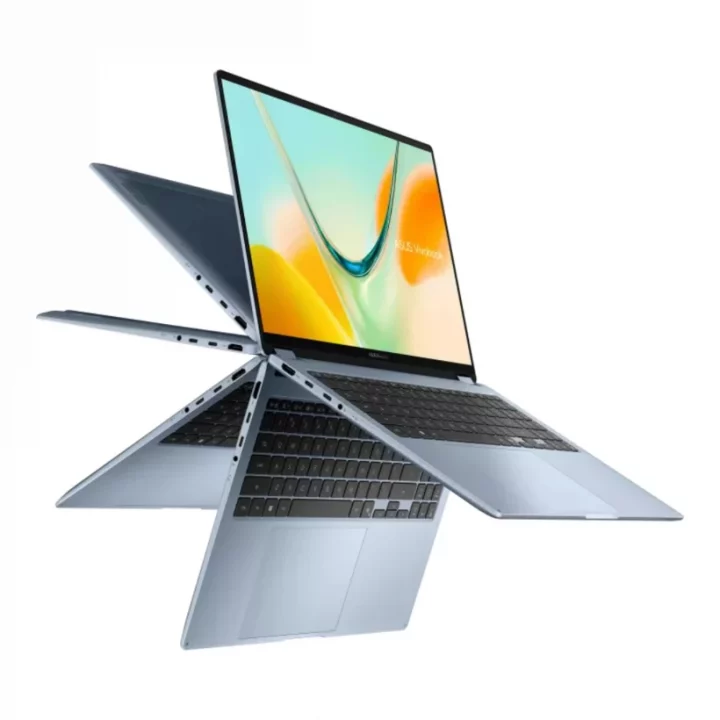
The Vivobook S14 Flip and S16 Flip models develop the idea of a universal device that adapts to the user’s scenario, not the other way around.
The 360-degree hinge turns the laptop into a tablet, stand or presentation device, and the 2K OLED touch screens with ASUS Pen 3.0 support are geared towards creative tasks.
The Snapdragon X architecture with NPUs up to 45 TOPS enables real-time AI functions without overloading the system, while Dolby Audio and surround sound enhance the multimedia experience.
With a TDP of up to 35 W, the devices maintain stable performance without overheating, and autonomy exceeds 20 hours, which makes them competitors not only among laptops, but also among tablet solutions.
ASUS V700 Mini Tower and the transition to compact AI desktops
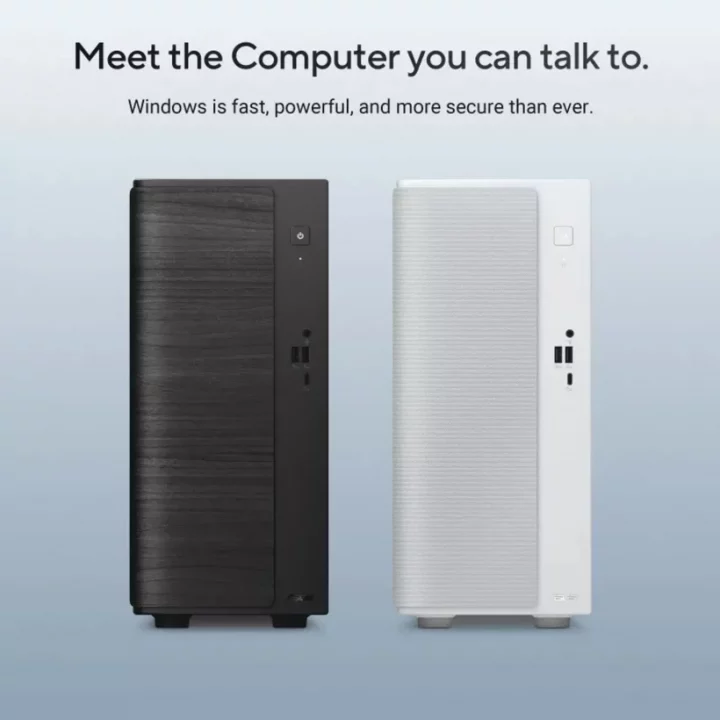
In the desktop segment, ASUS bets on compact but powerful systems.
V700 Mini Tower is an attempt to combine the performance of a full-fledged PC with the compactness of an office solution. In the maximum configuration, it is equipped with Intel Core Ultra 9, DDR5 memory and SSD PCIe 4.0 up to 2 TB.
Support for NVIDIA GeForce RTX 50 graphics cards turns the system into a versatile tool for content, games and AI workloads.
In fact, ASUS continues the trend of “small form factors with a large power reserve”, which is becoming the standard for new generation workstations.
V200 and V400 AiO: monoblocks as a hybrid of work and AI services
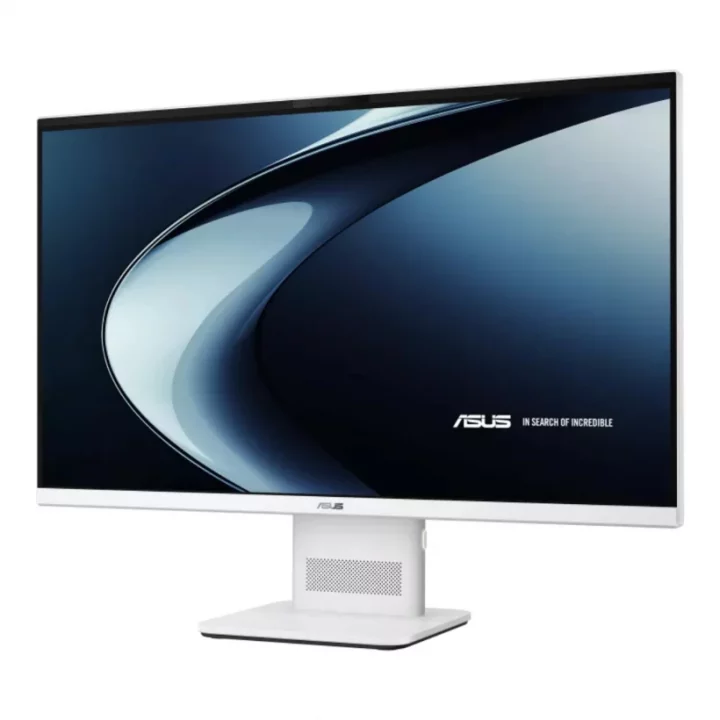
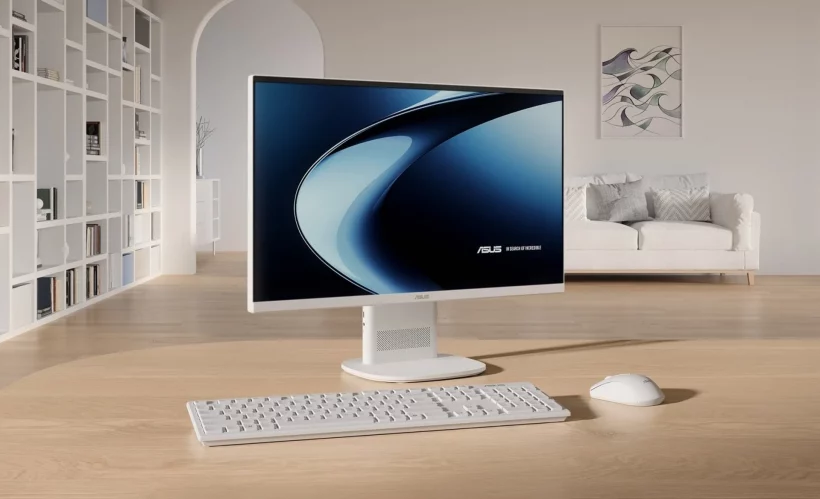
ASUS V200 AiO and V400 AiO monoblocks demonstrate two different strategies.
V200 is aimed at the mass user: a 23.8-inch display, noise reduction for video communication, Wi-Fi 6E and universal interfaces make it a solution for home and education.
V400 is a more advanced scenario. The 27-inch screen and Snapdragon X turn it into a local AI workstation capable of processing tasks without the cloud. This is no longer just a monoblock, but a “desktop AI computer”.
ASUS Pad: the company’s return to the tablet segment
One of the most strategic announcements was the new ASUS Pad, which actually returns the brand to the tablet market.
The device received a 12.2-inch 2.8K OLED display with a frequency of 144 Hz and a high level of visual quality. The screen occupies 92% of the front panel, and the TÜV Rheinland certification confirms the focus on long-term use without eye fatigue.
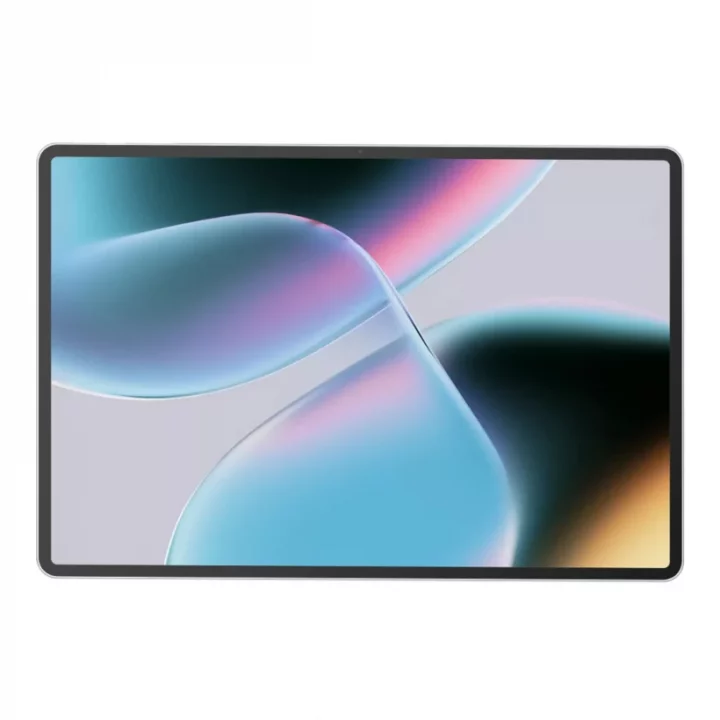
It is based on the MediaTek Dimensity 8300, which provides a balance between performance and energy efficiency.
A key feature is ASUS’s attempt to position the tablet not as a media gadget, but as a full-fledged mobile work device.
Despite the thickness of only 6.5 mm and the weight of 523 g, the tablet received:
- battery 9000 mAh
- charging up to 50% in 30 minutes
- four speakers with Dolby Atmos
- case made of magnesium-aluminum alloy and fiberglass
This emphasizes the general trend of the exhibition – maximum performance with minimum device thickness.
ASUS forms a single AI device ecosystem
ASUS announcements at Computex 2026 show not just line updates, but the formation of a complete ecosystem, where all devices from laptops to tablets and desktops are united by one logic: local artificial intelligence, energy efficiency and adaptation to different usage scenarios.
The company actually establishes a new industry standard: the PC ceases to be just a computing device and turns into an intelligent platform that can adapt to the user in real time.
Don't miss interesting news
Subscribe to our channels and read announcements of high-tech news, tes

Oppo A6 Pro smartphone review: ambitious

 0
0 
Creating new mid-range smartphones is no easy task. Manufacturers have to balance performance, camera capabilities, displays, and the overall cost impact of each component. How the new Oppo A6 Pro balances these factors is discussed in our review.
In-Ear headphones Active Noise Cancellation: how Oppo eliminate noise
0 
In-ear headphones remain one of the most popular form factors due to their lightweight design. However, this design is considered one of the most challenging to implement active noise cancellation (ANC). We’ll explain how Oppo solved this problem.
Chinese monopoly: humanoid robots are taking over the market

During the first six months of 2026, approximately 19,100 humanoid robots were delivered globally, with Chinese companies producing over 97% of them.
LG xBoom Blast Packs 220W Power and IP68 Durability for Extreme Sound

LG xBoom Blast is a new portable Bluetooth speaker with up to 220W of power, IP68 protection, and a removable 99Wh battery.