

Xiaomi to launch its 3nm chip in 2025 to compete with Qualcomm and MediaTek
29.11.24
Xiaomi is preparing to enter the 3nm processor market with its own chip, which is expected to be introduced in 2025. This step is an important strategic direction for the company, allowing it to reduce its dependence on third-party suppliers such as Qualcomm and MediaTek. The development is carried out on the basis of advanced TSMC production technology, which guarantees a high level of performance of the new processor.
Xiaomi’s first 3nm chip is expected to debut in one of its flagship smartphones, possibly in the Xiaomi 16. The company has previously announced the completion of development in this area, which confirms the seriousness of its intentions to compete with the leading players in the market.
Against the backdrop of restrictions imposed on Chinese technology companies, such as sanctions against Huawei, its own chips could give Xiaomi a significant advantage. The introduction of its own processor in 2025 promises to strengthen its position and potentially change the balance of power in the mobile technology market.
More promising from Xiaomi
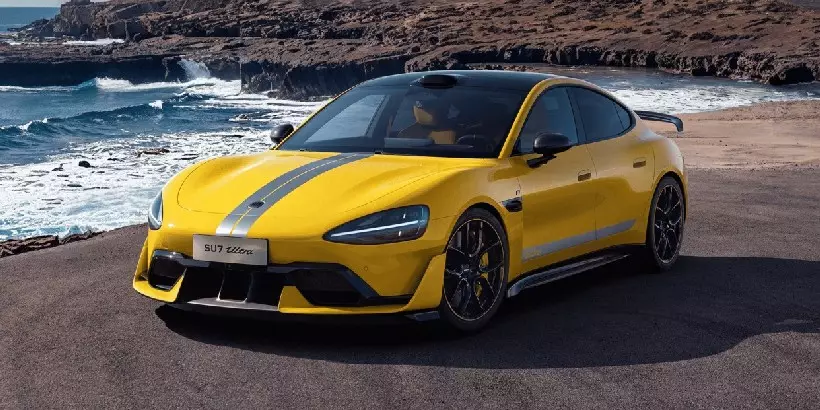
Xiaomi has introduced the SU7 Ultra electric sedan for the Chinese market, which is impressive in terms of power and performance. The car is equipped with a 1,500 hp engine, which allows it to accelerate from 0 to 100 km/h in less than 2 seconds. It is based on the standard SU7, but features improved aerodynamics: sporty bumpers, a wide body, a rear spoiler and an active diffuser that provides downforce of up to 265 kg for improved stability.
The seats are upholstered in Alcantara leather, and carbon fiber elements emphasize the dynamic character of the SU7 Ultra. The car is equipped with a Qilin 2.0 battery with a capacity of 93.7 kWh from CATL, which supports fast charging, allowing you to recharge the battery from 10% to 80% in 11 minutes.

The Xiaomi SU7 Ultra has a top speed of 350 km/h and uses carbon ceramic brakes for high braking efficiency. The sedan is priced at 814,900 yuan (about $114,200), and is positioned by Xiaomi’s CEO as a competitor to the Porsche Taycan Turbo GT, offering more power at a lower price. In the first 10 minutes since pre-orders opened, 3,680 reservations were recorded. Mass production is scheduled to begin in March 2025.
Don't miss interesting news
Subscribe to our channels and read announcements of high-tech news, tes

Oppo A6 Pro smartphone review: ambitious

 0
0 
Creating new mid-range smartphones is no easy task. Manufacturers have to balance performance, camera capabilities, displays, and the overall cost impact of each component. How the new Oppo A6 Pro balances these factors is discussed in our review.
Oppo Reno16 Pro 5G smartphone review: well-heeled
0 
Oppo Reno16 Pro 5G looks like a balanced smartphone, in which the manufacturer tried not to make a single characteristic the defining one. It has many advantages. Let’s tell you what
Squadron 42 Delayed to 2027 to Avoid GTA 6 Clash

Cloud Imperium Games has pushed the release of Squadron 42 to the second quarter of 2027 due to the launch of GTA 6.
Mouse DAIV CX-A9A60 Mini PC: Ryzen AI Max+ Power at a Premium Price

Mouse has unveiled the high-performance DAIV CX-A9A60 mini PC, powered by the Ryzen AI Max+ 395, 128GB of RAM, and a 2TB SSD.