

Aston Martin and Curv Racing Simulators unveil $75,000 AMR-C01-R car simulator
05.04.25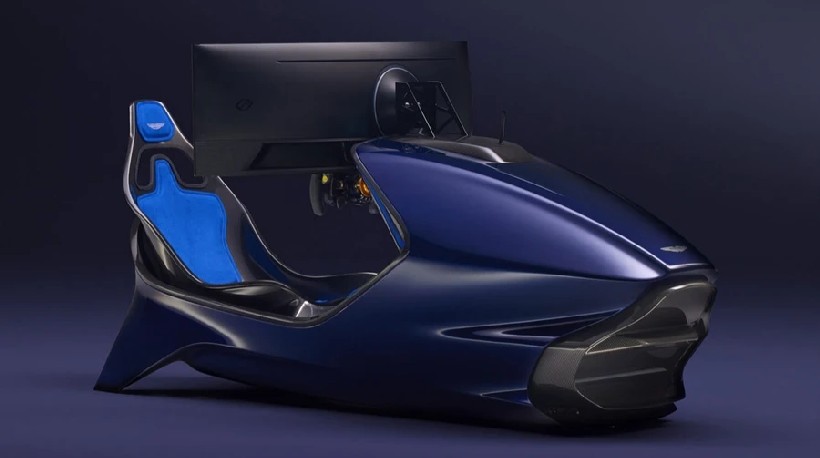
Aston Martin and Curv Racing Simulators have unveiled an updated version of the AMR-C01-R racing simulator, first introduced in 2020. The new model will be limited to 50 units and will offer an even higher level of realism and immersion.
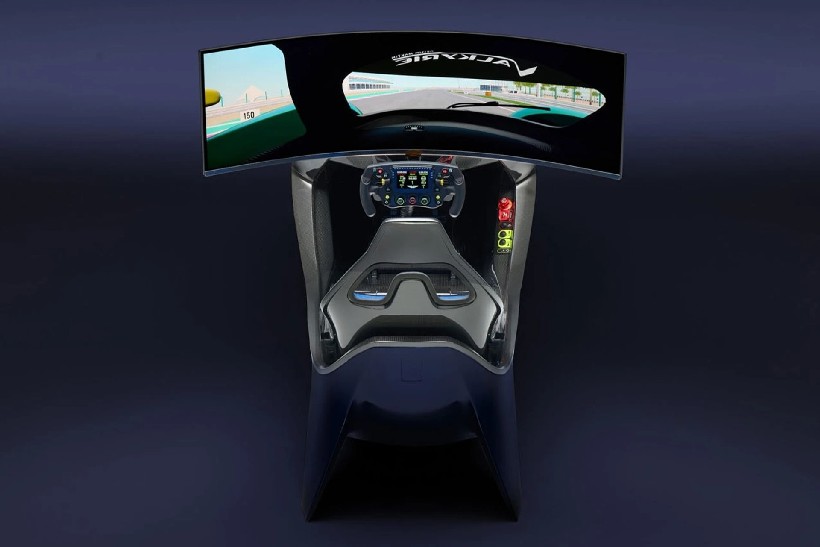
The simulator’s design is based on a carbon monocoque and includes the signature Aston Martin grille. The new version features a redesigned seating arrangement inspired by the Aston Martin Valkyrie hypercar, improved ergonomics for taller users, and a revised switch panel layout and grilles for improved usability and cooling efficiency.
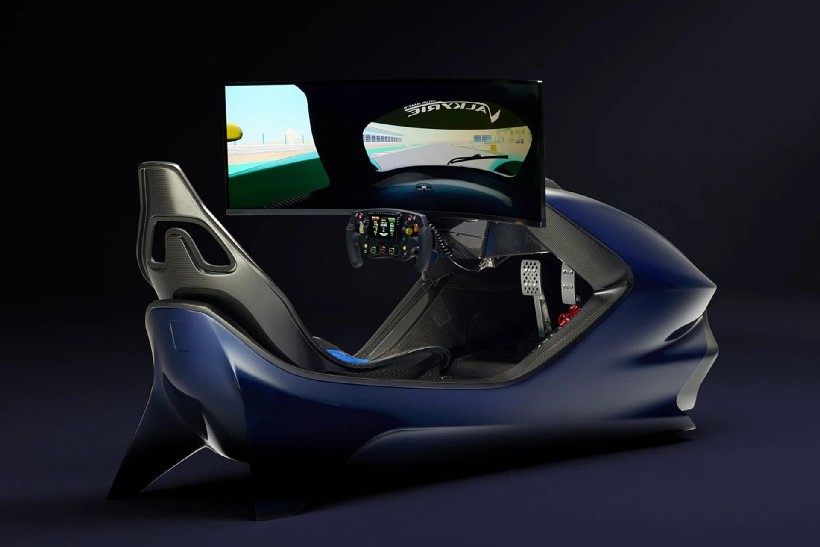
The AMR-C01-R features a 49-inch C95C curved display with a 240Hz refresh rate, 1ms response time, and HDR10+ Gaming support. Inside, it’s powered by an NVIDIA GeForce RTX 5090 GPU, a 14th-generation Intel processor, 32GB of RAM, and 2TB of storage.
The simulator is available to order starting at £58,750 (approximately $75,914). First deliveries are expected in April 2025.
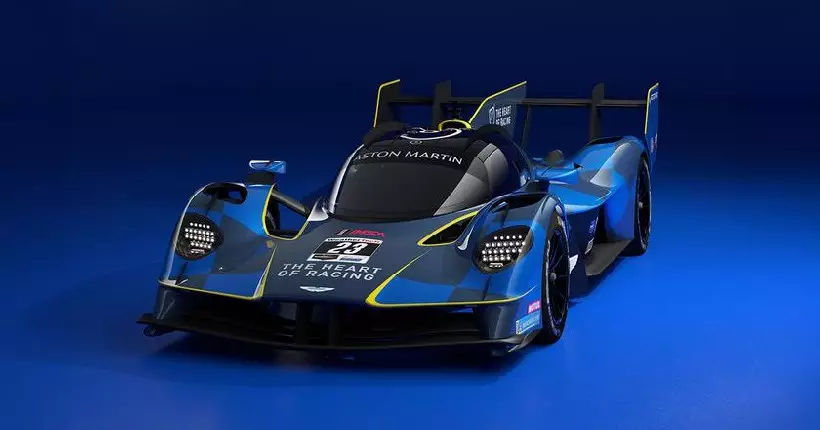
Aston Martin has unveiled its new Valkyrie LMH hypercar, which will compete in the 24 Hours of Le Mans in 2025. The move will mark the British automaker’s first attempt to win the overall race at the prestigious marathon in six decades.
Based on the road-going Aston Martin Valkyrie, the new car is adapted to the Le Mans Hypercar (LMH) category of the Le Mans Daytona Hybrid (LMDh) class, a technical regulation that allows for more flexible engineering solutions, giving designers more freedom in their designs.

One of the key features of the Aston Martin Valkyrie LMH is its naturally aspirated 6.5-liter V12 Cosworth engine. This engine remains the only twelve-cylinder unit in the top category of endurance racing, where most competitors use turbocharged V8s and V6s. Although the hybrid system is retained, engine power has been reduced from 1,140 to 680 horsepower to meet the requirements of the FIA WEC.
The company’s engineers have made changes to the engine design, improving its fuel efficiency and durability. In particular, the rev limit has been lowered, and the fuel-air ratio in the mixture has been adjusted, which will allow for fewer refuelings during races.
Don't miss interesting news
Subscribe to our channels and read announcements of high-tech news, tes

Oppo A6 Pro smartphone review: ambitious

 0
0 
Creating new mid-range smartphones is no easy task. Manufacturers have to balance performance, camera capabilities, displays, and the overall cost impact of each component. How the new Oppo A6 Pro balances these factors is discussed in our review.
Oppo Reno16 Pro 5G smartphone review: well-heeled
0 
Oppo Reno16 Pro 5G looks like a balanced smartphone, in which the manufacturer tried not to make a single characteristic the defining one. It has many advantages. Let’s tell you what
Iron Man Game Trailer Surfaces: Combat and Flight Mechanics Detailed

A gameplay trailer for the highly anticipated Iron Man game from EA and Motive Studios has leaked. The two-and-a-half-minute video showcases Tony Stark’s abilities and combat mechanics.
Haptic Feedback in Smart Rings: The Future of Wearable Interaction

Integrating a vibration motor into the RingConn Gen 3 changes the significance of the ring as a wearable device. We examine why haptic signals are the next step in smart ring evolution, what the feature can currently do, and the technical challenges involved.