

The city as a data center: a British project turns street lights into a distributed AI infrastructure
06.05.26
The idea of a data center as a separate building is gradually losing its monopoly. The British Conflow Power Group Limited offers an alternative model: instead of concentrated server power, there is a network of tens of thousands of “smart” street lights, each of which acts as a computing node. Nigeria plans to deploy up to 50,000 of these devices, creating a distributed infrastructure where lighting, data processing and AI work as one.
From centralized servers to “smart peripherals”
The iLamp project is based on the principles of edge computing — moving calculations closer to the data source. Instead of sending information to remote data centers, the system processes it locally, reducing delays and network load.
Each lantern is equipped with a solar panel, a battery and an energy-efficient computing module. Thanks to modern chips with low power consumption, such devices are able to perform basic artificial intelligence tasks directly on site without constant connection to a centralized infrastructure.
Such an architecture does not replace classic data centers, but creates an additional layer of data processing — especially useful for tasks that require a quick response and local analytics.
Lantern as sensor, camera and analytical node
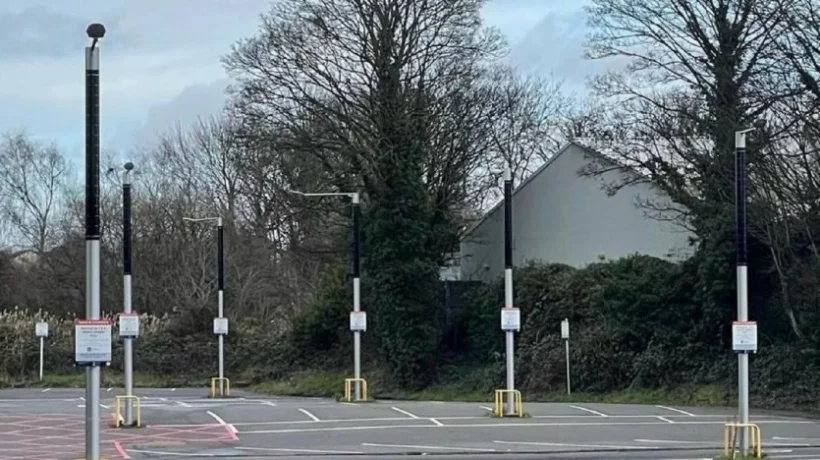
The functionality of iLamp goes far beyond lighting. The devices can work as elements of a “smart city” system, equipping cameras with AI analytics. They are able to record violations of traffic rules, control parking and analyze behavior in the urban environment.
Technologically, such lights turn into universal nodes: they simultaneously collect data, process it and transmit the results to larger systems. In the future, we are talking about the introduction of license plate recognition functions and even identification of people, which opens up both new opportunities and privacy.
A special direction is interaction with residents. Developers consider scenarios where urban infrastructure becomes an interface for surveys and digital services, responding to gestures or user actions.
Africa as a launch pad for a new model
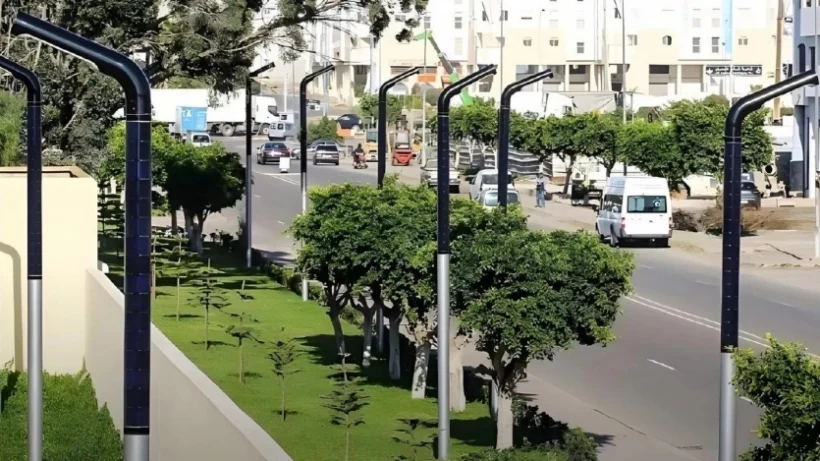
The choice of Nigeria is not accidental: the region combines a high level of solar activity and more flexible regulation of technological initiatives. This creates favorable conditions for the implementation of autonomous solutions that do not depend on stable energy networks.
The initial stage of the project involves the installation of 50,000 devices, but the scale may increase several times. According to the company’s estimates, the total network is capable of exceeding 300,000 lights, covering not only cities, but also transport corridors, schools and government facilities.
One of the most ambitious scenarios remains the deployment of iLamp along the Lagos-Calabar Coastal Highway. Here, the system can not only provide lighting and security, but also generate income through digital services and data processing.
Technological shift and its consequences
Conflow Power Group Limited’s initiative demonstrates a fundamental change in the approach to computing infrastructure. If earlier data flowed to processing centers, now the environment itself is becoming computational.
This approach can radically change the architecture of “smart cities”: instead of separate systems, there is a single distributed network where every element of the infrastructure participates in data processing.
In the long term, this means that the line between physical and digital environments will blur: streetlights, roads and buildings will cease to be mere objects and become active participants in the digital ecosystem.
Don't miss interesting news
Subscribe to our channels and read announcements of high-tech news, tes

Oppo A6 Pro smartphone review: ambitious

 0
0 
Creating new mid-range smartphones is no easy task. Manufacturers have to balance performance, camera capabilities, displays, and the overall cost impact of each component. How the new Oppo A6 Pro balances these factors is discussed in our review.
Oppo Reno16 Pro 5G smartphone review: well-heeled
0 
Oppo Reno16 Pro 5G looks like a balanced smartphone, in which the manufacturer tried not to make a single characteristic the defining one. It has many advantages. Let’s tell you what
Danger in the Driver’s Seat: Waymo and Zoox Robotaxis Surface with Brake-Related Injuries

Dozens of robotaxi test drivers have been injured due to flaws in autonomous driving systems. The primary culprit is erratic emergency braking, which has led to significant neck and back injuries.
Samsung Galaxy Book6: An Affordable Laptop With 25-Hour Battery Life

Samsung has introduced a new affordable version of the Galaxy Book6. The device features Intel Core 3 or Core 5 processors, up to 16GB of RAM, up to 1TB of storage, and a rated battery life of up to 25 hours.