

On Android, you can now send video with emergency call
14.12.25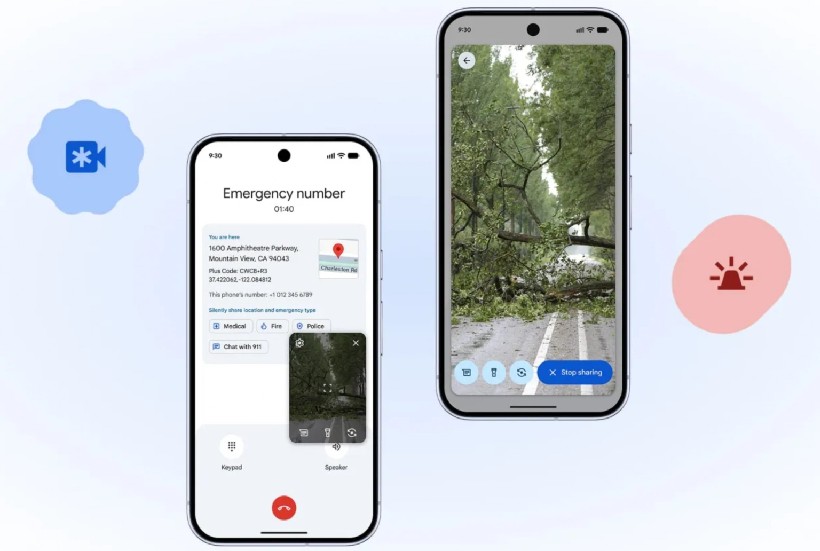
Google is launching Android Emergency Live Video, a feature that allows emergency services to stream live video from their smartphone’s camera to emergency services. Now, when calling or texting the emergency number on their Android device, dispatchers will be able to request a video stream if they believe that visual contact will help them better assess the situation and is safe for the user.
Image transmission allows them to understand what is happening at the scene of an incident and quickly dispatch the appropriate services. In some cases, this allows dispatchers to accompany a person while performing CPR or other actions necessary for help to arrive. The user decides whether to grant access to the camera by choosing between the options “Share” or “No, thanks”. The company emphasizes that the video stream is encrypted by default.
Why video for SOS calls
Google notes that during an emergency, it is difficult to explain what is happening, especially when a person is stressed or in danger. The company cites examples of traffic accidents, medical crises, or rapidly spreading fires, where the ability to show rescuers the situation can significantly affect the course of the response.
After activating the broadcast, the video opens in a picture-in-picture window with the ability to expand it to full screen. A stop button is available at any time. The user can also turn on the flashlight or switch to the front camera. Response services are given the opportunity to review the image and, if necessary, record it throughout the event.
On which devices is it available
The Android Emergency Live Video rollout is starting in the US on devices running Android 8 and above that have Google Play services installed. The feature has also started working in select regions of Germany and Mexico. Google is working with public safety organizations in different countries to expand the availability of the technology and provide documentation for partners who are ready to integrate the service into their systems.
The corporation explains that the distribution of Emergency Live Video depends on the readiness of local emergency services and infrastructure, so the possibility remains limited for now and is expanding gradually. Google plans to work with state and regional operators to adapt the feature to their security protocols and data processing.
Video transmission is carried out over secure channels, and decisions about the storage of materials are made by emergency services themselves in accordance with local legislation. Further use of the feature is expected to occur in stages as different countries integrate it into their response systems.
We also recall that Google recently introduced call recording on Pixel 6 series smartphones and newer, added two translation modes to Google Translate, and introduced a black and white mode in the Google Maps app on Android, which helps save battery life.
Don't miss interesting news
Subscribe to our channels and read announcements of high-tech news, tes

Oppo A6 Pro smartphone review: ambitious

 0
0 
Creating new mid-range smartphones is no easy task. Manufacturers have to balance performance, camera capabilities, displays, and the overall cost impact of each component. How the new Oppo A6 Pro balances these factors is discussed in our review.
Oppo Reno 15 5G smartphone review: confident
0 
The Oppo Reno15 smartphone emphasizes design, a high-quality display, versatile cameras, and good battery life. Let’s take a closer look.
WhatsApp will now allow you to send scheduled messages messenger update WhatsApp

To create a scheduled WhatsApp message, the user needs to enter the text, select the date and time of sending, after which the system will automatically deliver it to the recipient.
Microsoft adds image support to Notepad Microsoft update

Microsoft continues to expand the capabilities of the updated Notepad in Windows 11. The next step may be image support