

Kitan has developed a multi-frequency 6G chip with speeds of over 100 Gbps
03.09.25
Chinese scientists from Peking University and the City University of Hong Kong have unveiled the world’s first multi-frequency chip for sixth-generation networks.
The development allows for data transfer rates of more than 100 Gbps, which exceeds the capabilities of existing solutions. The chip provides ultra-fast connections, low latency and integration with artificial intelligence systems that will manage networks and optimize their operation in real time. To do this, future 6G networks must operate in a wide range of frequencies – from standard microwaves to waves with a frequency of several terahertz. The current 5G technology operates in a limited set of radio frequencies, similar to those used in previous generations of wireless communication.
The size of the new chip is 11 by 1.7 mm. It is capable of operating in the frequency range from 0.5 to 115 GHz. Typically, at least nine separate radio systems are required to cover such a range, but Chinese experts managed to place all the key elements of a wireless system on one compact chip.
The solution is based on a lithium niobate nanofilm. The chip also uses a new method of generating and transmitting signals. In the first stage, a broadband electro-optical modulator converts radio signals into optical ones. Then these signals pass through optoelectronic generators that generate the necessary radio frequencies. The generators use a combination of light and electricity to obtain stable and clean signals in the range from microwaves to terahertz waves. During tests, the system showed the ability to tune the frequency to 6 GHz in 180 microseconds.
The developers note that the proposed system is an important step towards future full-spectrum and universal wireless networks. It provides multi-channel, reconfigurable communication with increased bandwidth, data transfer speed and functionality compared to previous photonics-based wireless solutions.
Despite significant progress, the technology is still in its early stages of development. Experts believe that commercial sixth-generation networks will begin to be introduced by about 2030. Before that, it is necessary to carry out large-scale work to create the appropriate infrastructure and compatible devices.
It is expected that the introduction of 6G and the emergence of ultra-fast connections will open the way to a new wave of services and technological solutions. This can significantly change the way the Internet is used, enable smart cities and affect almost all areas of human life.
Don't miss interesting news
Subscribe to our channels and read announcements of high-tech news, tes

Oppo A6 Pro smartphone review: ambitious

 0
0 
Creating new mid-range smartphones is no easy task. Manufacturers have to balance performance, camera capabilities, displays, and the overall cost impact of each component. How the new Oppo A6 Pro balances these factors is discussed in our review.
Oppo Reno16 Pro 5G smartphone review: well-heeled
0 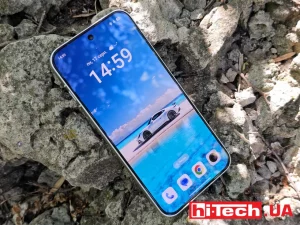
Oppo Reno16 Pro 5G looks like a balanced smartphone, in which the manufacturer tried not to make a single characteristic the defining one. It has many advantages. Let’s tell you what
Garmin Beta 18.27 Rolls Out With Over 12 Fixes

Garmin has released a new beta firmware version, 18.27, for five popular smartwatch models. The update focuses on resolving software bugs and improving overall system stability.
Ugreen MagFlow Debuts: 25W Qi2.2 Foldable Charger for iPhone

Ugreen is readying a compact 2-in-1 foldable wireless charger with Qi2.2 support. The 25W device efficiently powers the latest iPhone models and AirPods accessories.