

Bluetooth 6.2 introduced – 20 times faster connection speed
10.11.25
The Bluetooth Special Interest Group (Bluetooth SIG) has officially introduced the new Bluetooth 6.2 standard, which brings a series of technological improvements without changing the basic architecture of the protocol. Instead of radical innovations, it focuses on gradual evolution – increasing the speed, security and stability of connections.
One of the main innovations is the Shorter Connection Intervals mechanism, which reduces the minimum connection interval in Bluetooth Low Energy (LE) from 7.5 milliseconds to 375 microseconds. This significantly reduces signal latency, making the technology more suitable for systems where instant response is important, for example, in medical devices, automotive electronics or industrial sensors.
Another important update is the support of HCI USB LE Isochronous Support with the new Bulk Serialization Mode (BSM). It allows you to standardize the transfer of synchronous data over USB, which makes it easier to integrate Bluetooth LE Audio into devices with a wired connection. This opens up opportunities for manufacturers of headsets, audio interfaces and adapters without the need for complex drivers.
What’s new in Bluetooth 6.2
Bluetooth 6.2 also increases the level of connection security. The new mechanism protects against radio frequency attacks, in particular, from attempts to intercept based on signal amplitude fluctuations. Such improvements are especially relevant for smart homes and transportation systems, where wireless channel security is key.
In addition, the standard has received LE Test Mode Enhancements – an updated test mode that allows you to check the quality of the connection without using cables directly “over the air”. This simplifies the process of developing and debugging devices that use Bluetooth.
Bluetooth SIG emphasizes that version 6.2 is an evolutionary step, not a revolution, but its impact will be felt in areas where minimal latency, stability, and security are important. In particular, Bluetooth LE Audio, which the company calls “the next generation of wireless audio,” is already integrated into Windows 11, confirming the relevance of this direction of development.
Don't miss interesting news
Subscribe to our channels and read announcements of high-tech news, tes

Oppo A6 Pro smartphone review: ambitious

 0
0 
Creating new mid-range smartphones is no easy task. Manufacturers have to balance performance, camera capabilities, displays, and the overall cost impact of each component. How the new Oppo A6 Pro balances these factors is discussed in our review.
Oppo Reno 15 5G smartphone review: confident
0 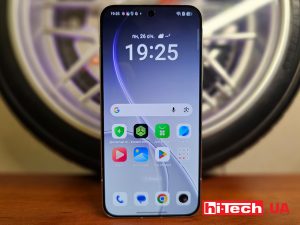
The Oppo Reno15 smartphone emphasizes design, a high-quality display, versatile cameras, and good battery life. Let’s take a closer look.
Study: Artificial Intelligence uses nuclear weapons in 95% of simulations artificial intelligence war

Researchers at King’s College London conducted a series of military simulations using leading artificial intelligence models. The tests used OpenAI’s GPT-5.2, Anthropic’s Claude Sonnet 4, and Google’s Gemini 3 Flash.
Asus ProArt GoPro Edition laptop for action camera fans has gone on sale in Ukraine action-camera Asus laptop
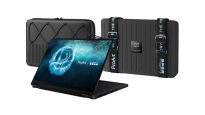
One of the key features of the Asus ProArt GoPro Edition is the proprietary StoryCube service – the first solution for Windows with support for GoPro cloud storage and 360-degree video.