

Bank card Radiance with a flexible OLED display has been developed
26.04.24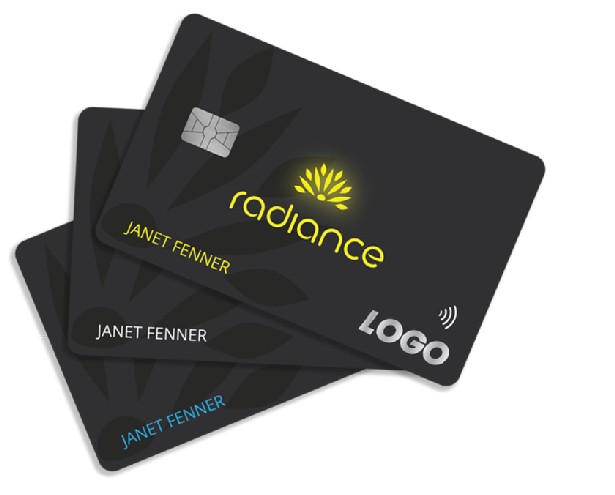
Sentry Enterprises has developed a new line of bank cards called Radiance, equipped with displays. These cards can be either credit or debit and have a small flexible OLED display.
It is important to note that this display is not touchscreen and is not intended to display the time or incoming messages. Instead, it is used for illumination while making payments. Banks also have the option to customize the display to match their logo so that it lights up when the card is used.
Radiance cards can be issued under both Visa and Mastercard brands. Sentry Enterprises partners with Konica Minolta to produce displays. Interestingly, the panel does not require a battery to power it –it receives the necessary energy from the NFC receiver while making payments
There is no exact information yet about the date the first Radiance cards will appear on the market, since Sentry has not yet announced its partners. It is likely in the process of finding banks interested in using Radiance cards.
Don't miss interesting news
Subscribe to our channels and read announcements of high-tech news, tes

Oppo A6 Pro smartphone review: ambitious

 0
0 
Creating new mid-range smartphones is no easy task. Manufacturers have to balance performance, camera capabilities, displays, and the overall cost impact of each component. How the new Oppo A6 Pro balances these factors is discussed in our review.
Oppo Reno 15 5G smartphone review: confident
0 
The Oppo Reno15 smartphone emphasizes design, a high-quality display, versatile cameras, and good battery life. Let’s take a closer look.
Google Gemini can now generate music artificial intelligence Google music

Google has announced the launch of a new feature in the Gemini program that allows users to create music tracks using artificial intelligence
Amazfit T-Rex Ultra 2 – rugged watch with a titanium case and an 870 mAh battery Amazfit protection smart watches

Kkey upgrade of the Amazfit T-Rex Ultra 2 is the 870 mAh battery. This is a 74 percent increase compared to the previous T-Rex Ultra model, which was equipped with a 500 mAh battery.