

Artificial intelligence entrusted with controlling the Perseverance Mars rover
07.02.26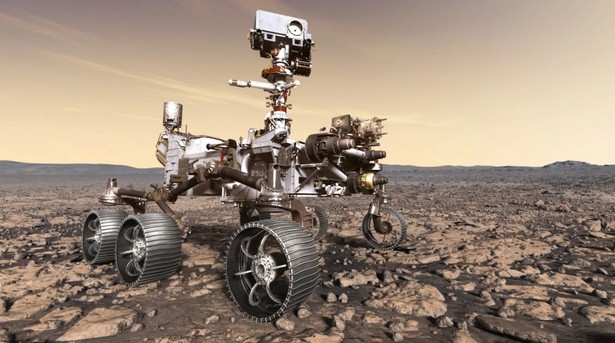
Due to the large delay in the signal from Earth to Mars, which ranges from 3 to 22 minutes depending on the relative position of the planets in orbit, direct control of the rovers using a joystick is impossible. Therefore, until recently, control was carried out in semi-automatic mode – operators assessed the terrain and set navigation points along which the rover moved. That is why all Martian vehicles move so slowly, about 100 meters per day. In early December 2025, NASA conducted an experiment in which it instructed AI to create a route for the Perseverance rover. The agency reported this on January 30, 2026.
An unnamed generative AI model analyzed high-quality images of the Martian surface from the HiRISE camera installed on board the Mars Reconnaissance Orbiter, as well as a digital elevation model of the area where the Perseverance rover is currently located. After identifying critical terrain features—rock outcrops, dangerous boulder fields, sandy areas, and more—the AI created a continuous path for the rover with marked waypoints without human intervention.
First, the Jet Propulsion Laboratory, which created and operates the rover, tested the AI algorithms on a virtual model of Perseverance on Earth, then transmitted the data to Mars. With the loaded AI route, the rover covered 210 and 246 meters without any problems on December 8 and 10, 2025, respectively. This is not yet an absolute record, which is 411 meters per day, but a decent result.
Don't miss interesting news
Subscribe to our channels and read announcements of high-tech news, tes

Oppo A6 Pro smartphone review: ambitious

 0
0 
Creating new mid-range smartphones is no easy task. Manufacturers have to balance performance, camera capabilities, displays, and the overall cost impact of each component. How the new Oppo A6 Pro balances these factors is discussed in our review.
Oppo Reno16 Pro 5G smartphone review: well-heeled
0 
Oppo Reno16 Pro 5G looks like a balanced smartphone, in which the manufacturer tried not to make a single characteristic the defining one. It has many advantages. Let’s tell you what
Framework Laptop 13 Pro Hits 27-Hour Battery Life, Outlasting MacBook Pro 14

Framework Laptop 13 Pro sets new endurance standards for compact laptops, surpassing the results of the Apple MacBook Pro 14 (2025) in battery tests. Learn about the engineering behind its 27.5-hour runtime and whether it is worth an upgrade.
GTA 6 Dominates Netflix: Game Presentation Outperforms Top Movies

The massive 27-minute GTA 6 presentation by Rockstar Games has become the most popular content on Netflix in 87 countries.