

AI instead of love: people are massively creating digital copies of their former partners
20.05.26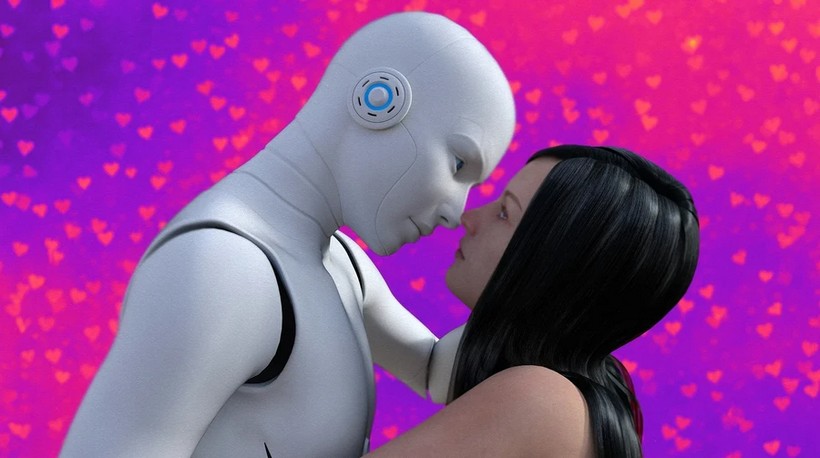
While technology companies convince the world that artificial intelligence should help people work faster and live more comfortably, users are increasingly using it for completely different purposes — to overcome loneliness, emotional trauma and painful breakups. But the new trend, which is rapidly gaining popularity in the network, is already causing serious concern among psychologists and specialists in digital ethics. It is about creating AI clones of former partners — virtual copies of people with whom the relationship ended a long time ago.
In fact, technology has approached one of the most sensitive areas of the human psyche: the inability to let go of the past.
How people “resurrect” their exes with the help of AI
The scenario looks like an episode from science fiction, but today it is already quite real. Users upload correspondence, voice messages, photos, posts from social networks and even fragments of old dialogues to special AI services. The algorithm analyzes the manner of speech, the nature of answers, emotional reactions, vocabulary and gradually forms a digital double of a person.
After that, the user can continue communication as if the breakup never happened.
According to the South China Morning Post, one of the centers of this phenomenon was the Colleague.skill platform, an open-source tool that was not originally created for romantic purposes. The developers wanted to preserve the corporate expertise of employees: communication style, knowledge and work habits. However, very quickly the technology went beyond business.
It turned out that neural networks are able to convincingly copy human communication, so that the user has a feeling of “living presence”. This proved to be enough for people to start using the system for emotional attachment.
And it is not only about former partners. Some enthusiasts create digital versions of famous personalities – such as Elon Musk or Steve Jobs – by uploading interviews, biographies and public appearances.
Why people go for it
On the surface, the answer seems obvious: loneliness and emotional pain after a breakup. But psychologists believe that the reason is deeper.
Modern AI systems create a dangerous illusion of emotional availability. Unlike a real person, a digital clone:
- always responds;
- does not disappear;
- doesn’t really conflict;
- adjusts to the emotional needs of the user;
- creates a sense of control over relationships.
For a person experiencing a loss, it turns into a kind of emotional “painkiller”. Instead of going through the painful process of accepting a breakup, the user remains inside an artificially maintained connection.
Some openly admit that they use AI copies as an opportunity to “communicate” everything that could not be said in real life. Others try in this way to return a sense of closeness or even to correct the mistakes of the past.
But the problem is that the algorithm does not help to end the relationship – it simulates its continuation.
A new type of digital addiction
Experts increasingly compare such services not with therapy, but with a form of emotional dependence of the new generation.
Separation itself is a type of psychological grief. The brain perceives the loss of a relationship almost like the loss of a loved one. But the digital clone interferes with the natural process of experiencing this pain.
Psychotherapists note that a virtual “ex” is able to keep a person at almost every stage of an emotional crisis:
- denial – a feeling is created that the person is still around;
- anger – a safe object for emotional claims appears;
- bargaining – the illusion arises that the relationship can be “overplayed”;
- depression – digital contact becomes a substitute for real intimacy.
The biggest danger is that the user can get stuck inside this loop for a long time. In psychology, this state is called complicated or “frozen” grief – when a person stops moving on and emotionally fixes on the loss.
The consequences can be serious:
- social isolation;
- deterioration of emotional state;
- problems with self-esteem;
- difficulties in building new relationships;
- increasing anxiety and depressive states.
Technology vs real relationships
The situation is further complicated by the fact that modern AI models are designed to hold the user’s attention for as long as possible. It is no longer just a communication tool – it is a system optimized for emotional involvement.
That is why experts in digital ethics consider the current trend particularly disturbing. Unlike classical psychotherapy, where the goal is to accept the situation and gradually recover, AI platforms are actually interested in continuing the interaction.
Simply put, the algorithm benefits the user from letting go of the past.
The line between support and self-deception
Proponents of such technologies argue that digital copies help people cope with loneliness and live emotions in a safe way. Some users really say that after communicating with an AI-clone, they were able to look at the relationship soberly and get over the breakup more easily.
But critics ask another question: what happens when a person begins to emotionally invest not in living people, but in a simulation created by an algorithm?
While the AI industry is rapidly developing, society is just beginning to face the consequences of technology gaining access not only to our work or entertainment, but also to the most vulnerable aspects of the human psyche—memory, attachment, and fear of being alone.
Don't miss interesting news
Subscribe to our channels and read announcements of high-tech news, tes

Oppo A6 Pro smartphone review: ambitious

 0
0 
Creating new mid-range smartphones is no easy task. Manufacturers have to balance performance, camera capabilities, displays, and the overall cost impact of each component. How the new Oppo A6 Pro balances these factors is discussed in our review.
Oppo Reno16 Pro 5G smartphone review: well-heeled
0 
Oppo Reno16 Pro 5G looks like a balanced smartphone, in which the manufacturer tried not to make a single characteristic the defining one. It has many advantages. Let’s tell you what
Legendary Apple-1 Hatfield Computer Heads Back to Auction

A unique collector’s item—the Apple-1 personal computer known as “Hatfield”—is returning to the Bonhams auction block.
Atlas Gadget: Tracking Brain Activity to Sharpen Focus

Atlas 1.0 is a miniature EEG tracker that attaches behind the ear and analyzes multiple biometric indicators at once.