

3DMark developers show video cards performance growth since 2016
27.05.24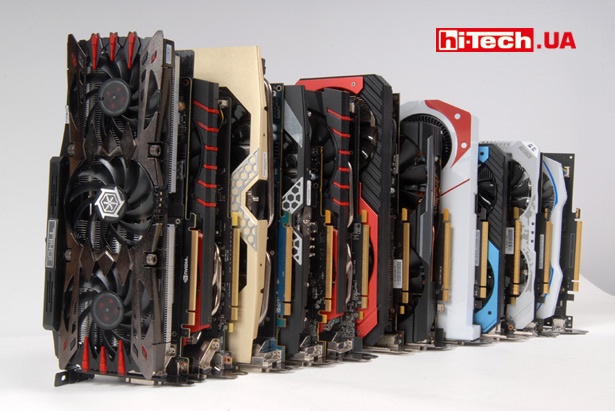
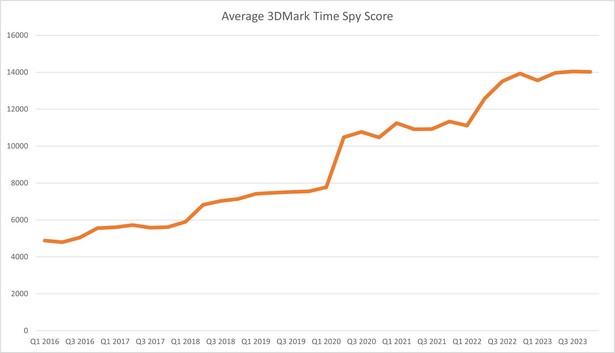
The 3DMark Steel Nomad benchmark was released, which is positioned as the successor to 3DMark Time Spy. On this occasion, UL Solutions shared some interesting statistics. They collected all 48 million 3DMark Time Spy results over the past 8 years to show the increase in average graphics card performance over that period.
The resulting graph showed significant jumps in average 3DMark Time Spy results at times when AMD and NVIDIA released new generations of video cards. The greatest increase in productivity was observed in 2020 and 2022. Nvidia Ampere and AMD RDNA 2 3D accelerators hit the market in 2020, followed by NVIDIA Ada Lovelace and AMD RDNA 3 in 2022. In just eight years, benchmark averages have grown by about 2.8 times.
This growth shows how much the performance of graphics cards has improved and emphasizes the importance of the releases of new architectures from the leading GPU manufacturers.
Video card tests of 2016 at hi-tech.ua:
Don't miss interesting news
Subscribe to our channels and read announcements of high-tech news, tes

Oppo A6 Pro smartphone review: ambitious

 0
0 
Creating new mid-range smartphones is no easy task. Manufacturers have to balance performance, camera capabilities, displays, and the overall cost impact of each component. How the new Oppo A6 Pro balances these factors is discussed in our review.
Oppo Reno 15 5G smartphone review: confident
0 
The Oppo Reno15 smartphone emphasizes design, a high-quality display, versatile cameras, and good battery life. Let’s take a closer look.
Micron releases 3GB GDDR7 memory chips Micron ram videocard
Micron Technology officially announces the launch of new GDDR7 memory chips with a capacity of 3 GB. This is 50% more compared to the usual 2 GB modules
Samsung Galaxy S26 512GB version will be available in Ukraine cheaper events in Ukraine Samsung smartphone

Samsung is betting on a proven strategy: pre-orders get double the storage at no extra cost.