

TrendForce: By the end of 2024, memory will become cheaper, but video cards will become more expensive
25.06.24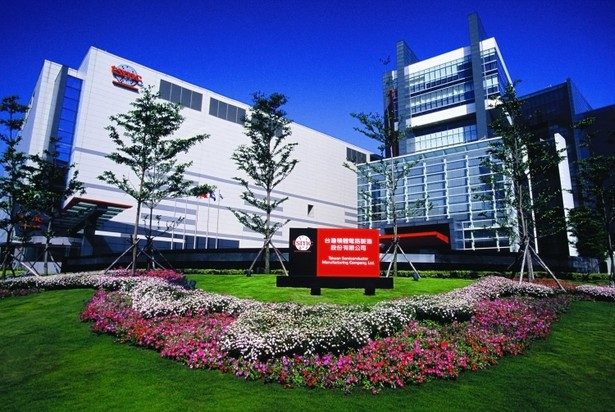
According to the latest TrendForce report, prices for DRAM and NAND memory are unlikely to increase in the near future. On the contrary, there may be conditions for their reduction.
DRAM
Reasons for lower DRAM prices:
- Overstock: The market has accumulated a large amount of memory.
- Smuggling of recovered memory: The Chinese government’s actions to combat the smuggling of recovered memory have a significant impact on prices.
Trends in the DRAM market:
- Spot prices for DRAM continue to fall, despite the stability of contract prices.
- Falling demand for consumer goods reduces the need for additional memory from hardware manufacturers.
- Since the end of May, the average spot price of a DDR4 1Gx8 2666 MT/s chip has decreased by 2.54%, from $1,881 to $1,835.
NAND
NAND price reduction:
- On the NAND spot market, the number of transactions is decreasing due to a sufficient level of inventory at SSD manufacturers.
- The 512 Gb 3D TLC NAND wafer spot price fell 0.57% to $3,309.
Factors Affecting the NAND Market:
- Kioxia has stopped production cuts and intends to increase production of 3D NAND memory to increase market share, which may lead to further price reductions.
Due to expansion costs and rising energy prices, as well as strong demand, TSMC plans to raise the prices of its advanced processes by 5%. TSMC’s N5, N4 (5nm and 4nm) and N3 (3nm) technology lines are working at full capacity.
Demand for TSMC N3 chips is extremely high, with production fully booked by major customers including Apple and NVIDIA until 2026. TSMC’s capacity utilization is expected to exceed 100% in the second half of the year and strong demand will continue through 2025.
Impact on users
- Potential Price Increases for NVIDIA Graphics Cards: Increased production costs for TSMC N3 chips may be passed on to partners or end users.
- Increasing graphics card prices: A 5% price increase for high-end graphics cards can lead to a significant increase in the cost to end customers, taking into account the value added at each stage of the supply chain.
Thus, despite the decline in DRAM and NAND memory prices, TSMC’s advanced technology process prices are expected to rise, which could affect the cost of end products such as graphics cards and other devices with high-performance chips.
Don't miss interesting news
Subscribe to our channels and read announcements of high-tech news, tes

Oppo A6 Pro smartphone review: ambitious

 0
0 
Creating new mid-range smartphones is no easy task. Manufacturers have to balance performance, camera capabilities, displays, and the overall cost impact of each component. How the new Oppo A6 Pro balances these factors is discussed in our review.
Oppo Reno16 Pro 5G smartphone review: well-heeled
0 
Oppo Reno16 Pro 5G looks like a balanced smartphone, in which the manufacturer tried not to make a single characteristic the defining one. It has many advantages. Let’s tell you what
Tesla Cybertruck Prices Hike Again as Artificial Hype Continues

Tesla has once again raised the price of its Cybertruck electric pickup by $5,000. We explore the reasons behind the price hike and the company’s strategy for managing demand.
OpenAI Uncovers Secret Scheme: ChatGPT Used as Disinformation Tool

OpenAI has identified a network of accounts that used ChatGPT to promote the fake “International Burke Institute.”