

Paid Autopilot: Tesla will charge $99 for automatic driving of the car
28.01.26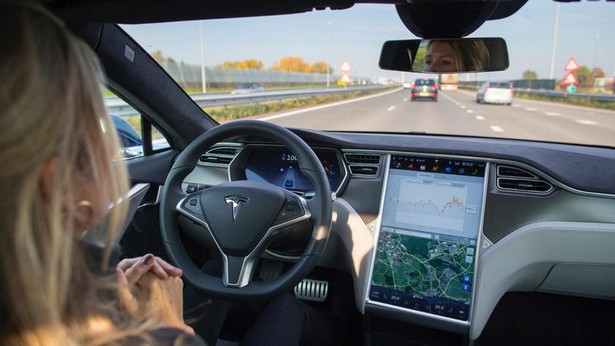
Tesla has radically revised its approach to driver assistance systems in the United States and Canada. The company is removing Autopilot from the standard equipment of the Model 3 and Model Y. New cars now come only with Traffic Aware Cruise Control without the lane-keeping function. To return the automatic steering, buyers will have to subscribe to Full Self-Driving (Supervised) or manage to buy it once by February 14.
For more than a decade, Autopilot has been the basic driver assistance system in Tesla electric cars. It combined adaptive cruise control with the Autosteer function, which recognized the markings, kept the car in the center of the lane and allowed it to make turns. All this corresponded to the level of Level 2 automation – the car controlled the speed and steering, but the driver had to constantly keep his hands on the wheel and be ready to intervene.
What’s left free at Tesla
Now Tesla is actually dismantling this connection. In the configurator, Autopilot has disappeared as a standard option. Only Traffic Aware Cruise Control remains, which uses cameras and an on-board computer to monitor the flow ahead and automatically adjust speed and distance. The software ball, which is responsible for determining lanes, trajectory planning and constant steering commands, the company no longer activates by default. At the same time, the hardware is fully ready to work – the limitation is exclusively software in nature.
A similar approach has already been used by other automakers. BMW offered a subscription for heated seats and the use of adaptive suspension, although all the necessary equipment had already been installed. Volkswagen, in turn, introduced a monthly subscription for the full power of the electric motor.
Changes to Full Self-Driving Sales
In parallel, Tesla is changing the Full Self-Driving sales model. Until February 14, the system can still be purchased once for $8,000 and permanently tied to a specific car. After this date, the one-time purchase option will disappear, and FSD will remain only in the subscription format for $99 per month. The system, as before, is classified as Level 2 and operates under driver control. It can automatically change lanes, follow a route, respond to traffic lights and road signs, using Tesla’s own software stack and neural networks trained on data from the entire fleet.
In fact, Autosteer, which was previously part of Autopilot, has now been completely transferred to the paid FSD level. That means even basic lane-keeping, which many drivers consider standard for a modern electric car, has become a paid feature.
The changes come amid significant regulatory and legal pressure. Tesla has faced lawsuits over allegations that it misrepresented the capabilities of Autopilot and FSD. In California, an administrative law judge found that the company had exaggerated the capabilities of its driver-assistance systems and recommended that Tesla’s license to sell cars be suspended for 90 days. Autopilot has also been implicated in a number of fatal accident cases, one of which resulted in a verdict of approximately $329 million against the company.
Elon Musk’s Business Logic
The abandonment of the Autopilot brand and the concentration of all advanced features in the Full Self-Driving (Supervised) package simplifies the lineup and makes the company’s position more legally secure. Instead of several packages, there is now a basic level with cruise control and one premium option. At the same time, the decision also has business logic: the level of FSD connectivity turned out to be lower than expected, and one of the key indicators in Elon Musk’s reward package is achieving 10 million active FSD subscriptions with 20 million cars sold.
For buyers, everything looks simple and brutal. The new Model 3 and Model Y receive only adaptive cruise control, basic safety systems and a short FSD trial period. Lane keeping will no longer be included as standard. To return the familiar “autopilot” experience on the highway, you will have to pay monthly or understand how to buy FSD once, while this option still exists. Or consider cars from other brands that offer similar features on different terms.
Don't miss interesting news
Subscribe to our channels and read announcements of high-tech news, tes

Oppo A6 Pro smartphone review: ambitious

 0
0 
Creating new mid-range smartphones is no easy task. Manufacturers have to balance performance, camera capabilities, displays, and the overall cost impact of each component. How the new Oppo A6 Pro balances these factors is discussed in our review.
Logitech G G325 headphones review: reliable and long-lasting
0 
Logitech G has released a new gaming headset that offers good ergonomics, stable connectivity, and high battery life at a very affordable price. Let’s talk about the Logitech G G325 in more detail
ASUS ROG Strix OLED XG34WCDMTG gaming monitor that can work without PC Asus monitor OLED
Asus has announced the ROG Strix OLED XG34WCDMTG ultra-wide gaming monitor with an aspect ratio of 21:9. The device has a 34-inch OLED panel
LG Buds Plus xboom Buds Lite – the company’s new Bluetooth headphones Bluetooth earphones LG

LG xboom Buds Lite and xboom Buds Plus have joined the xboom Buds line and are aimed at different categories of users