

OpenAI said that Chinese DeepSeek stole ChatGPT data for AI training
31.01.25
Developer ChatGPT said he has evidence that Chinese company DeepSeek used OpenAI data to train its rival AI model. OpenAI’s rules state that users cannot copy the company’s services or use their results to build competing models.
This is a method of “distillation” – a process that allows smaller models to become more efficient by using the results of larger versions. Distillation is a common practice in the industry, but if DeepSeek used it to build a competitor, it violates OpenAI’s terms of service.
The release of the new DeepSeek model has shaken the AI market, causing a collapse in the shares of key companies in the industry. Nvidia shares fell by more than 17%, resulting in a loss of almost $600 billion in one day. However, on Tuesday, the situation partially stabilized and Nvidia shares rose by 9%. Previously, entrepreneur David Sachs, who was responsible for the development of AI under the Trump administration, said that “data theft is quite possible.”
Experts believe that the theft of training data from companies such as OpenAI is common for smaller Chinese and American AI labs, since full-fledged training requires significant investment. DeepSeek said that it used a cluster of 2,000 Nvidia H800 graphics cards and spent $ 5.6 million to train its V3 model with 671 billion parameters, while training GPT-4 cost $ 100 million. Suspicions of data theft arose even during the launch of the Chinese model, when it claimed that “it is ChatGPT.”
OpenAI and its key partner Microsoft are reported to have investigated and blocked accounts that probably belong to DeepSeek and were used for distillation last fall. OpenAI is also currently facing copyright infringement allegations from publishers and content creators, including a lawsuit from The New York Times, which claims the company is training its models on their articles without permission.
Don't miss interesting news
Subscribe to our channels and read announcements of high-tech news, tes

Oppo A6 Pro smartphone review: ambitious

 0
0 
Creating new mid-range smartphones is no easy task. Manufacturers have to balance performance, camera capabilities, displays, and the overall cost impact of each component. How the new Oppo A6 Pro balances these factors is discussed in our review.
Acer Nitro Lite 16 (NL16-71G) laptop review: versatile and attractive
0 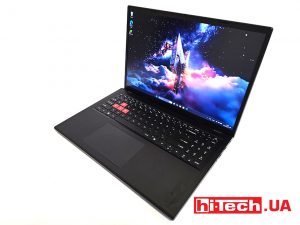
The 2025 Acer Nitro Lite 16 features an interesting case design, gaming accents, and proven components. Let’s take a closer look at its features.
Apple iPhone and iPad receive NATO security clearance iPad iPhone Security

The approval makes the iPhone and iPad the first commercial consumer devices approved to handle this type of data under NATO standards.
HP: Memory and storage now cover third of the PC cost business HP memory drive ram
If in 2025 the cost of memory and storage devices accounted for 15-18% of the total cost of components, now the figure is approaching 35%.