

Google will acquire part of HTC’s XR business for $250 million
28.01.25
Google has reached an agreement with Taiwanese company HTC to buy part of its XR business for $250 million. The deal includes the transfer of part of the HTC VIVE engineering staff to Google, as well as the granting of rights to intellectual property related to XR technologies.
- HTC VIVE engineering staff will move to Google, which will strengthen the company’s expertise in the field of XR.
- HTC will retain the right to use and develop the transferred technologies.
- Google plans to integrate the acquired solutions to accelerate the development of the Android XR platform, designed for headsets and glasses of augmented and virtual reality.
This step by Google is part of the strategy to strengthen its position in the XR market, which is dominated by giants such as Apple and Meta. The development of XR technologies is becoming a key direction for large players seeking to create a new generation of ecosystems.
This isn’t the first major deal between Google and HTC. In 2017, Google acquired HTC’s mobile division for $1.1 billion, a milestone that paved the way for the Pixel smartphone series. Google hopes the new deal will accelerate its development in XR and help the company compete in the augmented and virtual reality space.

HTC has introduced its new virtual reality helmet Vive Flow. HTC Vive Flow is equipped with two displays with a resolution of 1600×1600 pixels. The screens have a refresh rate of 75 Hz and a viewing angle of 100 degrees. There are lenses with adjustable focus on each side of the headset.
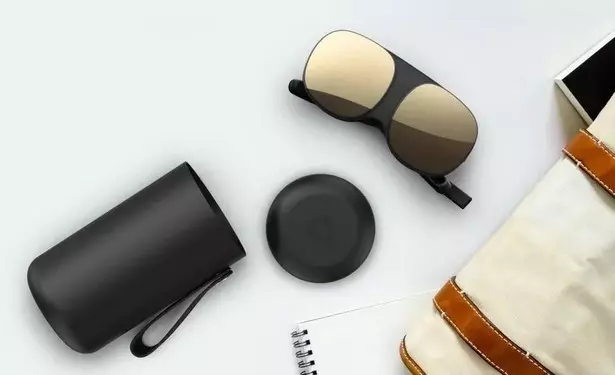
It is equipped with two speakers and two microphones with noise and echo cancellation. HTC Vive Flow comes without a remote control. Instead, a smartphone acts as a controller. The helmet has Bluetooth 5.0, Wi-Fi and Miracast support.
The novelty is powered via a USB-C port. HTC managed to reduce the power consumption of the helmet to 7.5 W. This allows you to charge the gadget from a power bank or smartphone. It is worth noting the presence of a hot swap function. It allows you to switch the helmet to another power source within 5 minutes.

The helmet has 4 GB of RAM, as well as a 64 GB storage and a cooling system. The novelty has received compact dimensions and a weight of 189 grams. Sales of HTC Vive Flow start in November, but you can order it now. The price is $ 499.
Interestingly, HTC posted a lot of photos of both the headset itself and people using it. In general, there is nothing criminal in this approach, but The Verge published a news story on this topic with the headline “I have a hard time believing that your device is good if you had to Photoshop it on a model“.
Don't miss interesting news
Subscribe to our channels and read announcements of high-tech news, tes

Oppo A6 Pro smartphone review: ambitious

 0
0 
Creating new mid-range smartphones is no easy task. Manufacturers have to balance performance, camera capabilities, displays, and the overall cost impact of each component. How the new Oppo A6 Pro balances these factors is discussed in our review.
Oppo Reno 15 5G smartphone review: confident
0 
The Oppo Reno15 smartphone emphasizes design, a high-quality display, versatile cameras, and good battery life. Let’s take a closer look.
Samsung Galaxy Buds 4 and Buds 4 Pro – more integrated with the Galaxy ecosystem Bluetooth earphones Samsung

The Samsung Galaxy Buds4 and Buds4 Pro weren’t so much about a revolution in sound, but rather about design changes, ergonomics, and deeper integration with the Galaxy ecosystem.
Oppo Enco Air 5 Pro headphones have IP55 protection and price $50 Bluetooth earphones Oppo

Oppo launches a new generation of fully wireless headphones – Oppo Enco Air 5 Pro with IP55 protection