

Chinese scientist developed electronic skin that allow robots to feel pain
06.01.26
Scientists from the City University of Hong Kong have unveiled a next-generation neuromorphic electronic skin that gives humanoid robots the ability to sense touch and respond to excessive pressure, effectively simulating the sensation of pain. NotebookCheck reported on the development, citing a publication in the scientific journal PNAS.
The goal of the technology is to make interactions between robots and humans safer and more natural. With this new electronic skin, machines can not only detect physical contact but also analyze its intensity, trigger responses, and activate protective reflexes in the event of danger.
How robot electronic skin works
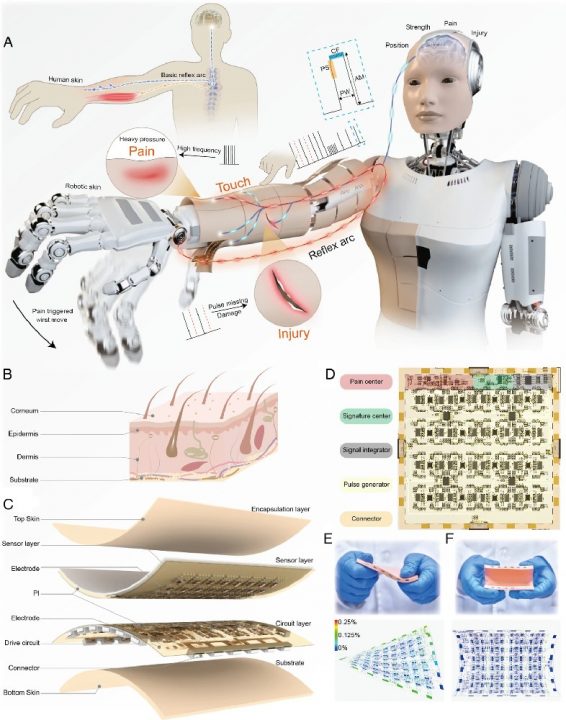
The NRE electronic skin has a four-layer structure and a hierarchical architecture based on the principles of human skin. When lightly pressed, the sensors go beyond simply measuring pressure and generate electrical impulses that are sent to the central processor. There, the system analyzes the signal and determines the robot’s response.
If the force of impact exceeds a preset safety threshold, the e-skin generates a high-voltage signal that is transmitted directly to the motors, bypassing central processing. In this case, the robot instantly withdraws the corresponding body part, reducing the risk of damage to its own mechanisms and dangerous contact with a person. Researchers note that this design significantly reduces reaction time and improves safety during physical interaction.
Why do robots need feelings?
In addition to its protective functions, NRE skin is capable of self-diagnosis. Each sensor element periodically sends a so-called “life signal” confirming its functionality. If this signal disappears, the system identifies the damaged area. Replacing a module requires technical intervention, but the developers envision the possibility that the robots will be able to perform such operations independently after appropriate software updates.
The authors of the study believe that the presented technology demonstrates a new level of sensory system integration in modern robotics, combining protection and self-monitoring mechanisms. According to them, neuromorphic e-skin has significant potential for use in the creation of humanoid robots that can work safely and effectively alongside people.
Don't miss interesting news
Subscribe to our channels and read announcements of high-tech news, tes

Oppo A6 Pro smartphone review: ambitious

 0
0 
Creating new mid-range smartphones is no easy task. Manufacturers have to balance performance, camera capabilities, displays, and the overall cost impact of each component. How the new Oppo A6 Pro balances these factors is discussed in our review.
Home autonomous power sources: inverters, batteries, solar panels
0 
Let’s try to figure out how to choose the right inverter depending on the load power, sine wave type, and battery system configuration.
Doom launched on wireless headphones Doom games

Sydney-based enthusiast Arin Sarkisian has created a unique port of the classic Doom game that runs on PineBuds Pro headphones.
Samsung has developed technology to hide content on the screen development Samsung smartphone

New feature allows you to limit screen visibility to outsiders at certain angles