

Artificial nervous system for robots will allow them to feel touch
26.07.25
A team of researchers from the Korea Advanced Institute of Technology (KAIST) has created an artificial sensory nervous system that allows robots to respond differently to safe and potentially dangerous touches.
The development is based on a neuromorphic semiconductor – a new type of memristor that can process external stimuli without the use of complex software and high computing power.
In living organisms, similar reactions are regulated by the processes of gibbitation (weakening of the response to repeated neutral stimuli, such as noise or the touch of clothing) and
The key component is an improved memristor, which, unlike previous versions, can change conductivity not only in one direction, but also in the opposite direction. This allows the device to gradually reduce sensitivity to repeated stimuli, but quickly activate in the presence of a pain signal.
The system was tested on an artificial hand. Initially, it responded to every touch, but with the repetition of safe stimuli, the sensitivity decreased. When a painful stimulus (electrical impulse) was added, the reaction sharply increased.
According to the authors, this is proof that compact and energy-efficient sensor systems for robots can function without powerful computing resources, which opens up new prospects in the development of robotics and neuroengineering.
Don't miss interesting news
Subscribe to our channels and read announcements of high-tech news, tes

Oppo A6 Pro smartphone review: ambitious

 0
0 
Creating new mid-range smartphones is no easy task. Manufacturers have to balance performance, camera capabilities, displays, and the overall cost impact of each component. How the new Oppo A6 Pro balances these factors is discussed in our review.
Oppo Reno16 Pro 5G smartphone review: well-heeled
0 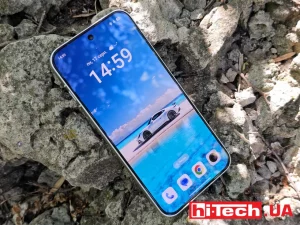
Oppo Reno16 Pro 5G looks like a balanced smartphone, in which the manufacturer tried not to make a single characteristic the defining one. It has many advantages. Let’s tell you what
OpenAI Adds Task Scheduling to Free ChatGPT

The scheduled tasks feature is now available to users of the free version of ChatGPT.
Samsung Galaxy Quantum 7: Mid-Range Phone With Flagship-Grade Support

Samsung introduced the Galaxy Quantum 7 for the Korean market, known globally as the Galaxy A57.