

Robots replacing warehouse workers in Japan
20.09.25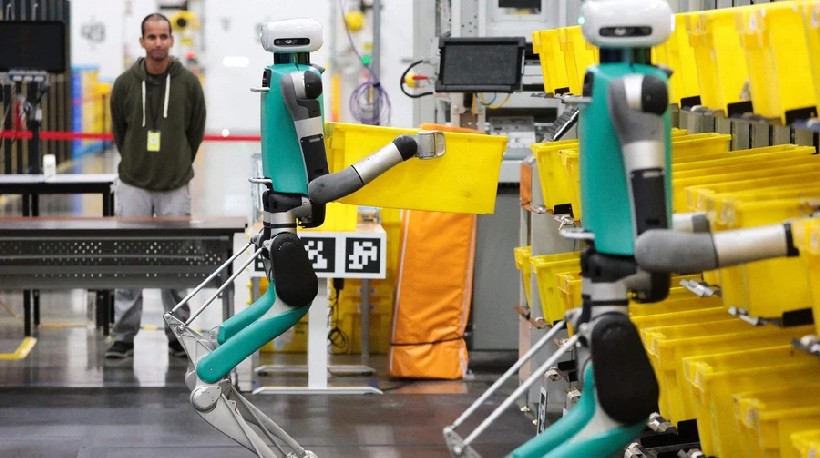
In the face of an acute labor shortage, Japan is actively testing automation of warehouses and deliveries. According to the Financial Times, the country is considering robotization as one of the ways to maintain the previous pace of logistics and compensate for the decline in the number of employees.
The number of robots at Amazon’s warehouse in Chiba city already exceeds two thousand employees. Thanks to automation, the capacity of the facility is 40% higher than in conventional warehouses. The company also introduced a new automatic packaging machine and a sorting system that allows combining several goods into one package.
Other applications of robots
However, experts note that bringing robots to the streets for direct delivery is still much more difficult. The country is facing a severe shortage of truck drivers: according to Nomura Research Institute, by 2030 their number will decrease by a third to about 480,000. Amazon is considering a transition from large distribution centers to smaller hubs closer to customers, where robots can perform more tasks of packaging and sorting.
The company is also launching an artificial intelligence system, DeepFleet, which manages robots in warehouses and increases their speed by about 10%. At the same time, Japanese logistics giants such as Nippon Express are introducing innovations more cautiously due to the high cost, variety of goods and specific customer requests. Most projects still remain demonstration projects, and companies are assessing their economic benefits.
According to analysts, in 2024 the warehouse automation market in Japan reached $1.28 billion. Until 2030 it is planned to grow by more than 21% annually. The main profit is still brought by equipment, but the fastest growing segment is the software segment.
The main obstacles to the large-scale implementation of robotics are the high cost of integration into existing facilities, the complex architecture of Japanese warehouses with small areas and multi-level layouts, as well as the relatively slow development of e-commerce. In Japan, online sales occupy less than 10% of the retail market, which is significantly lower than in Europe.
To compensate for the labor shortage, logistics companies are even considering the possibility of hiring foreign drivers. The service sector is experiencing similar problems: some Japanese cafes already employ robot waiters in the form of cats, which emphasizes the large-scale demographic challenges for the country.
Don't miss interesting news
Subscribe to our channels and read announcements of high-tech news, tes

Oppo A6 Pro smartphone review: ambitious

 0
0 
Creating new mid-range smartphones is no easy task. Manufacturers have to balance performance, camera capabilities, displays, and the overall cost impact of each component. How the new Oppo A6 Pro balances these factors is discussed in our review.
Oppo Reno16 Pro 5G smartphone review: well-heeled
0 
Oppo Reno16 Pro 5G looks like a balanced smartphone, in which the manufacturer tried not to make a single characteristic the defining one. It has many advantages. Let’s tell you what
Cuktech 25 SE Debuts Globally With 25,000mAh Capacity and 100W Charging

Cuktech has launched its 25 SE power bank globally, featuring a 25,000mAh capacity, 100W fast charging, and a convenient built-in cable.
Sony Reveals Four Free Games for PlayStation Plus in September 2026

Sony has officially announced the September monthly lineup for PS Plus subscribers. Players will get four games ranging from military shooters to JRPGs, available for download starting September 1, 2026.