

Qualcomm buys Arduino company
13.10.25
Qualcomm announced that it has entered into an agreement to acquire Arduino, an Italian non-profit organization. Arduino is an open-source platform widely known among developers, students and engineers as a tool for prototyping robots and automation systems. According to the company, Arduino solutions are used by more than 33 million developers worldwide. The deal is part of Qualcomm’s strategy to expand its presence in the areas of edge computing, artificial intelligence (AI) and the Internet of Things (IoT).
The acquisition will allow Qualcomm to integrate its own technologies into the Arduino ecosystem, which is compatible with chips from various manufacturers. This will open up wider access to Qualcomm tools to developers around the world and accelerate the transition from the prototyping stage to commercial implementation of solutions.
Arduino will maintain independence in making engineering and personnel decisions, and will continue to develop its brand. The deal complements Qualcomm’s recent acquisitions of Foundries.io and Edge Impulse, allowing the company to build a complete ecosystem spanning all levels – from hardware to cloud services.
Don't miss interesting news
Subscribe to our channels and read announcements of high-tech news, tes

Oppo A6 Pro smartphone review: ambitious

 0
0 
Creating new mid-range smartphones is no easy task. Manufacturers have to balance performance, camera capabilities, displays, and the overall cost impact of each component. How the new Oppo A6 Pro balances these factors is discussed in our review.
Oppo Reno 15 5G smartphone review: confident
0 
The Oppo Reno15 smartphone emphasizes design, a high-quality display, versatile cameras, and good battery life. Let’s take a closer look.
Blizzard will release Overwatch mobile Blizzard games smartphone

Blizzard Entertainment has officially confirmed the development of a mobile game in the Overwatch universe. The new project is called Overwatch Rush and is being created specifically for smartphones.
MIT 3D-printed electric engine for 50 cents 3D print research science
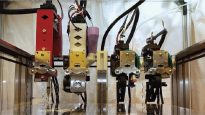
As part of the MIT demonstration, engineers created an electric linear motor that generates translational motion instead of rotating a shaft.