

Porsche introduces fully electric Cayenne
26.11.25
Porsche has officially introduced the new Cayenne Electric, an electric crossover that debuted in two versions with a price starting at 105,200 euros.
Design and dimensions
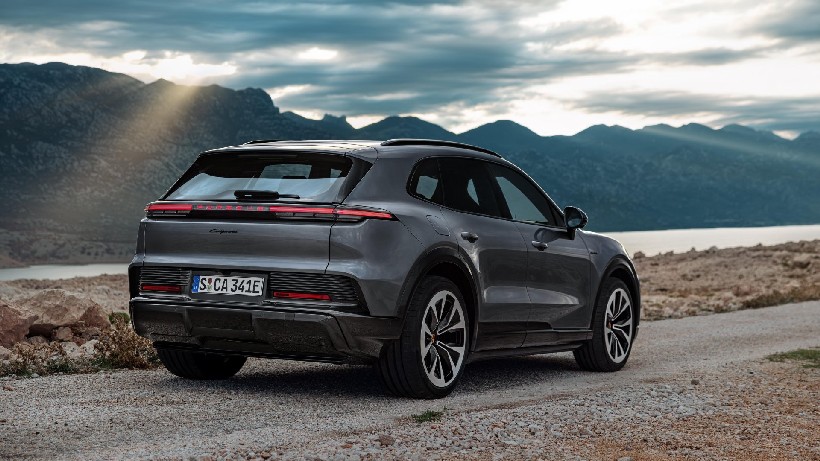
The new Cayenne Electric is 55 mm longer and 24 mm higher than the internal combustion engine version, and its wheelbase has been increased by almost 13 cm. The overall dimensions of the car are 4985×1980×1674 mm, the distance between the axles is 3023 mm.
The design of the model emphasizes width due to narrow headlights and a long hood, while frameless doors and contoured wings give dynamism. At the back is a horizontal light strip and an illuminated Porsche logo. An off-road package is available for the Turbo.
The car is equipped with active aerodynamic elements: an adaptive spoiler, Turbo blades and air cooling flaps, which improves aerodynamics and increases range at high speeds.
Interior and technology
The Cayenne Electric offers extensive personalization options: 12 interior options, 5 accent packages and 5 personalization packages. The transparency of the panoramic roof is adjustable, and a new heating system includes seats and contact surfaces.
The central feature of the interior is the Flow Display – a vertical touchscreen, tilted downwards, complemented by a 14.25-inch instrument panel, an optional 14.9-inch passenger display and a driver’s head-up display. There are physical buttons for climate control and audio, as well as voice control.
The rear seats are electrically adjustable, the trunk from 781 to 1588 liters, the front trunk – an additional 90 liters. The permissible trailer weight is up to 3.5 tons.
Power and characteristics
The basic Cayenne Electric develops up to 325 kW (442 hp) and 835 Nm of torque. Acceleration from 0 to 100 km/h – 4.8 seconds.
The Cayenne Turbo Electric has a maximum output of 850 kW (1,155 hp) with all-wheel drive. In standard mode – 630 kW, the push-to-pass function adds 130 kW for 10 seconds, and Launch Control allows acceleration to 100 km/h in 2.5 seconds and 0–200 km/h in 7.4 seconds.
The battery of both versions is 113 kWh. WLTP range: up to 642 km for the Cayenne Electric and 623 km for the Turbo. Thanks to the 800-volt architecture, fast charging with direct current up to 390–400 kW allows you to recharge the battery from 10 to 80% in less than 16 minutes.
Additional features
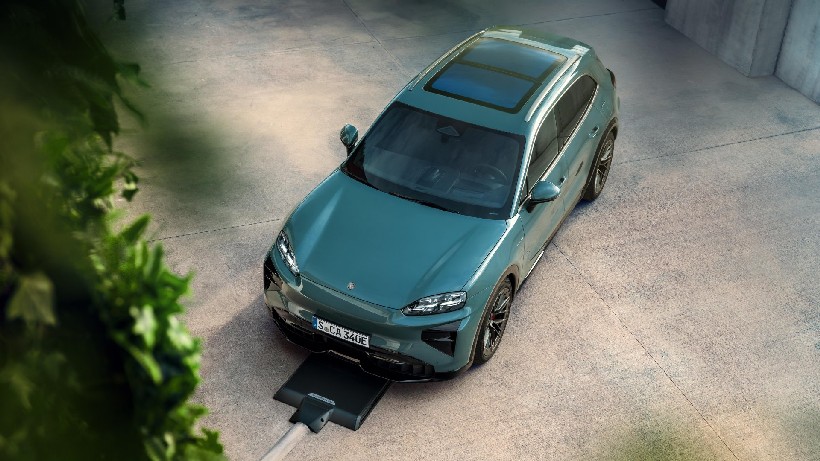
The Cayenne Electric supports inductive charging up to 11 kW (Porsche Wireless Charging). The recuperation mode delivers up to 600 kW, which significantly reduces the load on the mechanical brakes. The PCCB ceramic brake system is available for the Turbo.
Price and availability
The price of the basic Cayenne Electric is from 105,200 euros, the Cayenne Turbo Electric from 165,500 euros. Orders are now open.
Don't miss interesting news
Subscribe to our channels and read announcements of high-tech news, tes

Oppo A6 Pro smartphone review: ambitious

 0
0 
Creating new mid-range smartphones is no easy task. Manufacturers have to balance performance, camera capabilities, displays, and the overall cost impact of each component. How the new Oppo A6 Pro balances these factors is discussed in our review.
Poco M8 Pro smartphone review: give us more
0 
Poco M8 Pro 5G immediately catches the eye with its size and the manufacturer’s desire to offer more than you’d typically expect from a device in this price range. It’s not just another mid-range device.
Returning of international Ukrposhta delivery will become free events in Ukraine post

“Ukrposhta” as a member of the Universal Postal Union delivers items to more than 230 countries and territories. The partner network of national postal operators covers more than 660 thousand post offices
Samsung Galaxy S26 will be presented on February 25, 2026. What will the new flagships be like? Samsung smartphone

All Samsung Galaxy S26 models will receive the new Qualcomm Snapdragon 8 Elite Gen 5 processor, and the differences between the Galaxy S26 Ultra and the previous model may be more noticeable.