

ELSA Gigalo Gryf – a data center in a suitcase on wheels
06.04.26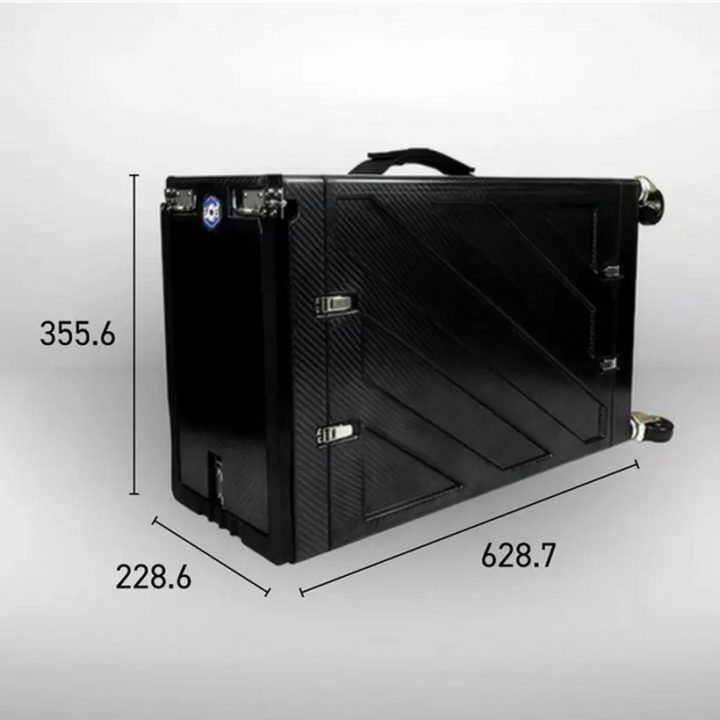
The Japanese company ELSA has introduced an unusual form of server solution — the Gigalo Gryf, which packs the computing power of a full data center rack into a suitcase-like chassis. Developed in collaboration with Gigalo, it is designed for running neural networks locally without relying on cloud services or renting space in a traditional data center.
A mobile computing platform
The main highlight of the system is its portability. Weighing no more than 25 kg, it is exceptionally lightweight for professional server hardware. This is not just a standard workstation; it is a fully mobile computing complex that can be transported easily.
Inside the chassis, there are six slots for modules. Users can configure the system according to their needs — adding additional compute units, accelerators, or storage drives.
Hardware foundation and performance
The system is powered by server processors AMD EPYC 7713P and AMD EPYC 7313P. However, graphics accelerators play a central role in AI workloads.
Available configurations include:
- NVIDIA H100 NVL (94 GB memory)
- NVIDIA L40S (48 GB memory)
The top-tier H100 configuration delivers an impressive 3341 TFLOPS (FP8), suitable for training and inference of complex AI models.
For data storage, the system offers up to 246 TB, enough for large datasets and AI model libraries.
Flexible architecture without tools
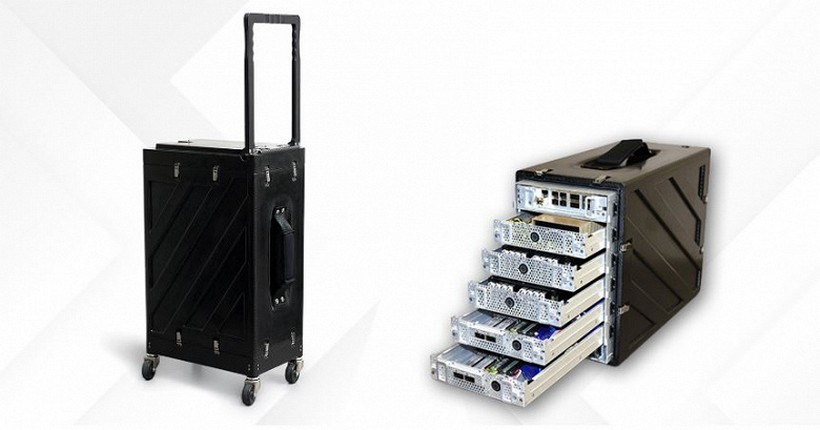
Gigalo Gryf uses the proprietary Fabrex PCIe/CXL bus, which allows dynamic allocation of resources between the CPU, GPU, and memory purely through software.
This eliminates the need to physically reconfigure the system — all adjustments can be made via software, making it convenient for varying computational tasks.
Scaling up to cluster-level performance
Multiple units can be connected to work as a single cluster. Up to five Gigalo Gryf systems can operate together, providing:
- Performance exceeding 3600 TFLOPS (FP16)
- Storage capacity scaling to the petabyte level
Effectively, this creates a mobile supercomputer deployable in offices or field locations with only basic infrastructure requirements.
Don't miss interesting news
Subscribe to our channels and read announcements of high-tech news, tes

Oppo A6 Pro smartphone review: ambitious

 0
0 
Creating new mid-range smartphones is no easy task. Manufacturers have to balance performance, camera capabilities, displays, and the overall cost impact of each component. How the new Oppo A6 Pro balances these factors is discussed in our review.
Oppo Reno16 Pro 5G smartphone review: well-heeled
0 
Oppo Reno16 Pro 5G looks like a balanced smartphone, in which the manufacturer tried not to make a single characteristic the defining one. It has many advantages. Let’s tell you what
Anbernic RG 55G1 Surfaces as Brand’s First Snapdragon-Powered Handheld

The Anbernic RG 55G1 is the company’s first console to run on the Snapdragon G1 Gen 2 processor, featuring a 5.5-inch Full HD display and Hall Effect joysticks and triggers.
Squadron 42 Delayed to 2027 to Avoid GTA 6 Clash

Cloud Imperium Games has pushed the release of Squadron 42 to the second quarter of 2027 due to the launch of GTA 6.