

A processor that can operate at temperatures up to 700 degrees was accidentally designed.
05.04.26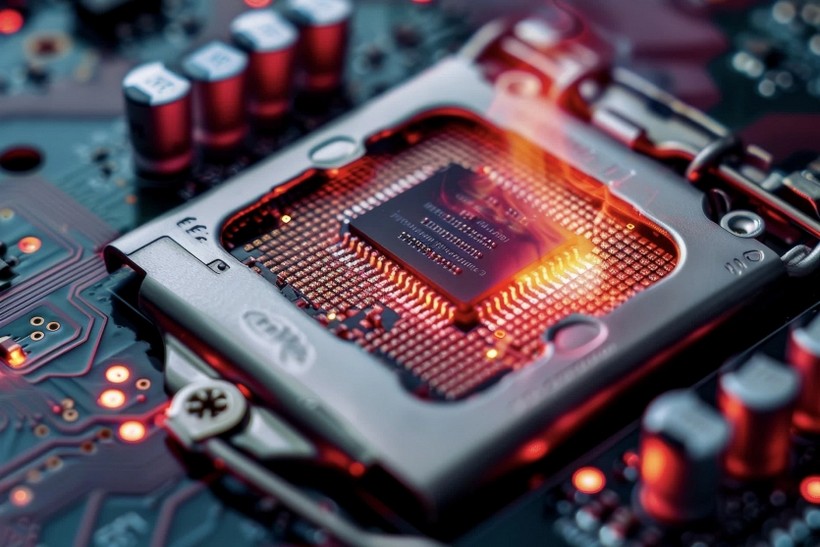
A serendipitous discovery by scientists could change the way high-temperature electronics are designed. During experiments, researchers created a chip that functions at temperatures previously considered destructive for any electronic component.
Why high temperatures were a challenge
Electronic devices traditionally struggle with heat: above 200 °C, they stop functioning entirely. This limitation hindered the development of instruments for extreme conditions, such as planetary exploration or deep-earth drilling. The new USC team’s chip could break this thermal barrier.
Record-breaking heat resistance
The study published in Science shows a memory chip operating reliably at 700 °C — hotter than lava. It maintained data for over 50 hours, survived more than a billion switching cycles, and worked at only 1.5 V, with nanosecond-level response. By comparison, modern smartphone and satellite chips degrade after just a few hours at 200 °C.
“This is a revolutionary achievement,” said lead researcher Joshua Yan.
The chip’s design secrets
The chip is structured like a “layered sandwich”:
- Top layer: tungsten, highly heat-resistant.
- Middle layer: thin ceramic.
- Bottom layer: graphene, preventing short circuits.
In conventional chips, heat pushes metal atoms through the ceramic, causing short circuits. Graphene stops this: tungsten atoms cannot adhere to its surface and retreat, preserving functionality. Yan compares the effect to “oil and water.”
“By our estimates, this is the most heat-resistant memory ever demonstrated,” the scientist emphasized.
The discovery was accidental
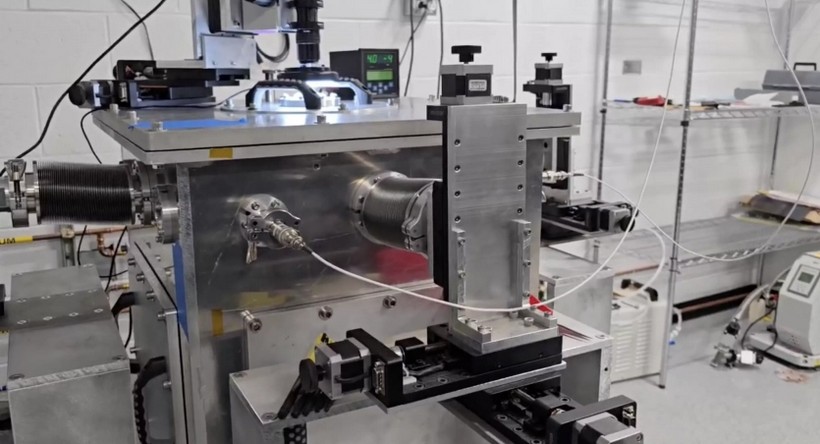
Interestingly, this remarkable effect was discovered by chance. “Most major scientific breakthroughs happen unexpectedly, and this is no exception,” Yan noted.
Applications in artificial intelligence
The chip can accelerate computations in AI systems like ChatGPT. Over 90 % of operations in such systems involve repetitive calculations, which this chip can perform directly as current passes through, increasing speed and energy efficiency compared to current solutions.
Mass production and future prospects
Two of the three materials — tungsten and hafnium oxide — are already standard in global semiconductor manufacturing. Graphene is newer, but companies like TSMC and Samsung have already incorporated it into their roadmaps and successfully grown it in lab-scale wafers.
“We are close to using this chip for space research and other extreme projects. It opens entirely new horizons,” Yan said.
Funding and research base
The project is conducted at CONCRETE — the Center for Neuromorphic Computing under Extreme Environments, with support from the U.S. Air Force Research Laboratory.
Don't miss interesting news
Subscribe to our channels and read announcements of high-tech news, tes

Oppo A6 Pro smartphone review: ambitious

 0
0 
Creating new mid-range smartphones is no easy task. Manufacturers have to balance performance, camera capabilities, displays, and the overall cost impact of each component. How the new Oppo A6 Pro balances these factors is discussed in our review.
Oppo Reno16 Pro 5G smartphone review: well-heeled
0 
Oppo Reno16 Pro 5G looks like a balanced smartphone, in which the manufacturer tried not to make a single characteristic the defining one. It has many advantages. Let’s tell you what
ChatGPT Locked Chats Spotted: PIN and Biometric Security

OpenAI is working on a Locked Chats feature that will allow users to hide individual ChatGPT conversations.
Signia Unveils MaX Platform With Quad-Neural Engine for Hearing Aids

Signia Pure CG MaX is the first hearing aid based on the new MaX platform, utilizing four specialized neural networks.