

The end of the OpenAI browser era: ChatGPT Atlas is shutting down
12.07.26
OpenAI has decided to stop supporting ChatGPT Atlas, its specialized browser with integrated artificial intelligence. The project, launched in the fall of 2025, is completely closed on August 9, 2026.
ChatGPT Atlas and why it was needed
Atlas was presented as a browser-oriented deep integration of ChatGPT capabilities. A key feature was agent functions that allowed AI to perform complex tasks and actions on behalf of the user directly within web pages. During its existence, the product managed to receive a number of functional updates, including support for user profiles, groups of tabs and work with extensions.
Reasons for closing the project
The decision to “sunset” Atlas is dictated by a change in OpenAI’s strategy. The company aims to reduce the number of disparate software solutions and consolidate resources within key products. In particular, the capabilities that users received in Atlas will become the basis of new tools, in particular, based on the ChatGPT Work program.
Integration into ChatGPT Work
The developers of OpenAI plan to transfer the accumulated experience of working on Atlas to the new ecosystem. The functionality of Atlas is now combined with the capabilities of the company’s other program, Codex, which was released in April. These components will be part of ChatGPT Work, presented simultaneously with the release of the updated GPT-5.6 model. Thus, the entire toolkit for productivity is gradually migrating to a single desktop service.
Optimization of the OpenAI product line
The closure of Atlas continues a series of changes at the company. Previously, OpenAI had already stopped supporting the Sora video generator and announced plans to consolidate the underlying applications into a single super-platform for work and personal tasks. At the moment, the main priority of the company is to transform ChatGPT into a full-fledged “superapp” capable of closing most of the user’s requests.
Should we wait for Atlas to return?
Most likely, the functionality in its former form will not return. The experience of creating Atlas was used as a kind of research ground. James Sun from the development team confirmed that it was thanks to users who believed in the new concept of the browser that the company was able to understand exactly how AI agents can help with the open network and apply this knowledge to future updates of the main interface.
Don't miss interesting news
Subscribe to our channels and read announcements of high-tech news, tes

Oppo A6 Pro smartphone review: ambitious

 0
0 
Creating new mid-range smartphones is no easy task. Manufacturers have to balance performance, camera capabilities, displays, and the overall cost impact of each component. How the new Oppo A6 Pro balances these factors is discussed in our review.
Oppo Reno16 Pro 5G smartphone review: well-heeled
0 
Oppo Reno16 Pro 5G looks like a balanced smartphone, in which the manufacturer tried not to make a single characteristic the defining one. It has many advantages. Let’s tell you what
Xiaomi Debuts Robot Vacuum with Active Roller Mop and AI Mapping
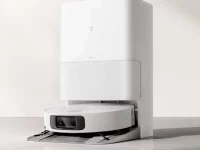
Xiaomi has announced the Mijia 7C robot vacuum, featuring an active scrubbing roller, 30,000 Pa of suction power, and an intelligent obstacle recognition system. The new model aims to revolutionize wet cleaning with its continuous washing system.
Oko HD: A Breakthrough in Ukrainian HD Thermal Imaging Technology

Ukrainian company Oko Kamera has announced the development of an innovative thermal imaging camera with an HD sensor.