

RAM Crisis: Nvidia AI Servers Face 15% Price Hike
24.08.26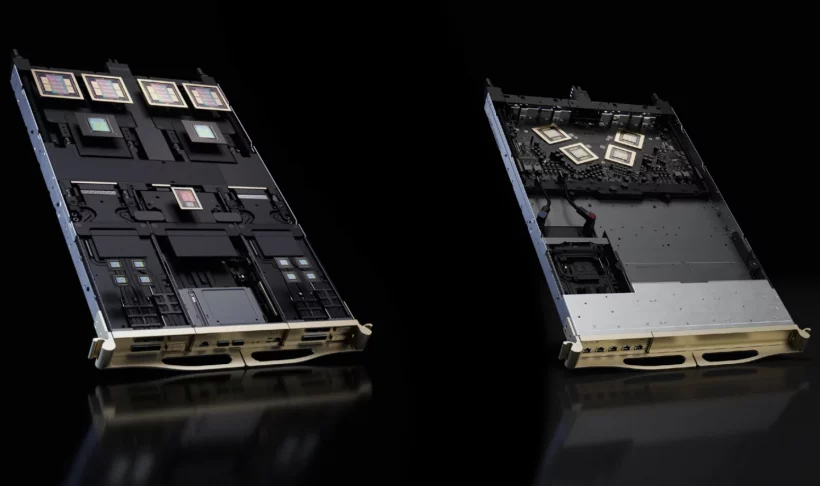
Nvidia has officially notified key customers of an upcoming price increase for servers equipped with its proprietary AI accelerators. In most cases, the price hike will exceed 15%.
This move is driven by a critical imbalance in the components market: demand for memory used in AI systems is significantly outpacing current production capacity. The use of specialized accelerators requires massive amounts of RAM, the cost of which has increased significantly in recent periods.
Which Nvidia Systems Will Become More Expensive
The price increase will affect servers of various generations. This includes configurations based on the company’s most current architectures, such as:
- Vera Rubin
- Grace Blackwell
The exact markup will depend on the specific accelerator generation and the amount of installed memory. The new pricing is expected to take effect for systems scheduled for delivery at the beginning of next year.
Who Will Face Price Hikes
Notifications are being sent by contract manufacturers that assemble equipment for the largest data center operators. Companies that may face additional costs include Microsoft, Google, and Oracle.
This situation clearly demonstrates the crisis in the DRAM memory industry. Major market players—Samsung, SK hynix, and Micron—are struggling to keep up with the surge in demand from the AI sector. Since the performance of Nvidia accelerators is directly dependent on the amount of DRAM, rising memory chip prices are immediately reflected in the total cost of the entire server solution.
Market Outlook and Consequences for the AI Industry
The implementation of many data center construction projects is already facing challenges, ranging from a lack of specialists to complex financing. Further server price increases could make such projects economically unfeasible or force companies to rethink their long-term infrastructure development plans.
Interestingly, rising prices for turnkey solutions are pushing industry giants (Amazon, Microsoft, Google, Meta) to accelerate the development of their own AI chips. Nevertheless, in the short term, they remain critically dependent on Nvidia’s hardware solutions. This trend mirrors processes occurring at Apple and Qualcomm, where chip costs are also forcing vendors to raise prices for the end user. We also recall that recent reports indicated rising retail prices for Nvidia gaming graphics cards in various regions around the world.
Don't miss interesting news
Subscribe to our channels and read announcements of high-tech news, tes

Oppo A6 Pro smartphone review: ambitious

 0
0 
Creating new mid-range smartphones is no easy task. Manufacturers have to balance performance, camera capabilities, displays, and the overall cost impact of each component. How the new Oppo A6 Pro balances these factors is discussed in our review.
Oppo Reno16 Pro 5G smartphone review: well-heeled
0 
Oppo Reno16 Pro 5G looks like a balanced smartphone, in which the manufacturer tried not to make a single characteristic the defining one. It has many advantages. Let’s tell you what
Infinix Xpad 30 Pro Debuts With 11-Inch Display and 2TB Storage Support

Infinix has officially unveiled the Xpad 30 Pro tablet, combining an 11-inch 90Hz screen with an affordable price tag. The device offers support for memory cards up to 2TB and is powered by the MediaTek Helio G200 processor.
Xiaomi Debuts Robot Vacuum with Active Roller Mop and AI Mapping

Xiaomi has announced the Mijia 7C robot vacuum, featuring an active scrubbing roller, 30,000 Pa of suction power, and an intelligent obstacle recognition system. The new model aims to revolutionize wet cleaning with its continuous washing system.