

PettiChat decodes barking and meowing: AI versus the language barrier
19.05.26
The smart collar PettiChat became the answer to the centuries-old desire of people to understand the true motives of the behavior of domestic animals. While skeptics doubt, an innovative device for translating barking and meowing with the help of artificial intelligence is actively conquering the market. The project is aimed at the year 2026, promising to turn familiar vocalization sounds into meaningful phrases in the owner’s smartphone.
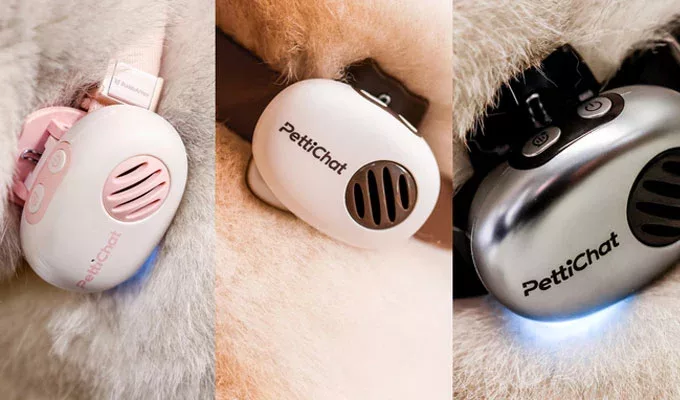
PettiChat is a compact, wearable device designed to attach to a dog or cat’s collar. The main idea of the gadget is to interpret the emotions and needs of animals based on neural network analysis of sounds. The device uses AI algorithms trained on extensive databases of vocalizations from different breeds and species so that the owner can get an instant interpretation of what the pet is signaling.
Technical specifications
The gadget is designed taking into account the active lifestyle of pets. Key parameters of the hardware include lightness, ergonomics and security. At the moment, the following specifications are known:
PettiChat Technical Parameters
| Weight of the device | 27 grams |
| Protection class | IP56 (protection against dust and strong water jets) |
| Charging Method | Magnetic charging |
| Attachment | Universal collar clip |
| Communication | Sync with mobile app |
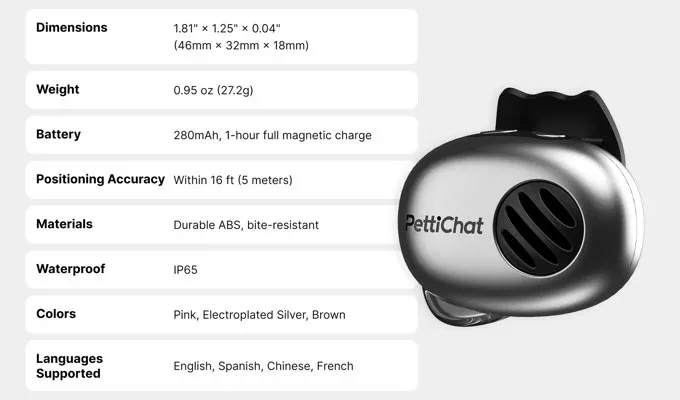
The IP56 case allows you to walk in the rain, but the device is not designed for full immersion in water. Light weight (only 27 g) ensures that even cats and small breeds of dogs will not feel discomfort when wearing.
Price and Kickstarter campaign
The commercial potential of the device is confirmed by the results on the Kickstarter platform. The developers have already attracted more than 5.655 million UAH ($130,000) from more than 800 sponsors, which many times exceeded the initial goal of the campaign.
- Early Bird price: UAH 5,000 ($120).
- Current retail price (at the campaign stage): UAH 7,000 ($150).
Features: two-way communication and AI accuracy
The main feature of PettiChat was the ability not only to listen to the animal, but also to respond to it. The program allows you to dictate text, which the gadget turns into sounds theoretically understandable to the pet. The authors claim context recognition accuracy of over 90%. The system analyzes growls, whines, barks or meows in real time, adapting to a specific pet.
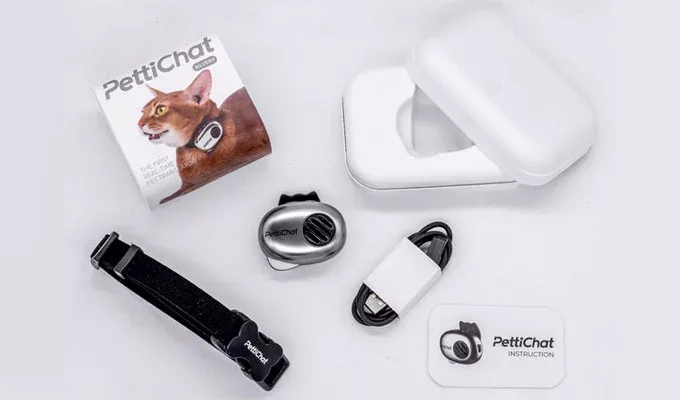
The process of working with the gadget:
- Fixing the block on the collar.
- Synchronization via Bluetooth with a mobile phone.
- Receiving push messages with a “translation” of the animal’s thoughts.
Don't miss interesting news
Subscribe to our channels and read announcements of high-tech news, tes

Oppo A6 Pro smartphone review: ambitious

 0
0 
Creating new mid-range smartphones is no easy task. Manufacturers have to balance performance, camera capabilities, displays, and the overall cost impact of each component. How the new Oppo A6 Pro balances these factors is discussed in our review.
Oppo Reno16 Pro 5G smartphone review: well-heeled
0 
Oppo Reno16 Pro 5G looks like a balanced smartphone, in which the manufacturer tried not to make a single characteristic the defining one. It has many advantages. Let’s tell you what
Nokia 300 Charge Packs Massive Battery and Reverse Charging Button

HMD Global has released the Nokia 300 Charge, a feature phone equipped with a powerful 3700 mAh battery and reverse charging functionality. This device offers unique features for the handset segment but comes with significant connectivity limitations.
Garmin Releases Critical Firmware Update to Fix Display Glitches

Garmin has released software version 17.39 for popular watch models, including the Forerunner, Venu, and Vivoactive lines. The patch addresses display bugs and fixes gesture recognition issues.