

Magnetic pulses against nicotine: scientists are testing an unusual method of fighting smoking
19.05.26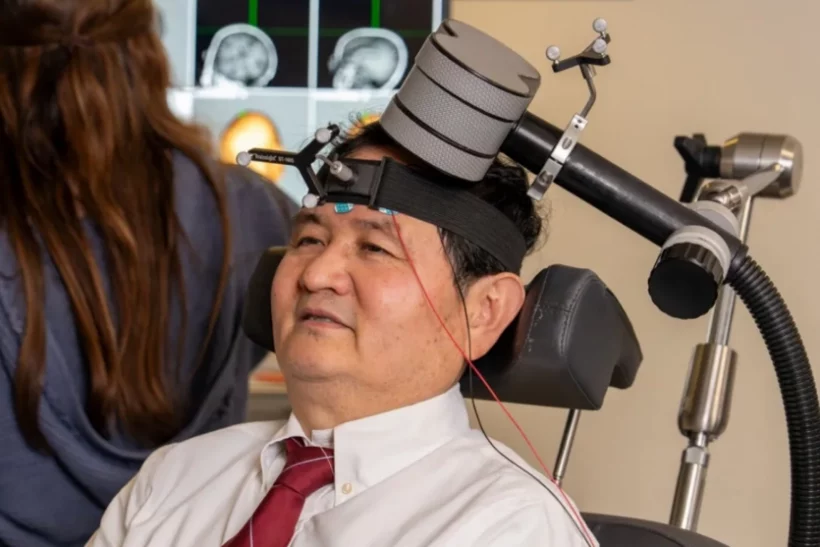
Nicotine addiction remains one of the most persistent forms of addiction in the world. Despite the fact that most smokers have tried to give up cigarettes at least once, statistics show that only a small part of people succeed in quitting smoking. Against this background, researchers continue to look for alternative methods of treatment, and one of the areas under discussion is influencing the brain using magnetic pulses.
The technology involved is Repetitive Transcranial Magnetic Stimulation, or rTMS. The method is already used in psychiatry and neurology to treat depression, obsessive-compulsive disorder and chronic pain, and now scientists are testing how effectively it can fight tobacco addiction.
How magnetic brain stimulation works
rTMS technology is based on the impact of electromagnetic pulses on certain areas of the brain. During the procedure, a special device generates a magnetic field that stimulates neural activity without surgery or implants.
Researchers believe that addiction disrupts the balance between areas of the brain responsible for pleasure, controlling behavior and making decisions. As a result, systems related to the desire to receive a reward become hyperactive, and self-control mechanisms weaken.
A team of scientists from the Medical University of South Carolina focused on exactly these processes. According to Xinbao Li, the leader of the study, the goal of the therapy is not simply to suppress the craving for cigarettes, but to restore normal interaction between different neural systems of the brain.
What the study showed
45 smokers who tried to quit nicotine took part in the experiment. Each of them underwent a course of 15 sessions of magnetic stimulation.
The researchers paid the main attention to the dorsolateral prefrontal cortex – the area of the brain associated with self-control, planning and decision-making. It was the stimulation of this zone that showed the most noticeable effect.
Participants who underwent high-frequency stimulation of this area reported a significant reduction in the urge to smoke. On average, the number of cigarettes smoked decreased by about 11 per day.
By comparison, the group that had the medial orbitofrontal cortex, which is associated with the reward system, reduced their tobacco consumption by about five cigarettes per day. At the same time, participants in the control group who received a sham treatment reduced their smoking by approximately six cigarettes.
Personalized therapy instead of a one-size-fits-all approach
The authors of the study emphasize that individual adjustment of therapy plays a key role. As part of the experiment, MRI scans of the brain and selection of the intensity of magnetic pulses were used separately for each participant.
Researchers call this approach an element of precision medicine. Instead of a universal scheme, the treatment is adapted to the specifics of the brain activity of a particular person.
The scan also showed changes in neural networks after a course of therapy. In the participants, the activity of the areas responsible for controlling behavior increased, while the areas related to the formation of addiction and the search for reward, on the contrary, showed a decrease in activity.
rTMS is already used in medicine
It is important to note that rTMS technology itself is not an experimental development. In the US, the method has already received FDA approval to aid in smoking cessation. However, current research is aimed at improving the accuracy and effectiveness of therapy.
In parallel, scientists are studying the possibility of using magnetic stimulation in the treatment of other addictions, including alcohol and methamphetamine addiction.
While rTMS cannot be called a universal solution to the problem of nicotine addiction, the results of recent studies show that the influence on brain self-control mechanisms can become one of the most promising directions in the fight against smoking.
Don't miss interesting news
Subscribe to our channels and read announcements of high-tech news, tes

Oppo A6 Pro smartphone review: ambitious

 0
0 
Creating new mid-range smartphones is no easy task. Manufacturers have to balance performance, camera capabilities, displays, and the overall cost impact of each component. How the new Oppo A6 Pro balances these factors is discussed in our review.
In-Ear headphones Active Noise Cancellation: how Oppo eliminate noise
0 
In-ear headphones remain one of the most popular form factors due to their lightweight design. However, this design is considered one of the most challenging to implement active noise cancellation (ANC). We’ll explain how Oppo solved this problem.
Poco X8 Power Surfaces With Massive 10,000mAh Battery

Rumors have emerged regarding the development of the Poco X8 Power, a smartphone with an impressive 10,000mAh battery. The device promises striking screen specs and a Snapdragon 6 Gen 5 hardware base.
Baseus PicoGo Pro: A 60W Compact Charger With a Smart Display
Baseus has released its new PicoGo Pro (AE22) charger in China. Equipped with an intelligent display and supporting up to 60W fast charging, the device aims to compete with the popular Anker Nano adapters at an accessible price point.